The more you understand what gets customers to buy, the better you can connect with them online and offline. That’s why it’s so important to know the psychological factors that influence your audience’s decisions.
When you use these factors deliberately, you’re not just “pushing” products. You’re tapping into emotions, habits, and expectations that are already there. For example, customers who feel an emotional connection to a brand don’t only look at the price tag when they buy. They’re often happy to pay more, and they’ll talk about you to friends and family.
In other words, psychology isn’t a “nice to have” in marketing. It’s the engine behind how people notice you, compare you, and finally choose you.
Psychological factors are the internal elements that shape a person’s thoughts, feelings, and behavior. They play a big role in how people make buying decisions and how they feel about certain products or services.
Key psychological factors include motivation, perception, learning, beliefs, and attitudes. These are shaped by personal experiences, emotions, and the way people process information. Together, they influence how consumers respond to your marketing.
In simple terms, psychological insight helps you fine-tune your messaging, channels, and offers so they align with how people already think and behave.
Core Psychological Factors That Shape Consumer Behavior
In this guide, we’ll start with several foundational psychological factors that sit behind many consumer decisions: motivation, learning, perception, modeling, socialization, reinforcement, and attitudes and beliefs.
Then we’ll look at specific named effects and biases you can use directly in your marketing.
Motivation
Motivation is the inner drive that pushes people to satisfy specific needs. It’s one of the core forces behind consumer behavior. At the most basic level, your product or service has to solve a problem or fulfill a desire the customer actually cares about right now.
That’s why positioning is so important. You’re not just selling a product; you’re presenting it as the most straightforward way to satisfy a current need or want. The clearer that link is, the easier it is for people to say “yes.”
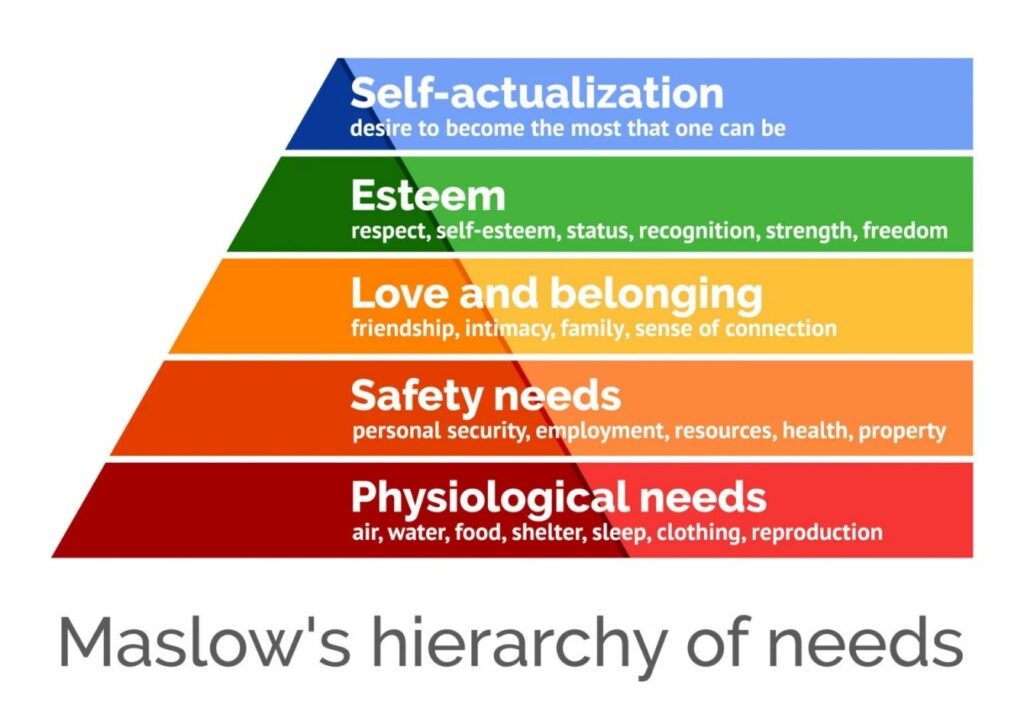
A helpful way to think about motivation is Maslow’s hierarchy of needs. This model groups human needs into five levels, from basic survival (food, safety, shelter) up to psychological and self-fulfillment needs (love, belonging, esteem, and self-actualization). You can imagine it as a simple pyramid chart, with survival needs at the bottom, and self-fulfillment needs at the top.
Maslow’s idea is that lower-level needs usually have to be met before higher-level ones become the main focus, although people can feel multiple needs at once. For marketers, the key is to ask: Which level is my offer speaking to? A meal kit speaks to convenience and safety. A luxury watch leans on status and esteem. A coaching program can speak to growth and self-fulfillment.
When you know which needs you’re addressing for a specific segment, you can shape your copy, visuals, and offers to match the motivation that’s already there.
Learning
Learning is the process of acquiring new information that changes how someone thinks or behaves. It’s ongoing and can come from two main types of experiences:
Experiential learning – gaining knowledge through direct, hands-on experiences.
Non-experiential learning – gaining knowledge by observing, listening, reading, or researching.
In many cases, marketing leans heavily on non-experiential learning. Companies share information through customer reviews, case studies, guides, videos, comparison pages, and more. Consumers then use that “secondhand” knowledge to judge whether a product or service is right for them.
For example, someone might search Google for “Jasper AI writing software review” and read several articles and user reviews before ever trying the tool. Even without direct experience, they’ve learned enough to feel confident saying yes or no.
You can make learning an intentional part of your marketing by:
Publishing honest educational content that answers real questions
Highlighting stories, case studies, and before-and-after examples
Creating clear how-it-works or “what to expect” walkthroughs
The easier you make it for people to understand your offer and see how it fits into their world, the more likely they are to move forward.
Perception
Perception is how people interpret and make sense of what they see, hear, and read. It’s subjective and shaped by past experiences, expectations, and what they happen to focus on in the moment.
That’s why two people with the same need can buy completely different products. They’re not just reacting to the product itself, but to how they perceive it.
Three processes are especially important for marketers:
Selective Attention
People naturally filter out most of what’s around them and only notice what feels relevant. That’s why strong hooks, clear headlines, and context (“this is for freelancers,” “for parents,” etc.) matter. You want to link your message to something the person already cares about so you can break through the noise.
Selective Distortion
People interpret new information in ways that confirm what they already believe. Even neutral facts can be twisted in their minds to fit an existing story. Clear, simple messaging reduces room for misinterpretation. When you know your audience’s beliefs, you can also frame your message so it aligns instead of clashing.
Selective Retention
People remember information that fits their interests, beliefs, and values—and quickly forget the rest. Your job is to make the most relevant benefits impossible to miss. Repeat key points, highlight what matters most to your audience, and tie benefits to outcomes they genuinely want.
Understanding perception helps you design marketing that doesn’t just “look good,” but lands the way you intended in the customer’s mind.
Modeling
Modeling is the process of imitating the behavior of others—friends, family, celebrities, influencers, or any admired “social agents.” People often adjust their behavior to match what feels normal or aspirational in their community, which makes modeling a powerful lever in marketing.
When you show someone “people like you” using and enjoying a product, you’re not just sharing proof. You’re offering a blueprint for what to do next.
For example, gyms often encourage referrals from current members. When a rep calls the referred friend and mentions, “Your friend Sarah is already a member,” it subtly signals, people in your circle already do this—maybe you should too.
The same thing happens with celebrity or influencer endorsements. If a well-known athlete consistently wears a particular brand, fans who admire that person may buy the same gear to align with their style or values.
To use modeling effectively:
Know who your audience looks up to or identifies with
Show those people using, recommending, or benefiting from your offer
Make the next step (sign up, join, buy) simple and obvious
You’re not just selling a product—you’re inviting customers into a pattern of behavior that already exists in their world.
Socialization
Socialization is closely related to modeling, but it’s bigger in scope. It’s the process through which people learn norms, values, and “how things are done” by interacting with others and with culture as a whole.
Through socialization, people pick up beliefs and behaviors from:
Other individuals (family, friends, coworkers)
Communities and groups (schools, clubs, online communities)
Organizations and media (brands, publications, platforms)
You can tap into socialization in two ways:
1. Align With Existing Norms
If your audience already cares deeply about sustainability, for example, your messaging can reinforce that norm by emphasizing eco-friendly practices, certifications, and lifestyle alignment.
2. Help Create New Norms
Brands can also socialize people into new behaviors. A company promoting reusable containers might run campaigns that normalize bringing your own cup, bottle, or bag, turning it into a “this is just what we do now” behavior.
The key idea: socialization sets what feels normal and acceptable. When your brand fits naturally into those patterns—or helps shape them—you reduce friction and increase adoption.
Reinforcement
Reinforcement is about what happens after someone acts. It’s the process where experiences, rewards, or disappointments strengthen or weaken a behavior.
In simple terms:
Positive reinforcement (good outcomes) makes people more likely to repeat a behavior.
Negative experiences (feeling misled, disappointed, or frustrated) make them less likely to come back.
In marketing, positive reinforcement shows up when the product or service actually matches (or exceeds) what your messaging promised. For example, if a skincare brand claims, “You’ll see visible results in two weeks,” and the customer truly does, that experience reinforces trust. They’re more likely to reorder and recommend the product to others.
On the flip side, if a phone is sold as having “all-day battery life” but dies by mid-afternoon, the gap between promise and reality becomes negative reinforcement. The customer feels misled and may avoid the brand entirely in the future.
To use reinforcement well:
Make promises you can actually keep
Design onboarding and support to create early wins
Follow up with customers at key moments to reinforce that choosing you was the right move
Over time, consistent positive reinforcement doesn’t just drive repeat purchases—it builds loyalty and advocacy.
Attitudes and Beliefs
Attitudes and beliefs are powerful psychological forces that shape how people respond to brands, products, and ideas. Beliefs are the assumptions or “truths” people hold about something. Attitudes are the ongoing evaluations built on those beliefs plus emotion—how someone consistently feels about a person, product, issue, or brand.
People hold attitudes and beliefs about almost everything: places, politics, religions, companies, and even entire industries. They’re far more likely to engage with things they already feel positively about, so if your offer fits into an existing positive belief, your job is easier.
Sometimes, though, marketing has to work on the perception itself. That might mean:
Providing clearer, more accurate information
Showing real benefits instead of vague claims
Addressing misconceptions head-on
For example, a politician may run a campaign to shift public attitudes around a policy by educating voters and showing practical outcomes. A brand might discover that customers see its product as “too complicated,” then simplify the onboarding, adjust the messaging, and highlight ease-of-use stories to reshape that belief.
That said, deep attitudes and beliefs are hard to change. Often, it’s more effective to adapt your positioning so it aligns with what people already believe than to fight uphill to rewrite their worldview.
Specific Psychological Factors to Help Your Marketing
Below is a set of specific psychological effects and biases you can use directly in your marketing. Each one offers a different way to influence how people notice, compare, and choose.
1. Paradox of Choice: When Too Many Options Hurt Decisions
The paradox of choice is the idea that more options can actually make decisions harder and less satisfying. When people are overwhelmed, they freeze or walk away instead of choosing.
A famous experiment often called “The Jam Study” illustrates this. Researchers set up a tasting booth in a grocery store on different days:
One day: 6 varieties of jam
Another day: 24 varieties of jam
The larger display with 24 jams attracted more attention. More people stopped to look. But when it came to buying, only about 3% of those visitors made a purchase. With just 6 options, roughly 30% of visitors bought jam.
In other words, fewer choices led to far more purchases.
For marketers, the takeaway is simple: don’t flood customers with every possible variation at once. Curate. Bundle. Highlight “best for most people” options. Make choosing feel easy and safe.
2. Decoy Effect: Using a Weaker Option to Guide Choice
The decoy effect happens when a less attractive option is added to a set, making another option look much more appealing by comparison. People rarely do an absolute evaluation; they compare what’s in front of them.
For example, imagine you sell three service packages:
Basic – $49
Pro – $99
Premium – $109
If Premium is only slightly better than Pro, most people may go for Pro. But if you introduce a clearly inferior decoy like:
Standard – $99 (fewer features than Pro at the same price)
Suddenly, Pro looks like an obvious “smart choice” because it’s clearly better than Standard at the same price. The decoy exists mainly to push people toward the option you want them to choose.
Used ethically, the decoy effect can help customers quickly find the best fit rather than getting stuck comparing everything equally.
3. Loss Aversion: People Hate Losing More Than They Love Winning
Loss aversion is the principle that losing something feels worse than gaining the same thing feels good. Most people will work harder to avoid a loss than to achieve an equal gain.
For example:
Someone might do more to avoid losing $1,000 than to try to gain $1,000.
They may gladly spend $50 for a strong chance to save $100, especially if the probability of success is high.
In marketing, you can use loss aversion by:
Highlighting what customers risk losing if they don’t act (time, money, opportunity)
Showing the gap between where they are now and where they could be
Framing offers as protection or prevention (“don’t miss out,” “stop overpaying,” “avoid…”)
The key is balance. You want to tap into the natural fear of loss without resorting to scare tactics or manipulative fear-mongering.
4. Anchoring Effect: How First Numbers Shape Decisions
The anchoring effect is a bias where people lean too heavily on the first piece of information they see (usually a number) when making a decision. That first figure becomes the mental “anchor,” and everything that follows is judged against it.
Imagine you’re shopping for a TV. You see one model with an original price of $3,000, marked down to $2,000. Right beside it is a similar TV for $2,200 at the regular price. Because your mind latched onto the $3,000 anchor, the $2,000 price feels like a big win, even if the $2,200 TV might be a better value overall.
Marketers use anchoring when they:
Show higher “compare at” prices next to sale prices
Put a premium plan first, so lower tiers feel affordable
Highlight a big, simple number (saved, earned, included) early on
The core idea: be intentional about the first number or claim people see, because it colors everything that comes after.
5. Confirmation Bias: Speaking to What People Already Believe
Confirmation bias is the tendency to notice, remember, and favor information that supports what we already believe—and to downplay or ignore what doesn’t.
In marketing, this means consumers are more likely to engage with brands that fit their existing views and preferences. If someone already believes “email marketing still works,” they’ll be more open to a tool that promises “more revenue from the emails you’re already sending” than a message framed around “reinventing your entire marketing strategy.”
You can work with confirmation bias by:
Mirroring your audience’s language, values, and priorities
Showing proof that matches what they already suspect is true
Avoiding messages that directly attack deeply held beliefs (unless you’re deliberately being contrarian and have a strategy for that)
You’re not trying to trick anyone. You’re simply framing your offer to fit the story they already have in their head.
6. Reciprocity: The Pull to Return Favors
Reciprocity is the social rule that when someone gives us something, we feel a pull to give something back. It’s one of the reasons small, genuine gestures can have a big marketing impact.
Brands use reciprocity when they:
Offer free samples or trials
Share valuable content with no immediate ask
Surprise customers with perks, upgrades, or small gifts
For example, a coffee shop that gives regulars a quality reusable cup after ten purchases isn’t just being nice. That gift makes customers feel seen and appreciated, and many will respond by visiting more often and recommending the shop to others.
The key is intent. Reciprocity works best when what you give is genuinely useful and not obviously manipulative. If the “gift” is just a thinly veiled sales pitch, people feel pressured rather than grateful—and the effect disappears.
7. Scarcity Principle: Why “Limited” Makes People Act
The scarcity principle says that people value things more when they seem hard to get. Limited supply, limited time, or limited access all create a sense of urgency—and urgency pushes people to act.
You see this everywhere:
“Only 3 spots left”
“Sale ends tonight”
“Members-only access”
When something feels scarce, we worry we’ll miss out. That fear of missing out (FOMO) can be more powerful than the actual desire for the product.
To use scarcity ethically:
Be honest about limits (don’t fake scarcity)
Make the deadline or quantity clear
Pair urgency with real value, not hype
Scarcity works best when people already want what you’re offering and just need a nudge to move now instead of “someday.”
8. Social Proof: Letting Others Do the Persuasion
Social proof is our tendency to look at what others are doing to decide what we should do. When people aren’t sure what to choose, they look for cues: reviews, testimonials, star ratings, follower counts, case studies, “best-seller” tags, and so on.
You can build social proof by:
Showcasing real reviews and testimonials
Highlighting customer counts (“Trusted by 12,000+ freelancers”)
Featuring case studies and success stories
Using “Popular choice” or “Best seller” labels where they’re true
When customers see that others like them have already chosen you and had a good experience, the perceived risk drops—and saying yes feels safer.
9. The Halo Effect: When One Good Thing Lifts Everything
The halo effect is a bias where one positive trait shapes how we see everything else about a brand or product. A strong first impression or standout feature can make people assume the rest is just as good.
For example, imagine a tech company known for beautiful, well-designed laptops. That reputation alone can lead customers to:
Assume their customer support is excellent
Believe their accessories are high quality
Expect new products from them to be worth the price
Even if customers haven’t tried those other products, the “halo” from the core strength spreads.
You can tap into the halo effect by:
Doubling down on one or two standout strengths (design, reliability, support, speed)
Making sure that strength is highly visible in your branding and messaging
Partnering with other respected brands or creators so their halo rubs off on you
A strong halo doesn’t replace solid delivery, but it does make people more open, forgiving, and loyal.
10. Mere Exposure Effect: Familiarity Breeds Preference
The mere exposure effect is the tendency to like things more simply because we see them often. Even if people don’t pay close attention, repeated exposure can quietly build comfort and preference.
In marketing, this is why consistent visibility matters so much. When your brand shows up regularly—on social, in inboxes, in search results—it starts to feel familiar. And familiar feels safer than unknown.
For example, imagine a new soft drink brand launches a big ad campaign. Their ads run on TV, show up on billboards, and appear in social feeds. Even if someone has never tasted the drink, they may still reach for it on the shelf because it’s the one they recognize.
You don’t need to shout to use the mere exposure effect. You just need a steady, repeated, on-brand presence in the places your audience already spends time.
Cognitive dissonance is the uncomfortable feeling people get when they hold two conflicting beliefs or desires. To reduce that discomfort, they’ll change something—what they believe, how they act, or how they justify a decision.
In marketing, you can either relieve this tension or position your product as the way out.
Take electric cars as an example. Many buyers want the comfort, status, and convenience of a nice car, but they also care about the environment. A well-positioned electric vehicle offers a way to enjoy driving while still feeling aligned with one’s values.
Good marketing can:
Highlight how your offer reduces that inner conflict
Show long-term savings or benefits that balance a higher upfront cost
Reassure buyers that their choice matches who they believe they are
When you help people feel good about their decision—not just about the product—you lower regret and increase satisfaction.
12. The Endowment Effect: The Power of “Mine”
The endowment effect is our tendency to value something more once we feel it’s ours. The moment people feel ownership—full or partial—their attachment grows.
This is why free trials, samples, and “try before you buy” offers can be so effective. For example, a SaaS company might offer a 14-day free trial. During that period, users customize settings, add data, and build habits around the tool. By the end, it doesn’t feel like “a product”; it feels like their system.
To leverage the endowment effect:
Offer trials, demos, or samples that let people experience real use
Make onboarding fast so they hit a feeling of ownership quickly
Let them personalize or configure things to their liking
Once people feel that something is “theirs,” walking away feels like a loss—so they’re far more likely to stay.
13. Priming: Influencing Responses with Subtle Cues
Priming is when a previous stimulus quietly shapes how we respond to something that comes next—often without us realizing it. In marketing, that means you can “set the mood” or create associations before someone makes a choice.
For example, imagine a supermarket that wants to increase sales of French wine. In the wine section, they play French music in the background. Shoppers may not consciously notice, but the music primes them to think of France and French culture. When they reach for a bottle, they’re more likely to choose a French label—even if they don’t connect that choice to the music at all.
You can use priming by choosing:
Images that suggest a certain lifestyle, quality level, or emotion
Words and phrases that put specific ideas front of mind (safe, fast, luxury, eco-friendly)
Colors and design that signal mood (calm, energetic, premium, playful)
The goal is alignment. You’re creating an environment—visual, verbal, and emotional—that nudges people to see your brand the way you want to be seen before they consciously evaluate the details.
14. The Bandwagon Effect: When Popularity Becomes Proof
The bandwagon effect is our tendency to adopt beliefs or behaviors simply because other people seem to be doing the same. If “everyone” is talking about something, buying something, or joining something, it starts to feel like the obvious move.
Viral social media challenges are a clear example. The Ice Bucket Challenge took off because each participant publicly called out friends to join in. As more people posted their videos, others felt both social pressure and social permission to do the same. The behavior spread because it became the “thing people are doing now.”
In marketing, you can tap into the bandwagon effect by:
Highlighting user counts or adoption (“Used by 10,000+ small businesses”)
Showing active communities (“Join thousands of marketers in our private group”)
Using copy like “Most popular choice” or “Fastest-growing…”—when it’s genuinely true
You’re sending a simple signal: people like you are already here. For many customers, that’s enough to move your offer from “risky” to “safe.”
15. The Framing Effect: How Presentation Changes Perception
The framing effect is the bias where people react differently to the same information depending on how it’s presented. The facts don’t change—but the way you describe them does.
A classic example is ground beef labeled as:
75% lean – focuses on the positive, feels healthier
25% fat – focuses on the negative, feels less healthy
It’s the same product, yet the “75% lean” version tends to sell better because it’s framed more positively.
You can see the framing effect in pricing, too. For a $100 product, both of these are true:
“Get 20% off”
“Save $20”
Depending on your audience, one frame may feel more compelling than the other, even though the discount is identical.
To use the framing effect in marketing:
Highlight outcomes and benefits rather than raw features
Emphasize gains when you want to inspire (“earn more,” “grow faster”)
Emphasize avoided losses when you want to protect (“stop overpaying,” “prevent churn”)
Framing isn’t about twisting the truth. It’s about choosing the angle that makes the value of your offer immediately clear.
16. The Contrast Effect: Making the Right Option Look Obvious
The contrast effect is a bias where something looks cheaper, better, or more attractive when it’s placed next to a more extreme alternative.
Imagine a clothing store that displays a $500 jacket right beside a $2,000 suit. On its own, the jacket might feel expensive. Next to the suit, it suddenly feels like a reasonable middle-ground option.
The same logic applies to pricing tiers. Suppose a software company offers:
Basic – $10/month
Premium – $20/month
Platinum – $100/month
Very few people will choose Platinum, and that’s fine. Its role is to make Premium look far more reasonable in comparison. The extremely high price frames the mid-tier as the “smart choice,” even if nothing about Premium actually changed.
To use the contrast effect effectively:
Place your ideal option beside a clearly less appealing alternative (too basic or too expensive)
Be intentional about the order and spacing of your prices and packages
Avoid cluttering the page with many similar options that blur the contrast
When you set up strong, honest contrasts, customers can quickly see which option makes the most sense for them.
17. The IKEA Effect: Why People Value What They Help Create
The IKEA effect is the tendency for people to place a higher value on things they’ve helped create or assemble. When someone puts effort into building or personalizing a product, their sense of ownership and pride increases, even if the final result isn’t perfect.
Imagine you buy a bookshelf that arrives in a flat box. You spend an afternoon sorting pieces, following instructions, and tightening screws. Maybe it’s a bit wobbly when you’re done, or you have a couple of screws left over. Still, you’re proud of it because you built it. You’ll often value that bookshelf more than a similar one you could have bought pre-assembled.
Marketers can tap into the IKEA effect by:
Offering customizable products or build-your-own bundles
Providing DIY kits or partial assembly experiences
Letting customers choose colors, configurations, or features
When customers help shape the product, they feel more attached to it. That sense of “I made this mine” can deepen emotional connection, increase satisfaction, and make them less likely to switch to a competitor.
18. The Serial Position Effect: Making Key Messages Stick
The serial position effect is the tendency for people to remember the first and last items in a sequence better than the ones in the middle. It’s usually broken into two parts:
Primacy effect: people remember the first items best
Recency effect: people remember the last items best
For marketers, this has clear implications for how you present information.
Some practical examples:
Ads in a break: Advertisers often prefer the first or last spot in a commercial block because those positions are more memorable.
Product placement in-store: Retailers may put new or high-priority items at the beginning or end of an aisle to increase the chance shoppers will notice them.
Pricing tables and feature lists: Companies often place their most profitable or recommended plan at the beginning or end of a list so it stands out.
Emails and landing pages: Strong hooks at the top and clear calls to action at the end take advantage of the serial position effect.
The middle still matters, but if you want something to stick, it usually belongs at the start or the finish.
19. The Zeigarnik Effect: Turning Incomplete Tasks into Motivation
Our brains like closure, so open loops stay mentally “alive” until we resolve them. The Zeigarnik effect is the tendency for people to remember and feel drawn to unfinished or interrupted tasks more than to completed ones.
In marketing and product design, you can use this effect to keep people engaged and coming back.
One practical approach is to intentionally leave part of a process incomplete while still capturing the most important information early on. Then give people clear reasons to return and finish.
A few examples:
Profile Completion Prompts
Platforms like LinkedIn show a “Profile Strength” meter and nudge users toward “All-Star” status. That visual reminder of an unfinished profile keeps people coming back to add more details.
Abandoned Cart Reminders
When customers add items to a cart but don’t check out, follow-up emails or notifications remind them of the incomplete process. The open loop (“I started buying this, but didn’t finish”) creates a natural urge to close the gap.
To use the Zeigarnik effect well:
Break big processes into clear, visible steps
Show progress (e.g., “Step 2 of 4,” “60% complete”)
Remind people of what’s left and why it’s worth finishing
You’re not just nagging them—you’re helping them complete something they already started and cared about, which often feels satisfying rather than pushy when it’s done right.
20. The Foot-in-the-Door Technique: Gaining Compliance Through Small Yeses
The foot-in-the-door technique is a way to gain compliance by starting with a small request before asking for a bigger one. Once someone says yes to something minor, they’re more likely to agree to a larger ask later because they want to stay consistent with their earlier decision.
In marketing, this shows up in free trials, low-commitment offers, and simple sign-ups that warm people up before a purchase.
Take Spotify as an example. It offers a free trial of ad-free listening and offline access so users can experience the benefits firsthand. After they get used to listening without interruptions and enjoy their playlists on the go, a paid plan feels like a natural next step rather than a big leap.
You can do something similar on your own site. Asking visitors to subscribe to a free newsletter, download a free guide, or create a free account are all small, low-risk commitments. Over time, as people receive value from you, they become much more open to paid offers. That first “yes” to a tiny request paves the way for bigger commitments later.
21. The Affect Heuristic: Letting Emotion Drive Risk and Reward
The affect heuristic is our tendency to lean on our emotions when we make decisions. Instead of weighing every pro and con, we often ask ourselves, “How do I feel about this?” and decide from there.
This has a big impact on how people see risk and reward:
When they feel positive, they tend to see lower risk and higher benefit.
When they feel negative, they tend to see a higher risk and lower benefit.
Someone in a good mood may invest in a risky stock because they feel optimistic. Someone feeling anxious or down might skip a social event because the potential social “risk” feels larger than it really is.
Emotion speeds up decision-making, but it also distorts it. That’s why brands work so hard to create emotional states that support the action they want.
You can use the affect heuristic by designing your marketing to evoke specific emotions:
Warm, hopeful stories and visuals that make the benefits feel bigger than the risks
Calm, reassuring copy when you want people to feel safe trying something new
Carefully used fear or urgency when you need to highlight the risk of doing nothing
The key is to be intentional and ethical. You’re not just trying to “trigger” people. You’re shaping an emotional context that helps them feel good about making a smart decision.
22. The Mere Measurement Effect: How Asking Questions Nudges Action
The mere measurement effect (or mere measurement bias) happens when simply asking people about their intentions or plans makes them more likely to follow through.
For example:
Asking, “Do you plan to buy a new car in the next six months?” can increase the chance that someone actually does.
Asking customers, “How likely are you to dine with us again?” can subtly nudge them toward coming back.
In marketing, that means well-designed surveys, polls, or quizzes can do more than collect data. They gently push people to think of themselves as someone who will take a specific action—subscribe, upgrade, switch tools, visit again, and so on.
To use this effect responsibly, ask questions that are:
Concrete (“Do you plan to restart your workouts this month?”)
Aligned with a real benefit for the customer
Followed up with a clear, low-friction next step
You’re not forcing behavior. You’re helping people clarify what they already want to do—and making it easier to act on it.
23. The Similarity-Attraction Effect: “People Like Me” Marketing
The similarity-attraction effect is the tendency to feel more drawn to people—and brands—that seem similar to us. We trust them more, pay more attention to them, and are more willing to follow their lead.
In marketing, that means the more your brand looks, sounds, and behaves like your audience, the easier it is to win them over.
For example, a clothing brand targeting young adults might feature people their age doing things they actually do: studying, going out with friends, working part-time, creating content. The viewer sees the ad and thinks, “That’s my life” or “That could be me,” which creates an instant connection.
You can lean into this by:
Using language and examples that your audience already uses
Featuring customers who look and live like your ideal buyers
Reflecting their values, style, and day-to-day reality in your stories
The more your audience recognizes themselves in your brand, the easier it is for them to say yes.
24. The Authority Principle: Borrowing Trust from Experts
The authority principle is our tendency to listen to people we see as experts, leaders, or credible authorities. If someone has status, credentials, or a strong track record, we’re more likely to accept their recommendations.
Visible credentials and experience (awards, years in business, big-name clients)
A few ways to use this ethically:
Feature real experts who genuinely recommend or helped design your product
Highlight legit certifications, case studies, and media mentions
Make sure authority signals are easy to see: logos, quotes, short “why they trust us” blurbs
The key is honesty. Fake authority or exaggerated claims might work once, but they destroy trust long-term.
25. The Self-Serving Bias: Letting Customers Be the Hero
The self-serving bias is our tendency to credit ourselves for successes and blame outside factors for failures. In other words, people like to see themselves as capable, smart, and driven—and they want their choices to support that story.
You can work with this bias by framing your product as the tool, not the hero. The customer is the hero.
For example, a fitness brand might say, “You bring the discipline. We’ll bring the equipment,” or “Your effort + our plan = your best results yet.” This ties success to the customer’s effort and qualities while positioning the product as a helpful partner that makes their win easier.
You can also reduce shame or blame around past “failures” by pointing to external factors:
“You didn’t fail at budgeting; you just didn’t have a system that worked with your brain.”
“You haven’t grown slower because you’re lazy; you’ve grown slower because your tools kept getting in the way.”
When your message protects people’s self-image and lets them feel proud of their role, they’re far more willing to engage, buy, and stick around.
26. The Optimism Bias: Why We Expect Things to Work Out
The optimism bias is our tendency to believe we’re more likely to experience positive events and less likely to face negative ones. Most people quietly think, “Bad things happen, but probably not to me.”
In everyday life, this affects how we think about health, money, work, and relationships. In marketing, it influences how people judge risk and whether they feel they actually need what you’re offering.
For example, someone might:
Skip insurance because “nothing serious will happen”
Ignore cybersecurity tools because “we’re too small to be hacked”
Delay maintenance because “it’ll probably be fine”
If you sell protective or preventative products (insurance, backups, safety tools, warranties), you often have to counter the optimism bias with:
Real stories and data (without going full doom-and-gloom)
Clear explanations of realistic risk
Framing protection as a smart, responsible move rather than a fear-based one
On the flip side, you can work with optimism by helping people imagine positive, believable outcomes from using your product—and then backing it up with proof.
27. The Consistency Principle: Turning Small Commitments into Loyalty
The consistency principle (or commitment and consistency principle) says people like their actions, beliefs, and self-image to line up. Once they’ve taken a public or conscious stance, they feel pressure—internal and external—to behave in ways that match it.
That’s why, once someone has called themselves “a loyal customer,” said, “I’m taking my fitness seriously this year,” or joined a specific community… they’re more likely to keep making choices that reinforce that identity.
In marketing, you can use this principle much like the foot-in-the-door technique:
Reinforce these steps as part of a positive identity (“You’re the kind of person who invests in your growth”)
Offer next steps that feel like a natural extension of what they’ve already started
The goal is not to trap people, but to support them in being more of the person they already want to be—using your product or service as one of their tools.
28. The Availability Heuristic: Make the Right Stories Easy to Recall
The availability heuristic is our habit of judging how likely or important something is based on how easily examples come to mind. If a recent story was vivid or emotional, it feels more common than it really is.
In marketing, this means the stories, examples, and case studies you highlight can strongly shape what people think is “normal” or likely.
You can use this by:
Sharing specific, concrete success stories instead of abstract claims
Using vivid language and simple visuals that stick in memory
Repeating key examples across channels so they become top-of-mind
For instance, if you consistently share stories of clients doubling their leads in 90 days, those examples become the mental shortcuts people use when thinking about your service—even if you also have clients with more modest results.
Make sure the examples you spotlight are truthful and representative, because they’ll become the “evidence” people rely on when they decide whether to trust you.
29. The False Consensus Effect: “Everyone Thinks Like Me… Right?”
The false consensus effect is our tendency to assume that other people share our opinions, habits, and preferences more than they actually do. In other words, we quietly believe, “Most people probably see this the way I do.”
In marketing, this bias cuts both ways:
On the customer side, people may assume “everyone” already knows a tool, uses a brand, or feels a certain way.
On the brand side, teams can mistakenly think, “Our audience thinks like us,” and write copy that only makes sense inside the company bubble.
You can work with (and against) this bias by:
Showing diverse testimonials—from different industries, ages, roles, or use cases
Making it clear that your product works for different types of people, not just one “typical” user
Testing messaging instead of assuming “what we like” is what customers like
When people see themselves and not themselves in your stories, it breaks the illusion that “everyone is just like me” and makes your product feel broader and more credible.
30. The Representativeness Heuristic: Using Familiar Patterns
The representativeness heuristic is a mental shortcut where people judge something based on how much it looks like a familiar example or category. If a brand feels like other premium brands they know, they’re more likely to assume it’s premium too.
In marketing, that means:
Your visual style, tone, and messaging will nudge people to put you in a certain “bucket”
If you look and sound like a cheap, spammy offer, you’ll be treated like one
If you match the cues of a trusted, high-quality solution, you’ll be judged through that lens
You can use this by:
Borrowing patterns from categories you want to be associated with (clean design, clear typography, professional photography)
Using analogies that link your product to something your audience already understands (“It’s like a personal trainer, but for your finances”)
Avoiding stereotypes that clash with who you truly serve
The goal isn’t to copy competitors. It’s to deliberately shape which mental “file folder” your brand gets dropped into the moment people see it.
31. The Just-World Hypothesis: “People Get What They Deserve”
The just-world hypothesis is the belief that people generally get what they deserve and deserve what they get. On some level, many people want to believe the world is fair: hard work leads to rewards, and bad choices lead to bad outcomes.
This shows up in marketing when:
People feel good about buying from brands that reward effort, responsibility, or smart decisions
“Earned” rewards (loyalty points, member perks, streaks) feel satisfying because they match this sense of fairness
Stories that connect effort → result feel more believable and emotionally satisfying
You can tap into this by:
Showing how your product rewards consistent action (“The more you learn, the more you earn,” “Our best rates are for our most loyal customers”)
Highlighting fair, transparent policies and pricing
Telling stories where customers put in effort, and your product helps them get the payoff they deserve
When your brand feels fair, honest, and rewarding, you’re not only appealing to logic—you’re aligning with a deep moral instinct.
32. In-Group Bias: Building a “We” Around Your Brand
In-group bias is the tendency to favor people we see as part of our group over everyone else. When something feels like “ours,” we defend it, talk about it, and stick with it longer.
In marketing, you can lean into this by turning your brand into a community, not just a product:
Give your customers a name (“members,” “insiders,” “founders,” “pro community”)
Create spaces where they see and interact with each other (forums, groups, events)
Use language that reinforces shared identity (“people like us do things like this”)
When customers feel like they’re part of a group with shared values and habits, your brand becomes “their” brand—and that’s hard to replace.
33. Hindsight Bias: Making Wins Feel Obvious in Retrospect
Hindsight bias is the feeling of “I knew it all along” once we already know the outcome. After something happens, people often overestimate how predictable it was.
You can use this in marketing by framing customer success stories so they feel both impressive and inevitable:
Show the messy “before” state clearly
Walk through the key decisions and milestones
Then highlight the “of course this worked” logic in hindsight
When you tell stories this way, prospects can see a clear path from where they are now to where they want to go—and feel like they’ll also be able to say, “I should have done this sooner.”
34. The Peak-End Rule: Make the High Point and the Ending Great
The peak-end rule says people judge an experience mainly by two moments: the most intense point (the “peak”) and the end. The average of everything else matters less than you’d expect.
For customer experience, that means:
Create at least one standout “wow” moment (peak): an unexpectedly fast win, a delightful unboxing, a helpful check-in, a surprising extra.
End on a high note: smooth delivery, clear next steps, a warm thank-you, or a follow-up that reinforces their good decision.
Even if parts of the experience are just “okay,” a strong peak and a strong ending can leave people with a very positive overall memory—and that memory is what drives reviews, referrals, and repeat business.
35. The Illusion of Control: Letting Customers Feel in Charge
The illusion of control is our tendency to feel like we have more control over events than we really do. When people feel in control, they’re usually more engaged, more confident, and more satisfied with their choices.
You can tap into this by:
Letting customers choose plans, colors, or configurations
Offering toggles, filters, and sliders in apps or dashboards
Giving options for delivery, payment, or support channels
Even small choices matter. When someone can tailor part of the experience, it feels less like something being “done to” them and more like something they’re actively shaping. That sense of control often leads to higher satisfaction and stronger loyalty.
36. Reactance: Why Pushy Marketing Backfires
Reactance is the natural resistance people feel when they think their freedom to choose is being threatened. If a message feels too aggressive, manipulative, or “cornering,” people push back—even if the offer is genuinely good.
You trigger reactance when you:
Use overly aggressive countdowns or fake urgency
Box people into all-or-nothing choices
Shame them for saying no
To avoid this, your marketing should:
Respect autonomy (“Here are your options,” “You’re in control of the pace”)
Offer clear choices instead of ultimatums
Use urgency honestly, without pressure tactics
When people feel free to decide for themselves, they’re actually more likely to say yes.
37. The Sleeper Effect: Messages That Grow Stronger Over Time
The sleeper effect is when a message becomes more persuasive later than it was at first. Sometimes people discount a message early on (maybe they doubt the source or aren’t ready), but remember the core idea. Over time, the message can feel more convincing as the original doubts fade.
This matters for marketing because not every campaign has an instant payoff. Some ideas need time to sink in.
You can work with the sleeper effect by:
Sharing clear, memorable core messages that are easy to recall
Repeating those messages across different channels over time
Accepting that some prospects will come back weeks or months later, once they’ve processed what they saw
Brand building, education, and thought leadership often work this way. The first touch plants the seed; the later decision is where it bears fruit.
38. The Confirmation Trap: Seeing What We Expect to See
The confirmation trap is a close cousin of confirmation bias. Instead of exploring all the options fairly, people seek out and interpret information that confirms what they already believe—and quietly ignore what doesn’t fit.
In marketing, that means:
If someone already believes “SEO is too slow,” they’ll latch onto stories that support that view.
If they believe “this tool is the best,” they’ll give more weight to positive reviews and dismiss negative ones as “outliers.”
You can work with the confirmation trap by:
Presenting proof and case studies that line up with what your ideal buyers already suspect is true
Surfacing data that supports the change they want to make (“You’re right to think you’re overpaying”)
Gently challenging bad assumptions—but backing it up with simple, credible evidence
The more your message fits the story already in their head, the less resistance you’ll face and the more persuasive your content becomes.
39. The Spotlight Effect: “Everyone’s Watching Me”
The spotlight effect is our tendency to overestimate how much other people notice us—our clothes, our mistakes, our choices. Most of the time, others aren’t paying nearly as much attention as we think, but it feels like they are.
In marketing, this shows up when:
People worry how they’ll look using your product (“Will I seem cheap? Smart? Try-hard?”)
Customers care about visible outcomes (logos, design, social posts) because they think others will notice
You can tap into the spotlight effect by:
Highlighting how your product will be seen by others (“Look professional on every call,” “Clients notice the difference”)
Positioning your offer as something that reflects well on the buyer (“the smart choice for serious creators,” “what top agents use”)
Reducing embarrassment or self-consciousness (“No one has to see your first drafts,” “Use it privately on your own time”)
You’re speaking to a quiet fear: “What will people think?” If your brand helps them feel confident about the answer, you’re in a strong position.
40. The Planning Fallacy: We All Underestimate How Long Things Take
The planning fallacy is our tendency to underestimate how much time, money, or effort a task will require—even when we’ve done similar tasks before. We think, “This time will be different,” and plan too optimistically.
In marketing, this creates a big opportunity:
People often believe they can “figure it out themselves” faster than they really can
They underestimate the time cost of staying with clunky tools or manual processes
They overestimate how quickly they’ll act on that free resource sitting in their inbox
You can respond to the planning fallacy by:
Being honest about timelines, but showing how your product shortens them (“Launch in days, not months”)
Highlighting the hidden cost of DIY or delay (lost leads, missed revenue, constant friction)
Offering clear, simple paths that make big goals feel manageable (step-by-step onboarding, templates, checklists)
When you position your product as the antidote to unrealistic planning—helping people get real results faster and with less friction—you’re solving a problem they feel every day, even if they don’t have a name for it.
41. The Base Rate Fallacy: Stories Beat Statistics
The base rate fallacy is our tendency to ignore general statistics (base rates) and focus instead on vivid, specific information. A single striking story can outweigh a mountain of data in people’s minds.
In marketing, that means:
A powerful testimonial can feel more convincing than a detailed report
One vivid failure or complaint can overshadow hundreds of quiet successes
Emotional examples often drive decisions more than abstract probabilities
You can use this wisely by:
Pairing data with stories (“92% renewal rate” plus a concrete client story)
Turning key statistics into simple, visual comparisons
Making your most important proof easy to grasp, not buried in fine print
You’re not fighting human nature here. You’re wrapping accurate base rates in stories and examples that actually stick.
42. The Gambler’s Fallacy: Misreading Randomness
The gambler’s fallacy is the belief that past random events change the odds of future ones. For example, thinking, “We haven’t won in a while, so we’re due for a win,” even when each event is independent.
In marketing and promotions, this can show up when:
People think their chances of winning a giveaway get “better” because they’ve lost before
Customers assume, “I’ve never been picked, so it must be my turn soon”
You can address this by:
Being transparent about odds in contests and sweepstakes
Emphasizing that each entry has the same chance, every time
Focusing your messaging on the fun, experience, or guaranteed value—not just the win
Clarity about randomness builds trust. When people feel you’re honest about chances, they’re more likely to keep engaging for the right reasons.
43. Choice-Supportive Bias: Helping Customers Feel Good After They Buy
Choice-supportive bias is our tendency to remember our choices as better than they actually were. Once we pick something, we naturally lean toward seeing that decision in a positive light.
As a marketer, you can support this bias by reinforcing your customers’ decision after purchase:
Send onboarding emails that highlight key benefits they now have
Share quick wins, tips, or use cases so they see early value
Remind them of what they’ve avoided or improved by choosing you
For example, after someone subscribes to a software tool, you might send a message like, “Great call—you’ve just saved yourself hours a week on reporting. Here’s how to get your first win in 10 minutes.”
When you help customers feel confident that they chose well, you reduce buyer’s remorse and increase loyalty, referrals, and renewals.
44. Information Bias: When “More Details” Doesn’t Mean Better Decisions
Information bias is the tendency to keep seeking more information, even when it doesn’t change the decision. People often feel that more data automatically means better choices, when in reality, it can cause confusion and paralysis.
In marketing, this can lead to:
Overloaded product pages packed with dense specs
Long-winded sales pages that bury key benefits
Customers stuck in endless research mode
You can respect this bias while still guiding people by:
Making the most important information easy to see and understand
Using short summaries first, with “learn more” sections for extra detail
Prioritizing clear benefits and practical outcomes over technical noise
Think of it as layering: give people enough to decide, then let the curious dive deeper without overwhelming everyone else.
45. The Ostrich Effect: Ignoring Bad News (and How to Handle It)
The ostrich effect is the tendency to avoid or ignore negative information, especially when it feels uncomfortable or threatening. Just like an “ostrich with its head in the sand,” people sometimes tune out problems rather than face them.
In marketing, this shows up when:
Customers avoid thinking about risks (debt, health, cybersecurity, taxes)
People skip fine print or warnings that feel stressful
Buyers postpone decisions that force them to confront unpleasant truths
You can work with the ostrich effect by:
Focusing on positive, doable next steps rather than fear alone
Acknowledging concerns, then showing clear solutions or improvements
Framing your product as a way to reduce anxiety and regain control
Instead of hammering people with negativity, position your offer as the calm, practical way to deal with what they’d rather not think about.
46. The Overconfidence Effect: Letting People Feel Smart (Without Misleading Them)
The overconfidence effect is our tendency to overestimate our own knowledge, skill, or accuracy. Most people think they’re better-than-average drivers, better-than-average planners, and better-than-average decision-makers.
In marketing, you can tap into this by:
Inviting people to test their knowledge (quizzes, challenges, scorecards)
Letting them “prove” they’re ahead of the curve (“You’re already doing X—here’s how to take it further”)
Framing your product as an upgrade for people who take their craft seriously
For example, a finance app might use a quiz like “How strong is your money system?” and then offer tailored tips. The quiz feels like a chance to show off, but it also opens the door to suggesting better tools based on their answers.
The key is respect. You’re not talking down to people. You’re acknowledging their confidence and giving them tools to be as capable as they believe they are.
47. The Self-Enhancement Bias: Selling the Better Version of “You”
The self-enhancement bias is our habit of seeing ourselves in a more positive light than others see us. We like to think we’re smart, kind, capable, and improving over time.
Marketing messages that lean into this often perform well, for example:
“For creators who take their work seriously”
“Built for teams that refuse to settle for average”
“Because you’re not the type to guess your numbers”
You can use this bias by:
Positioning your product as a tool for people who care more, try harder, or aim higher
Showing before-and-after stories that feel achievable but impressive
Framing the purchase as an expression of who they already are (or who they’re becoming)
You’re essentially saying, “If you see yourself as this kind of person, this is your kind of product.”
48. The Status Quo Bias: Helping People Move Off “Good Enough”
Status quo bias is the preference for keeping things as they are, even when change would clearly be better. “Good enough” beats “new and maybe risky” in many people’s minds.
This is why:
Teams stick with clunky software they complain about
Customers stay with overpriced providers out of habit
People delay switching tools even after they’ve researched better options
To overcome status quo bias, your marketing should:
Make the cost of staying the same very clear (time, money, stress)
Show how easy it is to switch—step-by-step if needed
Offer risk reducers like guarantees, migrations, or a done-for-you setup
Your message becomes: “Staying put is actually the risky move. Here’s how we make switching simple and safe.”
49. The Recency Effect: Make the Last Thing You Say Count
The recency effect is our tendency to give more weight to the most recent information we’ve seen or heard. It’s technically part of the serial position effect, but it’s useful to think about on its own for marketing.
This shows up when:
The last brand someone researches is the one they remember
The most recent testimonial or review they read shapes their impression
The final offer or bonus tips them from “maybe” to “yes”
You can lean on the recency effect by:
Ending emails and pages with a clear, strong call to action
Highlighting your most important benefit or guarantee near the end
Following up with timely reminders so your brand is the last one they see before deciding
If the first impression gets you noticed, the last impression often decides who gets the sale.
50. Hindsight Bias and Overconfidence About the Future
The hindsight–foresight bias is the feeling that we’re better at predicting the future than we really are. After something happens, people think, “I knew it all along,” and then project that confidence forward: “I can see what’s coming next.”
In marketing, you can tap into this by:
Showing trends and then positioning your offer as the “obvious” next step
Telling stories where early adopters look smart in hindsight (“They switched before everyone else did”)
Helping your audience feel like they’re getting ahead of the curve, not reacting late
When people feel they’re making a move that their “future self” will look back on and say, “Of course that was the right call,” they’re more likely to act now.
51. The Anchoring-and-Adjustment Heuristic: Setting the First Number
Anchoring-and-adjustment is the process where people start with an initial value (the anchor) and then adjust up or down from there, but often not enough. We covered anchoring earlier with pricing; this is the broader pattern behind it.
In marketing, this shows up when you:
Set a high original price, then show a lower “now” price
Present a premium plan first, so others feel cheaper by comparison
Establish high expectations for value, then “adjust” with bonuses, guarantees, or extras
Because people adjust from the first thing they see, you want that first thing—the anchor—to be intentional. If you don’t set it, their anchor might be a cheaper competitor, a bad past experience, or a rough guess.
By setting a clear, compelling starting point, you influence how every later detail feels.
Egocentric bias is the tendency to lean too heavily on our own perspective when judging what others think, feel, or want. We assume our view is the default and quietly project it onto everyone else.
In marketing, this is dangerous on both sides:
Customers assume their preferences are universal (“No one reads emails anymore,” “Everyone’s on TikTok”).
Brands assume their internal preferences match their audience (“We like this messaging, so they will too”).
You can counter egocentric bias by:
Showcasing diverse testimonials and case studies from different types of customers
Using language like “for founders who…” or “for parents who…” to anchor specific perspectives
Running real tests instead of trusting your gut on what “everyone” will respond to
The more angles and voices you include, the easier it is for people to see how your product fits their world—not just yours.
53. Affective Forecasting Bias: Helping People Imagine Future Feelings
Affective forecasting bias is our tendency to misjudge how we’ll feel in the future. We often overestimate how happy a win will make us and how devastated a loss will feel. We also underestimate how quickly we’ll adapt.
In marketing, this shows up when:
People think, “Once I buy this, everything will change,” or
They underestimate how good it will feel to finally solve a nagging problem
You can work with this by:
Helping customers vividly imagine realistic, positive future states (“Waking up without dreading your inbox,” “Knowing your finances are under control”)
Avoiding overblown promises that will obviously disappoint
Connecting your product to everyday relief and satisfaction, not just huge “life-changing” moments
When you paint grounded but emotionally rich pictures of the future, you help people make decisions that feel right now and later.
54. Illusory Correlation: Don’t Rely on Fake Patterns
Illusory correlation is seeing a relationship between two things when no real link exists. People connect dots that happen to sit near each other and treat them as cause and effect.
Examples:
“Every time I wear this shirt, we close a big deal.”
“We posted at 3 p.m. once and it went viral—3 p.m. must be the magic time.”
In marketing, you can’t stop people from forming these stories, but you should avoid creating them with shaky claims. Instead:
Back up your big promises with clear, honest evidence
Explain what your product actually does and what it doesn’t do
Use data and case studies without implying more than they really show
When you respect the line between correlation and causation, you build long-term trust instead of short-term hype.
55. Negativity Bias: Bad News Hits Harder
Negativity bias is our tendency to notice and remember negative information more than positive information. One bad review can stick harder than ten good ones. One rough support interaction can overshadow months of smooth service.
For marketers, this means:
You can’t ignore negative feedback or issues
A single bad moment in the customer journey can color the whole relationship
To work with negativity bias:
Proactively highlight your strongest positives (outcomes, wins, proof)
Address negatives honestly and constructively (“Here’s what we improved”)
Turn complaints into case studies of how you fix problems fast
You’re not pretending bad things never happen. You’re showing that when they do, your brand handles them well—which often matters more than perfection.
56. Projection Bias: Not Everyone Thinks Like Your Customer
Projection bias is the tendency to assume others share your own current preferences, feelings, or opinions. Customers often think, “If I like this feature, everyone must.” Brands do the same.
This can lead to misfires like:
Building campaigns around features that only a tiny segment cares about
Assuming one use case fits all
Ignoring people with very different contexts or constraints
You can counter projection bias by:
Presenting a range of customer stories and scenarios
Asking questions (“Which best describes you?”) and tailoring journeys
Avoiding copy that implies one “right” way to use the product
When you show that you understand multiple realities—not just one—you make more people feel seen and included.
57. The Self-Reference Effect: Make It About Them
The self-reference effect is the tendency to remember information better when it feels personal or directly relevant. When people see themselves in your message, it sticks.
In marketing, that means:
Copy that says “you” more than “we” is easier to remember
Examples that mirror your audience’s real life beat generic “user” stories
Personalized touches (names, roles, industries) boost attention and recall
You can use this by:
Writing in a second-person voice (“you,” “your business,” “your team”)
Using scenarios that feel specific (“If you’re a solo founder juggling clients…”)
Letting people segment themselves with simple choices (“I’m a freelancer / I run a small team / I’m at an agency”)
The more personally relevant your message feels, the harder it is to forget.
Similarity bias is our tendency to be more influenced by people who seem similar to us—similar background, role, challenges, or values. It overlaps with the similarity-attraction effect but is especially about influence.
You can tap into similarity bias by:
Choosing spokespeople and case studies that match key segments (e.g., “small ecom founder,” “in-house marketer,” “agency owner”)
Letting real customers tell their stories in their own words
Showing a mix of demographics and contexts that mirror your actual audience
When people see “someone like me” successfully using your product, your claims feel much more believable.
59. The Sunk-Cost Fallacy: “I’ve Already Put So Much Into This…”
The sunk-cost fallacy is the tendency to keep investing in something just because we’ve already spent time, money, or effort on it—even when switching would be better.
On the customer side, this can keep people stuck with bad tools or vendors. On the brand side, it can keep you stuck with bad strategies. But used carefully, it can also support retention:
Reminding subscribers of what they’ve already built or achieved with you
Highlighting assets they’d lose access to if they cancel (saved projects, history, perks)
Framing ongoing use as the way to “get the full value” of what they’ve already invested
Ethically, you want to help customers protect past effort, not punish them for it. When continuing with you clearly compounds what they’ve already done, sticking around feels like the smart move.
60. The Placebo Effect: Expectations Shape Experience
The placebo effect is when people experience real benefits simply because they believe something will work. Their expectations change how they feel and behave.
In marketing, you tap into this (ethically) when you:
Highlight honest testimonials and real outcomes
Share credible endorsements or scientific backing
Set clear expectations about what the product can help them achieve
When people go in expecting a positive result—and your product is genuinely helpful—the perceived impact often feels even stronger. Just avoid overpromising or making claims you can’t back up.
61. The Clustering Illusion: Seeing Patterns in Noise
The clustering illusion is our tendency to see patterns in random data. We notice “streaks” and “hot spots” even when they’re just coincidences.
In marketing, this can lead to:
Misreading random bumps in traffic or sales as a magic tactic
Customers believe “every time I do X, Y happens,” without real evidence
You can build trust by:
Presenting data clearly and honestly
Avoiding cherry-picked charts or misleading visuals
Explaining what the data does and doesn’t show
The more transparent you are with numbers, the more credible your brand becomes.
62. The Fundamental Attribution Error: Context Matters
The fundamental attribution error is our habit of blaming people’s character for outcomes while ignoring the situation. We think, “They failed because they’re lazy,” instead of “They had no support and bad tools.”
In marketing, you can flip this around to help people see:
Their struggles aren’t just about personal shortcomings
External factors like broken systems, outdated tools, or unclear processes play a big role
Your product helps improve those external conditions
For example, “You’re not disorganized—you’re using tools that weren’t built for how you work.” When you show how context affects results, your offer becomes a way to fix the environment, not “fix” the person.
63. The Hot-Hand Fallacy: Riding a “Winning Streak”
The hot-hand fallacy is the belief that recent success makes more success likely, even when each event is independent. People think, “We’re on a roll—this will keep working,” when the odds haven’t actually changed.
In marketing, this can show up when:
Teams assume one winning ad will keep working forever
A temporary sales spike is treated as a permanent trend
Customers believe, “Every time I buy from them, it goes great—so it always will”
You can use this carefully by highlighting real streaks of success—like a series of wins or consistent results—while still grounding expectations in reality. Show that you have a strong track record, but don’t imply that nothing could ever go wrong.
64. The Illusion of Explanatory Depth: “I Get It… I Think”
The illusion of explanatory depth is our tendency to believe we understand something more deeply than we truly do. People feel like they “get” how a system or product works—until they have to explain it.
In marketing, this means:
Customers may think they understand your category, but only at the surface level
You may assume your product is “simple,” when it actually needs clearer explanations
You can work with this by:
Using simple metaphors and visuals to explain how your product fits into their world
Creating short, clear “how it works” sections instead of dense technical breakdowns
Giving people just enough understanding to feel confident using and recommending you
When people feel they grasp your product at a basic, practical level, they’re more likely to adopt it and stick with it.
65. The Not-Invented-Here (NIH) Bias: Resistance to “Outside” Ideas
The not-invented-here bias is the tendency to devalue ideas, tools, or solutions that come from outside our own group, company, or country. “If we didn’t come up with it, it can’t be that good.”
This is especially common in B2B and technical markets. Teams may resist third-party tools because they believe their own internal solutions are superior—no matter the evidence.
You can soften NIH bias by:
Positioning your product as a partner, not a replacement (“We plug into what you already use”)
Highlighting how similar teams have adopted your solution successfully
Make it feel less like “admitting defeat” and more like a smart, leveraged decision.
66. The Observer-Expectancy Effect: Why Proof Needs to Be Clean
The observer-expectancy effect happens when a researcher’s or observer’s expectations accidentally influence results. In plain terms: people see what they expect to see—and sometimes nudge outcomes in that direction.
In marketing, this matters for:
Case studies and internal tests (did you measure fairly, or only what you hoped to see?)
Claims based on biased or poorly controlled experiments
“We tested this” stories that don’t hold up under scrutiny
To build trust:
Base your claims on transparent, well-documented results
Avoid exaggerated “we proved X” language when you just observed a small sample
Where possible, use third-party validation or independent data
Clean proof is more persuasive than big claims built on shaky testing.
67. Outgroup Homogeneity Bias: “They’re All the Same” vs. “You’re Different”
Outgroup homogeneity bias is the tendency to see people outside our group as “all the same,” while seeing our own group as diverse and nuanced.
In marketing, this is relevant in two big ways:
Customers don’t want to feel like they’re just another generic “user” or “SMB.”
Brands sometimes talk to a whole segment (e.g., “small businesses”) as if everyone inside it has the same needs and challenges.
You can flip this bias to your advantage by:
Emphasizing what makes your target segment unique (“Built for solo consultants,” “Designed for boutique agencies,” etc.)
Using messaging that shows you understand their specific context, not just their broad category
Avoiding lazy stereotypes about any demographic or group
The more clearly you signal, “We see you, not just ‘people like you,’” the more your audience feels respected and understood.
68. The Pratfall Effect: The Power of Imperfect
The pratfall effect is the idea that people and brands can become more likable when they reveal a small, human flaw—especially if they’re already seen as competent. A little vulnerability can make you more relatable.
In marketing, that might look like:
Admitting a past mistake and showing what you changed
Being honest about a limitation (“We’re not the cheapest, but we are the most reliable”)
Sharing behind-the-scenes struggles in a way that feels real, not staged
The key is balance. You still need to come across as capable and trustworthy. The “pratfall” should humanize you, not undermine confidence in your product.
Used well, it builds trust: “These people are real, they’re not pretending to be perfect—and they still deliver.”
69. Social Comparison Theory: “People Like Me Are Doing This”
Social comparison theory says people evaluate themselves by comparing their results, status, or progress to others. We constantly (often subconsciously) ask, “How am I doing compared to people like me?”
You can harness this by:
Sharing aspirational but believable customer stories
Using benchmarks and dashboards (“Top 10% of users send this many campaigns,” “Most stores your size…”).
Showing “before and after” journeys that make progress feel attainable
You’re giving customers a reference point: this is what’s possible for people like you. Done right, it motivates rather than shames—“If they can do it, I probably can too.”
70. Social Desirability Bias: Making the “Smart Choice” Feel Socially Safe
Social desirability bias is the tendency to answer and act in ways we think will be viewed favorably by others. People don’t just want the best option; they want the option that feels socially acceptable, respectable, or “on trend.”
In marketing, this means:
Positioning your product as the choice smart, responsible, or forward-thinking people make
Showing respected customers, brands, or communities who already use you
Using messaging that connects the purchase to positive identity (“chosen by top agencies,” “trusted by thousands of founders,” etc.)
You’re tapping into a simple question buyers often ask themselves: “If I pick this, will it look like a good decision?” Your job is to help that answer feel like a clear yes.
71. Stereotype Threat: Market Without Boxing People In
Stereotype threat is the fear of confirming a negative stereotype about your group. When people feel judged or reduced to a label, their performance and willingness to engage can drop.
In marketing, this means you should avoid:
Reinforcing lazy or negative stereotypes about gender, race, age, or roles
Suggesting certain groups are less capable or less tech-savvy
Instead:
Show positive, diverse role models using your product
Use inclusive language and imagery
Make it clear that everyone is welcome and capable
When people don’t feel stereotyped, they’re more open, confident, and ready to buy.
72. The False Uniqueness Effect: “I’m the Only One Who…”
The false uniqueness effect is the tendency to believe our strengths, struggles, or experiences are more unique than they really are. People quietly think, “No one else really gets what I’m dealing with.”
You can use this by:
Calling out very specific situations (“If you’re the only marketer on your team…” “If you’re the parent who handles everything…”)
Showing that many others share the same problem—and have found a path forward
Normalizing their experience while offering a solution
When customers realize, “Oh, it’s not just me,” your product feels like a tailored answer to a very personal problem.
73. The Door-in-the-Face Technique: Make “No” Lead to “Yes”
The door-in-the-face technique starts with a big request that’s likely to be rejected, then follows up with a smaller, more reasonable one. The contrast makes the second request feel like a compromise.
In marketing, that might look like:
First asking someone to book a full strategy project, then offering a low-cost audit when they hesitate
Showing a premium package, then suggesting a lighter version when the price feels too high
The important part is that the smaller ask is still genuinely valuable, not a manipulative downgrade. Done well, it lets people say yes without feeling pressured.
74. The Licensing Effect: “I’ve Earned This Treat”
The licensing effect is the tendency to justify indulgence after doing something “good.” After working hard, eating healthy, or saving money, people feel they’ve earned a reward.
You can tap into this by:
Positioning your product as a well-deserved treat after effort (“Reward yourself after a long week”)
Linking indulgence to prior discipline (“You’ve done the hard work—now enjoy the results”)
This works especially well for comfort, luxury, or entertainment products. Just be careful not to encourage harmful overindulgence.
75. The Pain of Paying: Make Spending Feel Easier
The pain of paying is the discomfort people feel when parting with money. The more “visible” and immediate the cost, the stronger the pain.
You can reduce this pain by:
Offering payment plans or subscriptions instead of large upfront costs
Bundling products to increase perceived value per dollar
Making pricing simple and transparent so there are no nasty surprises
When payment feels manageable and fair, buyers focus more on the value they’re getting and less on the sting of the transaction.
76. The Illusion of Transparency: Spell It Out Clearly
The illusion of transparency is the tendency to overestimate how clear our thoughts and intentions are to other people. We think, “It’s obvious what I mean,” when it really isn’t.
In marketing, this shows up when:
Copy assumes customers “already know” why a feature matters
Benefits are implied instead of clearly stated
Brands expect people to connect dots that never got drawn
You can counter this by:
Explicitly stating key benefits and outcomes
Making your value proposition unmistakable on every major page
Using simple language to explain what your product does, who it’s for, and why it’s worth it
When in doubt, over-explain the right things: value, outcomes, and next steps.
Conclusion: Turn Psychology Into a Simple Habit
You don’t need to use all 76 psychological factors at once to see a difference. In fact, trying to stack everything into a single page or campaign is one of the fastest ways to overwhelm both your audience and your team. A better approach is to treat these ideas like a toolbox you come back to whenever something isn’t working as well as it could.
One simple way to do that is what we call EASE: Explore, Align, Shape, Evaluate.
Here’s how it works.
E — explore what’s really happening in your funnel or campaign by looking at where people stall, drop off, or say “maybe later.”
A — align what you’re seeing with a small handful of psychological factors that fit the problem, whether that’s choice overload, weak social proof, or status quo bias.
S — shape one asset around those insights, such as rewriting your pricing section or adding a few sharp testimonials instead of rebuilding the entire site.
E — evaluate what happens over a realistic period of time and decide whether to keep, refine, or replace the change.
Used this way, psychology stops being a bag of tricks and becomes a way to respect how people actually think and decide.
FAQs About Psychological Factors in Marketing
How do psychological factors influence buying decisions in marketing?
Psychological factors shape every step of the customer journey: what people notice, what they ignore, how they compare options, and what finally pushes them to act. Things like motivation, perception, social proof, loss aversion, and status quo bias all play a role. For example, social proof can make a new offer feel safe, while the paradox of choice can quietly shut down decisions if you show too many options.
Which psychological principles should marketers focus on first?
A practical starter set is: motivation (what people actually want right now), social proof (who else has chosen this), the paradox of choice (how many options you show), loss aversion (what people risk losing), and status quo bias (why they stick with “good enough”). Pick one step in your funnel—like pricing or your main landing page—and see how you can improve it using just one or two of these at a time.
Can small businesses use psychological marketing without being manipulative?
Yes. The difference between influence and manipulation is intent and honesty. If you’re using psychological principles to clarify your value, reduce friction, and help people make better decisions for themselves, that’s ethical. If you’re hiding key information, overpromising, or pushing people into choices that aren’t in their best interest, that’s where it crosses the line. The goal is to make it easier for the right people to say “yes,” not to trick everyone into buying.
Are psychological tactics in marketing ethical, or are they just “mind tricks”?
Psychology itself is neutral; how you use it isn’t. The same principle can be used as a cheap trick or as a way to protect and respect customers. For instance, scarcity can be fake (“only 2 left” when that’s not true), or it can be transparent (“this cohort really does close Friday”). Loss aversion can be used to scare people, or it can simply highlight the real cost of doing nothing. A simple test is: would I still feel good if a friend or family member went through this funnel? If not, the tactic probably needs to change.
How many psychological factors should I use on a single page or campaign?
As a rule of thumb, aim for one primary psychological angle and one or two supporting ones per page or step in your funnel. For example, your pricing page might lean on social proof as the main driver, with a bit of scarcity and loss aversion in the guarantee or deadline. When you try to cram in too many different effects, everything starts to feel chaotic and “salesy.” Focus beats stacking.
Do these psychological factors work differently in B2B vs. B2C marketing?
The underlying psychology is the same, but the context changes how it shows up. In B2B, decisions usually involve more risk, more stakeholders, and longer timelines, so factors like loss aversion, status quo bias, authority, and in-group bias (“what other teams like ours use”) tend to be especially strong. In B2C, emotions, identity, and social comparison often play a bigger role at a faster tempo. The principles don’t change; you just adjust how you apply them to fit the decision, the timeline, and the number of people involved.
How can I test whether a psychological tweak in my marketing is really working?
Pick one place to improve (for example, your main landing page) and one metric that matters (sign-ups, clicks, demo requests, etc.). Capture a baseline, then apply your change using the EASE idea: explore what’s happening, align with a few relevant factors, shape one asset, and then evaluate. Ideally, you A/B test the old version against the new one for a set period and compare results. Even without full testing tools, you can still track before-and-after performance over a realistic time window to see whether the change is helping.
I’m a freelance copywriter and SEO specialist. I aim to empower individuals and businesses with impactful marketing solutions and insights. In my downtime, I recharge by embracing the beauty of nature or cherishing moments with my loved ones. If you found value in this post, please consider sharing it.
Want a heads-up once a week whenever a new article drops?