
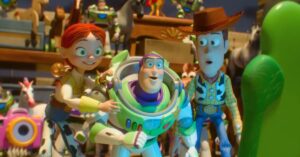
Nearly 31 years after the first Toy Story arrived in theatres, Toy Story 5 has become the franchise’s biggest theatrical entry by putting a different kind of technology at the centre of playtime.
The film, released in theatres in June and streaming on Disney+ as of September 23, does not treat tablets, online friendship and screen habits as background noise. Disney and Pixar’s official synopsis frames the sequel as “Toy meets Tech,” with Woody, Buzz, Jessie and the rest of Bonnie’s toys challenged by Lilypad, a tablet device with its own ideas about what is best for Bonnie.
A record built on a current anxiety
According to The Numbers, Toy Story 5 has grossed about $1.14 billion worldwide, ahead of Toy Story 4 at about $1.07 billion and Toy Story 3 at about $1.07 billion. Its domestic opening of $159.7 million also beat Toy Story 4’s $120.9 million start, and AP described that June launch as the year’s biggest opening weekend at the time.
That is not only nostalgia economics. The sequel arrived with a premise that matched the reality around its audience. Common Sense Media’s 2025 Zero to Eight census found that 40% of children had a tablet by age 2 and nearly one in four had a personal cellphone by age 8. Pew Research Center, in a 2025 survey of U.S. parents with children 12 and under, found that 68% said their child uses a tablet and 61% said their child uses a smartphone.
Why the tech conflict matters
Toy Story has always been about being replaced. Woody feared Buzz. Toys feared yard sales, day-care bins and college goodbyes. Toy Story 5 updates that fear for a generation where the rival is not another toy but a screen that can offer games, videos, group chats and the promise of belonging.
That makes Lilypad a more useful antagonist than a simple gadget joke. The tablet threatens the toys because it competes for Bonnie’s attention, but the film’s own creative team has avoided framing screen time as pure evil. In interviews with The National, director Andrew Stanton and producer Lindsey Collins described the film as a story about connection, isolation and the difficulty of knowing what a child needs.
Pixar made disruption part of the brand
The lesson for Disney is bigger than one sequel. Toy Story 5 did not survive by freezing childhood in 1995. It kept the emotional machinery of the franchise, including loyalty, abandonment, imagination and growing up, then forced those ideas to collide with the technology families already live with.
That matters because legacy franchises often soften modern change into a nostalgic callback. Toy Story 5 does the opposite. It uses a tablet as a plot engine and lets the toys’ fear of obsolescence become a new version of the franchise’s oldest question: what happens when a child no longer plays the same way?
The business case is familiar, but the story feels less recycled
Disney’s franchise model works best when a film does more than sell tickets. In the August Disney+ announcement, Disney said the Toy Story franchise had been streamed for more than 2 billion hours globally on Disney+ and called Toy Story the service’s most-watched film franchise. That turns Toy Story 5 into more than a box-office win; it feeds a loop of streaming, merchandise, music, consumer products and long-term IP value.
That playbook matches Disney’s wider approach to intellectual property, which Tech Help Canada has covered in its analysis of why Disney spends billions on theme parks. The movie matters inside that system because it gives an old franchise a current problem to organize around instead of relying only on character recognition.
The risk of making tech the story
There is a risk in turning screen time into a family film conflict. The subject is easy to flatten into scolding, and parents do not all manage technology the same way. A story that treats screens only as enemies can feel out of date before it reaches streaming.
Toy Story 5 appears to have avoided that trap by making technology disruptive without making it useless. The film’s central tension is not whether devices exist. It is whether digital connection can replace the messy, physical, imaginative play that made the franchise meaningful in the first place.
That is the difference between reviving a franchise and embalming it.

I can suggest related Tech Help Canada articles based on the topic you’re reading now.

Tech Help Canada Staff researches, writes, and reviews practical content for business owners and professionals. Our coverage spans business, marketing, SEO, technology, and the tools and systems people use to grow and operate online. We focus on clear, useful information backed by research, hands-on experience, and editorial review. Learn more about our team and editorial standards. Need help with something? Contact Us