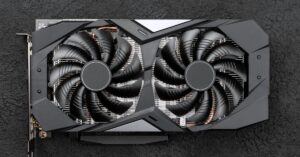
Reuters reported on October 20 that ByteDance, Alibaba and Tencent have ordered more than 3 million of Nvidia’s new RTX PRO 5500 graphics cards, carrying a collective sticker price of more than $35 billion.
Reuters attributed the order details to people familiar with the matter and said the three companies did not respond to requests for comment. Nvidia did not confirm the order totals in the report. Instead, Reuters quoted an Nvidia spokesperson criticizing a combination of U.S. export controls and Chinese limits on U.S. imports.
Purchase orders can show demand, bargaining urgency and supply positioning. They do not automatically mean Nvidia will build, ship and recognize the full amount as revenue.
Reuters also reported that Nvidia has told customers and partners it cannot guarantee the orders will be filled. One source said Nvidia told partners they might receive only 5% to 10% of the quantities requested.
Another source said Nvidia had indicated it could produce no more than 3 million RTX PRO 5500 cards globally in 2027. Total orders from Chinese customers have reportedly exceeded 6 million cards. If those figures hold, Chinese demand alone would be more than double the reported 2027 global production ceiling for the card.
Why the RTX PRO 5500 matters
The RTX PRO 5500 is not Nvidia’s most advanced data-center accelerator. Nvidia’s product page describes it as a Blackwell-based workstation GPU with 84 GB of GDDR7 memory with error-correcting code, designed for rack-mounted workstation deployment and workloads including agentic AI, generative AI, simulation and graphics.
Reuters described the card as a less powerful but export-compliant alternative that remains available to Chinese buyers. It also reported that Chinese companies are seeking to use the cards mainly for AI inference, which means running trained models to generate outputs such as chatbot responses, rather than training frontier models from scratch.
That makes the reported order wave more specific than a generic AI-chip rush. It suggests Chinese technology companies are trying to secure large-memory Nvidia hardware for inference capacity while more powerful data-center chips remain restricted, licensed or politically difficult.
Export controls limit access to data-center chips
Reuters said Nvidia’s Blackwell-based B300 data-center chip cannot be sold to Chinese buyers under U.S. export controls, while Hopper-based H200 exports are reviewed case by case and subject to licensing conditions.
The U.S. Commerce Department’s Bureau of Industry and Security said in January 2026 that it would review export license applications for Nvidia H200, AMD MI325X and similar chips to China on a case-by-case basis if certain security requirements are met. That followed earlier U.S. rules tightening access to advanced computing chips, including restrictions aimed at China’s ability to obtain high-end chips for AI and supercomputing uses.
Nvidia’s own Form 10-Q for the quarter ended July 26, 2026, shows how narrow the path has become. The company said it was able to ship uncontrolled products to China, such as gaming and workstation GPUs, but was effectively foreclosed from competing in China’s data-center compute market under the current rules and geopolitical conditions.
The headline number needs a delivery discount
At the reported price of about $11,400 per card, 3 million units would equal $34.2 billion. Reuters described the three-company total as more than 3 million cards and more than $35 billion, so the headline figure is consistent with an order count only slightly above 3 million at list price.
If the reported 5% to 10% fulfillment range were applied to a 3 million-card order base, the shipped value at that same price would be roughly $1.7 billion to $3.4 billion before any discounts, order changes, cancellations, delivery timing or accounting treatment.
A smaller public filing points to the same tension
A separate disclosure from Tansun Technology adds public-market context to the reported demand. In an October 13 filing carried by Sina Finance, the Shenzhen-listed fintech and AI-computing services company said it had signed a contract to buy 20,000 Nvidia RTX PRO 5500 Blackwell GPU products from an unnamed counterparty.
Tansun said the GPUs are mainly intended for workloads including AI inference, professional graphics rendering, engineering simulation, scientific computing and audio-video processing. The company also warned that chip supply chains, industry supply and demand, and overseas technology controls could delay batch deliveries or reduce the number of products delivered.
The filing is not proof of the ByteDance, Alibaba and Tencent order totals reported by Reuters.
Commercial deliveries are expected in the first quarter of 2027
Reuters reported that Nvidia has told customers to expect early samples in December, with commercial deliveries beginning in the first quarter of 2027.
The key questions are whether Nvidia can produce enough RTX PRO 5500 cards without taking capacity away from higher-priority platforms, whether U.S. or Chinese policy changes affect the card’s availability, and whether Chinese buyers receive enough units to make the reported order wave meaningful in deployment terms.
In its August 26 earnings release, Nvidia excluded China data-center compute revenue from its outlook for the quarter ending in October 2026. Reuters expects commercial RTX PRO 5500 deliveries to begin in the first quarter of 2027, so the reported orders do not directly contradict that earlier forecast.
For Nvidia, the upside depends on what can actually ship. For policymakers, the report shows how buyers adapt when the highest-end chips are restricted but adjacent hardware remains reachable.
Get new small business insights by email
Practical ideas and useful articles to help you make better business decisions.
Tech Help Canada Staff researches, writes, and reviews practical content for business owners and professionals. Our coverage spans business, marketing, SEO, technology, and the tools and systems people use to grow and operate online. We focus on clear, useful information backed by research, hands-on experience, and editorial review. Learn more about our team and editorial standards. Need help with something? Contact Us