Shell Canada Energy has agreed to acquire a 30 per cent non-operated interest in the Bay du Nord project from Equinor, adding a new partner to the proposed C$14 billion offshore oil development before a planned investment decision in early 2027.
Bay du Nord is planned for the Flemish Pass Basin, about 500 kilometres east of St. John’s, Newfoundland and Labrador. Equinor lists planned initial investment at around C$14 billion, initial recoverable resources of more than 400 million barrels, water depths of 600 to 1,170 metres, and first oil expected in 2031 if the project proceeds.
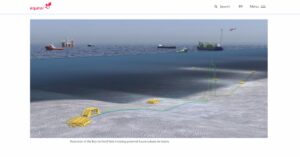
The current concept is a phased subsea development tied back to a floating production, storage and offloading vessel, known as an FPSO. Shell said gross production capacity is planned at 160,000 to 175,000 barrels of oil equivalent per day.
Equinor said the project is finalizing front-end engineering and design, with work focused on capital efficiency, execution planning and project robustness. The companies say any investment decision remains subject to market conditions, regulatory approvals and internal decision processes.
Why Shell’s entry matters
Bay du Nord briefly moved into full Equinor ownership in July after Equinor agreed to acquire bp’s interest. Bringing Shell in now spreads capital and project risk before the investment decision. Equinor will retain 70 per cent of the project and remain operator.
Canada and Newfoundland and Labrador have already moved to support it
The Shell agreement follows a March 2026 provincial agreement with Equinor and bp, which were then the Bay du Nord partners. Newfoundland and Labrador said the agreement included up to C$6.4 billion in direct revenue to the province in the first phase, more than 31 million person-hours of work over 25 years, at least 95 per cent of subsea fabrication in the province, a provincial equity option of up to 10 per cent, a C$200 million fabrication fund and a C$100 million research and development contribution.
Natural Resources Canada said in March that Bay du Nord would connect multiple subsea drill centres to a single FPSO, allowing a phased approach to unlock several fields. The federal release put full-operation capacity at 160,000 to 175,000 barrels per day.
The offshore regulator has also been reviewing the development application. The Canada–Newfoundland and Labrador Offshore Energy Regulator opened a 60-day public review period from June 22 to Aug. 20, 2026, covering the Development Plan, Benefits Plan, Safety Analysis and Socio-Economic Impacts.
Environmental approval is in place, but conditions remain
The federal environmental assessment decision was issued in April 2022. The Impact Assessment Agency of Canada said at the time that the project was not likely to cause significant adverse environmental effects when mitigation measures are taken into account.
The approval came with legally binding conditions. The decision statement includes a 2050 greenhouse-gas condition requiring the designated project to not emit greater than 0 kilotonnes of CO2 equivalent per year under the calculation method referenced in the document.
That approval does not remove the remaining commercial and regulatory hurdles. Shell’s own announcement said Bay du Nord remains pre-FID and must compete for capital within Shell’s portfolio.
Part of a larger Shell buildout in Canada
Shell’s Bay du Nord move comes during a busy period for its Canadian business. Shell said on Sept. 2 that it completed its acquisition of ARC Resources, a Canadian energy company focused in British Columbia and Alberta. On Sept. 29, Shell announced a final investment decision on LNG Canada Phase 2 in Kitimat, British Columbia.
The LNG Canada expansion is expected to double the facility’s production capacity from 14 million tonnes per annum to 28 million tonnes per annum, with commercial operations expected in the early 2030s.
Taken together, those moves give Shell more exposure to Canadian natural gas, LNG exports and now a proposed Atlantic offshore oil project. Bay du Nord is still the least certain of the three because it has not reached final investment decision.
What happens next
The next major test is the planned early-2027 investment decision. If Equinor and Shell do not proceed, the project could be delayed again or reshaped.
For Newfoundland and Labrador, the stakes include local work, royalty revenue, fabrication capacity and a new deepwater development after years of uncertainty. For Shell and Equinor, the question is whether Bay du Nord can meet internal return thresholds while competing for capital against other global projects.

I can suggest related Tech Help Canada articles based on the topic you’re reading now.

Tech Help Canada Staff researches, writes, and reviews practical content for business owners and professionals. Our coverage spans business, marketing, SEO, technology, and the tools and systems people use to grow and operate online. We focus on clear, useful information backed by research, hands-on experience, and editorial review. Learn more about our team and editorial standards. Need help with something? Contact Us