ElevenLabs is adding synthetic voice detection to ElevenAgents, its enterprise platform for conversational AI, the company announced October 9.
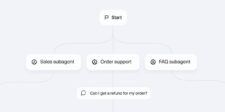
ElevenLabs framed the feature less as a consumer scam blocker and more as an operations control for companies that expect more automated callers. A business could send suspected AI callers to a bounded agent, require authentication before account work, or move human customers ahead in the queue.
The timing matters because businesses are starting to receive calls not only from scammers but also from legitimate personal agents acting on behalf of customers. That distinction is difficult over ordinary phone infrastructure, where caller ID may identify a number but not whether a person, bot, personal assistant, or cloned voice is speaking.
In practice, the feature gives contact centres an early signal. It does not prove the caller’s identity, authorization, or intent by itself. For sensitive requests such as password resets, bank-account changes, refunds, medical scheduling, or account access, synthetic-voice detection would still need to sit alongside normal authentication and escalation rules.
How ElevenLabs says it works
According to ElevenLabs, synthetic voice detection runs inside ElevenAgents on the live audio stream and returns a human-or-AI determination. It checks speech in the opening seconds of a call for signals that software can detect but a human listener may miss.
The company says the detection does not depend solely on watermarks. ElevenLabs-generated audio carries a watermark, but audio from other systems often does not, so ElevenLabs says its detector also looks for other signals in the voice audio.
Availability is limited at launch. ElevenLabs says the feature is now available to enterprise customers supported by its Forward Deployed Engineering team and said it would reach a broader group of enterprise customers later in October as a configurable option inside ElevenAgents.
The protocol angle may matter more than the detector
ElevenLabs also said it is joining the Personal Agent Protocol working group as a design partner. The protocol, announced by Sierra and Meta with partners including Genesys, Instinct, Rocket, Shopify, Stripe, and Walmart, is meant to define how personal agents identify themselves to businesses, authenticate, and act with user permission.
This suggests two different ways AI calls may be handled. Detection is useful when a caller does not declare itself. Protocols are useful when legitimate agents identify themselves and carry permission data through approved channels.
The draft Personal Agent Protocol documentation describes conversations where both sides state whether a person or AI is speaking. It also outlines session tokens, company-defined permissions, sign-in flows, and direct conversations that can bring the user into the exchange when needed. ElevenLabs says it will add support for agents that declare themselves as standards such as Personal Agent Protocol develop.
For businesses, the long-term issue is not only whether a voice is synthetic. It is whether the caller is authorized to act, what scope has been granted, and whether the business can audit the exchange afterward.
Why Canadian businesses should pay attention
The release lands amid growing warnings about AI-enabled impersonation. The Competition Bureau Canada warned in March 2024 that AI can be used to clone voices and create fake audio or video of real people, including for deceptive telemarketing. In March 2026, the bureau also warned that scammers were using voice cloning and AI-generated messages to impersonate government officials.
The Canadian Anti-Fraud Centre has also warned that it is seeing increased reporting involving deepfake technology, with fraudsters using manipulated audio and video to impersonate trusted public figures and promote fraudulent schemes.
Canadian organizations can no longer treat voice alone as a reliable trust signal. A caller who sounds familiar may not be the person they claim to be. A caller who sounds robotic may still be a legitimate automation. And a realistic synthetic caller may be acting with or without permission.
Detection still has limits
Recent research suggests live synthetic-voice detection should be treated as a risk signal rather than a final answer. A September 2026 arXiv paper measuring unwanted inbound calls to a U.S. voice honeypot found that commercial detector labels on short telephone-audio clips required careful validation. The authors reported that blinded listeners confirmed 54.4% of the detector-flagged clips reviewed in that part of the study.
The paper also noted that telephone audio, replayed recordings, and short opening windows can complicate measurement. A synthetic-voice flag can trigger stronger authentication, restrict sensitive actions, or route the call to a narrower agent without automatically assuming fraud.
Related: ElevenLabs is increasingly moving beyond voice generation into the infrastructure around conversational AI, including agents, authentication signals and synthetic-voice detection. Tech Help Canada’s ElevenLabs review looks at the broader platform and where its voice tools fit for businesses.

I can suggest related Tech Help Canada articles based on the topic you’re reading now.

Tech Help Canada Staff researches, writes, and reviews practical content for business owners and professionals. Our coverage spans business, marketing, SEO, technology, and the tools and systems people use to grow and operate online. We focus on clear, useful information backed by research, hands-on experience, and editorial review. Learn more about our team and editorial standards. Need help with something? Contact Us