Variety reported this week that Greta Gerwig, Margot Robbie and Ryan Gosling were seeking equal pay of around $25 million each for a sequel, plus larger shares of backend profits. The report said Noah Baumbach, Gerwig’s co-writer, would share in the writing fee with Gerwig, while CAA’s Bryan Lourd led negotiations for the creative team.
Skydance, Warner Bros., Mattel and the talent representatives have not publicly confirmed a “Barbie 2” package, release date, production schedule or plot.
Why the $25 million figure matters
If the reported figure applied equally to Gerwig, Robbie and Gosling, the trio’s upfront compensation would total about $75 million before backend participation, Baumbach’s writing fee, production costs or marketing. That calculation alone does not decide whether the deal is overpriced. The first film’s scale changed the negotiation.
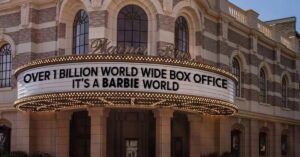
“Barbie” earned about $1.45 billion worldwide, according to The Numbers. Warner Bros. Discovery also said after the third quarter of 2023 that “Barbie” was the highest-grossing film in Warner Bros. history, generating nearly $1.5 billion in global box office.
That makes the sequel valuable, but the margin question is harder. Larger backend participation would give key talent more of the sequel’s upside while the studio still carries the production, marketing and distribution risk. The standoff is about control of future profits, not just salary.
Why Warner did not already control the sequel path
The New York Times reported in July that Gerwig and the lead actors did not have sequel obligations in their original “Barbie” contracts. Studios often try to secure that kind of language early, but Warner Bros. wanted Gerwig for the first film and proceeded without locking in a follow-up commitment.
That decision looked different before “Barbie” became a global hit. After the movie’s box office run, the leverage shifted. Warner could not simply order a sequel with the same core team. It had to negotiate again with the people most closely tied to the version audiences embraced.
The clock belongs to Mattel too
The New York Times reported that rights to a sequel would revert to Mattel if Warner Bros. did not make a deal with the principal talent by December. Variety later reported that if new contracts did not materialize, Mattel would face a reboot route rather than a direct continuation of Gerwig’s film.
That is why the reported year-end push matters. Variety said David Ellison, Skydance co-CEO Ynon Kreiz and Lourd want to make the “Barbie 2” deal happen by the end of the year. Kreiz’s role adds another layer: before joining Skydance, he served as Mattel’s chief executive.
The Skydance context makes the choice harder
Skydance completed its acquisition of Warner Bros. Discovery on Oct. 6, 2026. In its announcement, the company said it was targeting at least $6 billion in run-rate synergies within three years and planned at least 30 theatrical films annually.
That creates a tension. A company promising efficiencies also needs high-recognition movies to feed theatres, streaming platforms and licensing. “Barbie” is an obvious candidate, but obvious assets become expensive when the original creators and stars are not locked in.
The reported “Barbie 2” talks land directly in that tradeoff. Paying more may protect a proven theatrical property. Holding firm may protect margin, but it could also increase the risk that the current sequel path slips away.
What is known now
Reported: Gerwig, Robbie and Gosling sought around $25 million each, plus richer backend participation, according to Variety.
Reported: Earlier Warner talks broke down after then-Warner Bros. Discovery CEO David Zaslav balked at backend terms, according to Variety.
Reported: The sequel rights path faces a December deadline tied to Mattel, according to The New York Times.
Confirmed: Skydance completed its acquisition of Warner Bros. Discovery on Oct. 6, 2026, and is targeting at least $6 billion in run-rate synergies over three years.
Not confirmed: A final sequel deal, production start, release date, plot or official title.
The business read
The reported “Barbie” standoff shows how IP ownership and talent control can split after an unexpected hit. Mattel owns the underlying brand. Warner has the existing live-action film path. Skydance now owns Warner. But the specific version audiences turned into a $1.4 billion event still depends on agreements with Gerwig, Robbie and Gosling.
Get new small business insights by email
Practical ideas and useful articles to help you make better business decisions.
Tech Help Canada Staff researches, writes, and reviews practical content for business owners and professionals. Our coverage spans business, marketing, SEO, technology, and the tools and systems people use to grow and operate online. We focus on clear, useful information backed by research, hands-on experience, and editorial review. Learn more about our team and editorial standards. Need help with something? Contact Us