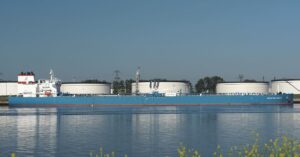
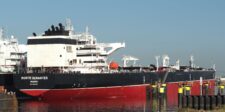
Saudi Arabia is expanding a complicated oil workaround through Oman after attacks forced the shutdown of its East-West Pipeline, turning a backup export route into a live test of how supply chains adapt when infrastructure breaks.
Reuters reported on Sept. 16 that Saudi Aramco was offering more crude to Asian refiners through ship-to-ship transfers off Sohar, Oman. The offers covered Arab Light, Arab Medium and Arab Heavy grades, according to people familiar with the matter cited by Reuters. Aramco declined to comment to the news agency.
Reuters later reported on Sept. 18 that Saudi Arabia had sold about 60 million barrels of crude from Ras Tanura for loading through ship-to-ship transfers at Sohar during September and October, citing multiple trade sources. The reported rebound would lift Aramco exports from inside the Gulf to an average of 1 million to 1.5 million barrels per day, similar to or slightly higher than August levels.
The route keeps crude moving, but adds more handoffs
The Oman transfer route does not fully replace the lost pipeline. Cargoes loaded at Saudi Gulf terminals such as Ras Tanura still need to move toward the Gulf of Oman before being handed off to ocean-going vessels near Sohar. In practice, the workaround shifts part of the risk and congestion from one asset to a chain of tankers, transfer slots, maritime services and security arrangements.
Reuters reported that other Gulf producers have also been offering crude for loading outside the Strait of Hormuz after securing vessels to shuttle supplies through the waterway, often with tracking signals switched off. That keeps cargoes moving, but it also makes the supply chain harder to monitor in real time.
Kpler said on Sept. 17 that Fujairah and Sohar handle the bulk of Middle East Gulf ship-to-ship transfers and were believed to be operating at or near capacity. The firm also said the constraint was not mainly the availability of very large crude carriers, but the transfer infrastructure needed to support the shuttle trade.
Why the pipeline mattered
Saudi Arabia’s Ministry of Energy said the East-West Pipeline in the Riyadh and Madinah regions was subjected to multiple attacks on the morning of Sept. 10 and shut as a precaution, Saudi Gazette reported. The ministry said the attacks caused injuries and that technical and emergency teams were securing the line and assessing its safety.
The Associated Press reported on Sept. 14 that the pipeline, which runs about 1,200 kilometres across Saudi Arabia to the Red Sea port of Yanbu, could be mostly out of service for three to five weeks while repairs are carried out, citing two regional officials briefed on the matter.
The line had become a major outlet because shipping through the Strait of Hormuz has been heavily constrained during the Iran war. The International Energy Agency says an average of about 20 million barrels per day of crude oil and oil products moved through Hormuz in 2025, equal to about 25% of world seaborne oil trade. When a route of that size is restricted, backup systems can become overloaded quickly.
Markets treated Oman as relief, not resolution
The Oman workaround gave oil markets some near-term relief. Reuters reported that oil prices fell on Sept. 16 after news that Saudi Arabia was offering more crude cargoes through Oman eased some supply concerns. Reuters also reported that global oil futures fell more than $1 a barrel on Sept. 18 after reports of the larger September and October sales through Sohar.
That relief followed a different market reaction earlier in the week. AP reported on Sept. 14 that oil prices had gained more than 2% amid growing worries about global petroleum supplies after the pipeline attack and new pressure on Red Sea routes.
The swing shows that markets are not only pricing barrels in the ground. They are pricing route capacity, transfer capacity, vessel risk and the speed at which damaged infrastructure can return.
The supply chain signal
For operators beyond energy, Saudi Arabia’s rerouting shows resilience is rarely binary. The product may still move after a failure, but every workaround changes the operating model. More handoffs mean more coordination. Longer or riskier routes mean higher freight, insurance, scheduling and visibility burdens. A backup route that works at modest volume can become the bottleneck once it has to carry crisis volume.
The details matter. Nameplate pipeline capacity, port geography and tanker counts do not equal usable throughput. The real capacity sits in transfer infrastructure, berth availability, crew and pilot scheduling, insurance terms, naval support, customs and documentation, and customer willingness to accept altered loading terms.
This is the operating reality behind rerouting. A supply chain can remain technically open while becoming slower, less transparent and more expensive to run.
What to watch next
The next test is duration. If East-West Pipeline repairs move quickly and partial flow resumes, Oman transfers may remain a bridge. If the outage persists, the workaround has to scale across more cargoes, more customers and more maritime capacity.
Security risk also remains active. On Sept. 19, AP reported that the Saudi-led coalition said Houthi attempts to attack civilian infrastructure in Yanbu and other locations were thwarted. The Houthis claimed, without providing evidence, that they had targeted sensitive sites and Aramco facilities. AP reported that Aramco did not respond to a request for comment.
The crude is still moving. The path is becoming harder to manage, measure and price.
Get new small business insights by email
Practical ideas and useful articles to help you make better business decisions.
Tech Help Canada Staff researches, writes, and reviews practical content for business owners and professionals. Our coverage spans business, marketing, SEO, technology, and the tools and systems people use to grow and operate online. We focus on clear, useful information backed by research, hands-on experience, and editorial review. Learn more about our team and editorial standards. Need help with something? Contact Us