
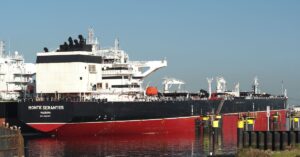
VLCC rates from the Gulf of Oman to China have jumped to about Worldscale 450, giving energy buyers and supply-chain teams a clearer warning than oil prices alone.
Oil-market risk is no longer showing up only in the price of crude. It is showing up in the cost of moving it, after the latest U.S.-Iran shipping attacks pushed oil-tanker freight rates to record highs around the Strait of Hormuz and Gulf of Oman.
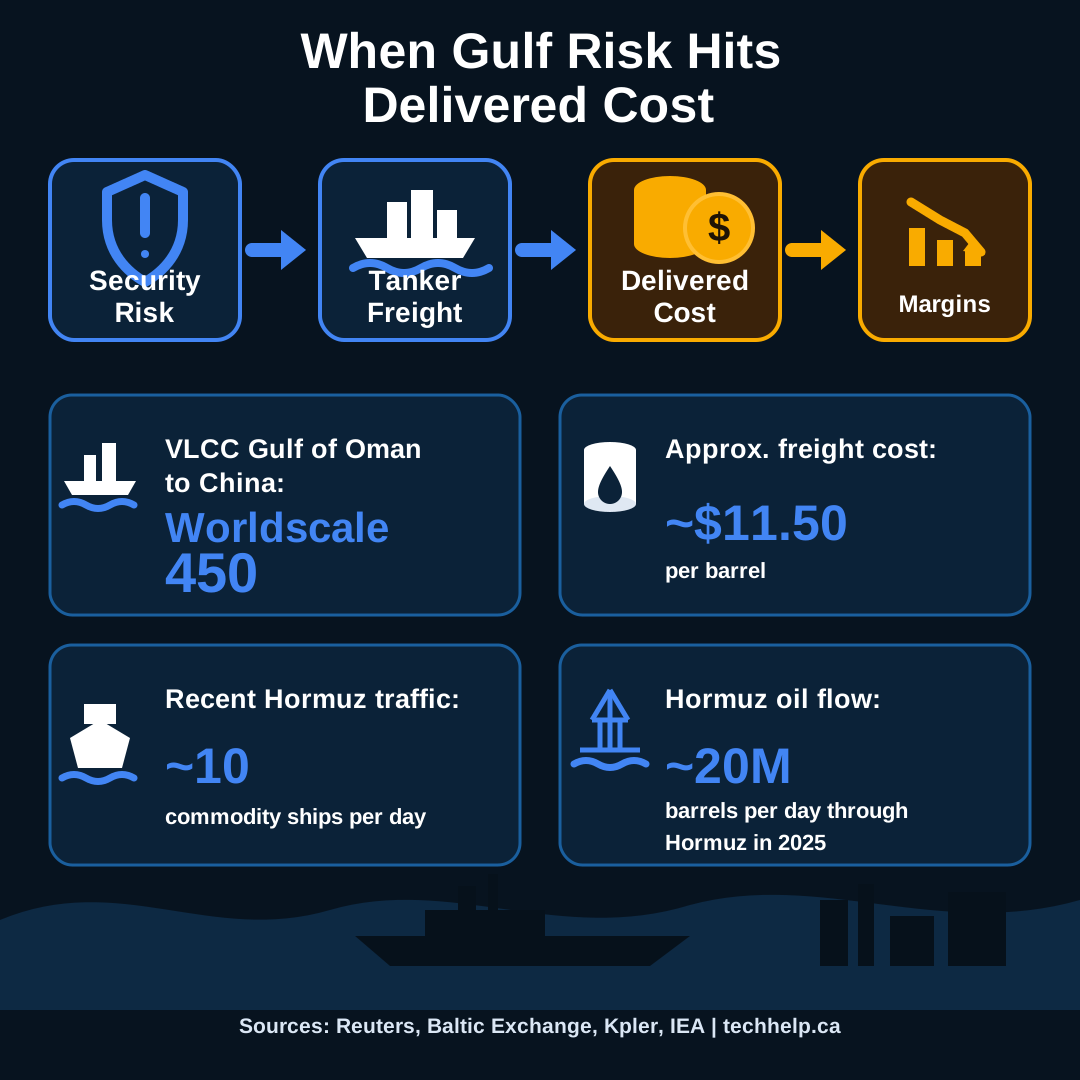
Reuters reported on September 11 that the rate for very large crude carriers, or VLCCs, loading oil in the Gulf of Oman for shipment to China reached around Worldscale 450. That works out to roughly $11.50 per barrel, according to Baltic Exchange data cited by Reuters, and marks the highest level since that rate was launched earlier this year.
Crude prices can rise because traders fear supply disruption. Freight rates rise when the physical system is already harder, riskier or more expensive to use. For companies that buy fuel, ship goods, use petroleum-linked inputs or depend on suppliers with heavy transport costs, the freight market is now one of the clearest signs that Gulf risk is moving into margins.
Freight is the price signal companies can use
Traffic through Hormuz tells you how strained the corridor is. Freight rates tell you what the strain costs. A vessel count can show that fewer ships are moving through the chokepoint, but it does not tell a buyer how much more a cargo costs to secure, insure or deliver. Freight turns risk into a number.
Reuters, in a report carried by gCaptain, said an average of 10 commodity ships transited the Strait of Hormuz per day over a recent 10-day period, the lowest since May, based on Kpler data. Only two vessels passed through on one Saturday, while six passed through the following Sunday.
Our earlier coverage of Hormuz shipping disruption looked at the traffic collapse, insurance pressure and fuel-cost risk. This week’s tanker-rate spike adds a harder pricing signal: even when some vessels keep moving, the market is charging far more for the risk of moving them.
That cost can reach buyers before the final retail price changes. It can appear in supplier quotes, fuel surcharges, insurance pass-throughs, shorter quote windows, inventory carrying costs and procurement decisions that suddenly need executive approval.
Hormuz still has limited workarounds
The Strait of Hormuz remains one of the world’s most critical energy chokepoints.
The International Energy Agency says an average of about 20 million barrels per day of crude oil and oil products moved through the strait in 2025, equal to roughly 25% of global seaborne oil trade. The IEA also says available pipeline capacity that could redirect crude away from Hormuz is only about 3.5 million to 5.5 million barrels per day.
That imbalance explains why freight reacts so violently. When a route carrying that much energy becomes more dangerous, the market cannot simply replace it. Some ships wait. Some reroute. Some avoid the region. Some require higher compensation. Insurers raise the cost of coverage. Charterers compete for tankers willing to operate near the Gulf.
The IEA also warns that a closure of the strait would affect gas trade because LNG exports from Qatar and the United Arab Emirates represent almost one-fifth of global LNG exports. Even without a full closure, reduced confidence in the corridor can ripple through oil, gas, chemicals, fertilizer, plastics, transportation and manufacturing.
Oil prices are rising at the same time
The freight spike is landing on top of higher crude prices. A separate Reuters report carried by Kitco on September 10 said oil prices jumped 5% as tanker attacks intensified. Brent crude was trading at $106.60 a barrel by late morning Eastern time, while West Texas Intermediate rose to $101.21, topping $100 for the first time since May.
That creates a compounding problem. A business may already model the effect of crude above $100. Fewer companies separately model what happens when tanker freight, insurance and routing risk rise at the same time.
For refiners, higher shipping costs can squeeze margins, alter crude slate decisions or push costs downstream. For airlines, trucking fleets and distributors, the pressure can show up through fuel prices and surcharges. For manufacturers, food companies, retailers and construction suppliers, it can arrive through packaging, resins, chemicals, refrigerated transport, supplier terms and delivery commitments.
The danger is not always one dramatic invoice. It is a series of smaller cost increases that arrive faster than pricing teams can respond.
The tanker market was already tight
The latest jump did not happen in a calm market. Lloyd’s List described the 2026 tanker market as the second-best in history, exceeded only by the 2000s supercycle. It said VLCC rates had been holding above $100,000 per day and that the current boom was vessel-supply driven, caused by geopolitical disruptions rather than a simple surge in demand.
That distinction matters for business planning. A demand-driven boom can signal stronger consumption. A disruption-driven freight boom signals inefficiency. The same cargo becomes more expensive to move because ships, routes, crews, insurance and security are harder to line up.
Reuters also reported that higher risk in and around the Middle East Gulf is thinning available tankers in the region. That can push costs beyond the Gulf itself, because tankers tied up, delayed or repriced in one route are not freely available elsewhere.
Security risk is now commercial risk
The security backdrop has worsened quickly. The Associated Press reported that the U.S. military said it destroyed five Iranian oil tankers on Tuesday after attacks on a U.S. warship by Iran’s Revolutionary Guard. AP also reported that Iran launched missiles toward U.S. targets in Jordan after the strikes, according to Iranian state-run media.
Reuters reported separately that Iran said it had attacked 10 ships near the Strait of Hormuz after the U.S. hit five Iranian tankers. gCaptain’s Reuters report cited a maritime risk assessment saying commercial tankers are now being pulled into reciprocal economic pressure.
For businesses, that changes how to read the market. A diplomatic headline, short-term traffic rebound or temporary easing in crude prices may not be enough to normalize freight. Shipowners and insurers will price the route based on recent incidents, vessel ownership, flag exposure, escort requirements, crew risk and the chance of further escalation. Freight can stay elevated even if traffic partially recovers.
What businesses should watch next
Companies do not need to trade oil to be exposed to this. If energy, packaging, ocean freight, chemicals, plastics, refrigeration, long-distance distribution or imported inputs affect your cost base, tanker freight belongs on the risk dashboard.
Start by separating crude-price exposure from delivered-cost exposure. A company may track Brent or WTI closely but miss the added cost of freight, insurance, fuel surcharges and route delays. Ask suppliers whether quotes are based on cargo price only or landed cost, and check whether freight escalation clauses can be passed through without warning.
Procurement and finance teams should stress-test 30, 60 and 90 days of elevated freight. The useful question is not only whether oil stays above $100. It is whether oil stays high while tanker freight, insurance and shipping delays stay high too.
Sales teams should prepare customer communication before surcharges or price increases become urgent. If shipping, delivery or fuel costs are likely to affect customer pricing, revisit the company’s shipping pricing strategy before the next quote cycle forces the conversation.
The metric to watch now is not only the oil price. Watch tanker routes, Baltic assessments, insurance premiums, vessel availability and supplier quote terms. Those signals may show cost pressure before it reaches your own invoices.
Record tanker freight is not a shipping-industry footnote. It is the market putting a price on risk. For energy-exposed companies, that price can move from the Gulf of Oman into delivered costs, working capital and margins faster than a headline suggests.
Frequently asked questions
Why did oil-tanker freight rates hit record highs?
Reuters reported that oil-tanker freight rates rose after the latest wave of U.S.-Iran shipping attacks around the Gulf of Oman and Strait of Hormuz. Higher security risk, thinner vessel availability, insurance pressure and uncertainty pushed VLCC rates on the Gulf of Oman-to-China route to about Worldscale 450.
What does Worldscale 450 mean for oil shipping costs?
Worldscale is a tanker freight pricing system used in the oil market. Reuters reported that Worldscale 450 on the Gulf of Oman-to-China VLCC route was equal to roughly $11.50 per barrel, based on Baltic Exchange data.
Why does the Strait of Hormuz affect business costs?
The International Energy Agency says about 20 million barrels per day of crude oil and oil products moved through Hormuz in 2025, equal to roughly 25% of global seaborne oil trade. When that route becomes risky or expensive, the pressure can move into fuel prices, supplier quotes, freight surcharges, packaging, chemicals and other oil-linked costs.
How can higher tanker rates affect companies that do not buy crude oil?
Many companies are indirectly exposed through fuel, packaging, plastics, chemicals, refrigerated transport, ocean freight and supplier delivery costs. Even if a business does not buy crude directly, higher tanker freight and insurance costs can feed into the prices it pays for goods and services.
What should businesses monitor besides oil prices?
Businesses should monitor tanker freight rates, Baltic Exchange assessments, insurance premiums, vessel availability, supplier quote terms, fuel surcharges and lead times. Those signals can show delivered-cost pressure before it fully appears in crude benchmarks or customer invoices.

I can suggest related Tech Help Canada articles based on the topic you’re reading now.

Tech Help Canada Staff researches, writes, and reviews practical content for business owners and professionals. Our coverage spans business, marketing, SEO, technology, and the tools and systems people use to grow and operate online. We focus on clear, useful information backed by research, hands-on experience, and editorial review. Learn more about our team and editorial standards. Need help with something? Contact Us