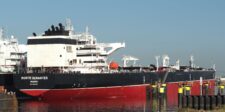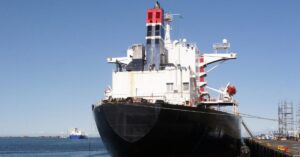
Ship-to-ship crude transfers in the Gulf of Oman have reached their limits amid a surge of rerouted Saudi exports, Reuters reported, citing trade sources and analysts.
Saudi Arabia leaned more heavily on Gulf-side exports after September disruption to the East-West Pipeline and the Yanbu Red Sea route. Reuters, citing Kpler data, reported that Saudi crude exports via Hormuz were on track to rebound to 3.6 million barrels per day in September, up from about 900,000 barrels per day in August.
Saudi Aramco also sold more than 60 million barrels of crude for ship-to-ship transfer off Sohar, Oman, for September and October cargoes, according to Reuters. That Saudi increase landed on top of transfer demand from other Gulf producers, including Iraq and the United Arab Emirates.
The result is a physical services bottleneck, not only a tanker count problem. Reuters reported queues for tugboats, labour and equipment. Vortexa analyst Emma Li told Reuters that a ship-to-ship operation was taking nearly 10 days, up from five to seven days previously.
More oil is moving, but each barrel uses more ship time
Kpler data as of Sept. 29 showed at least 16.5 million barrels per day of crude left the Middle East Gulf region excluding Iran between Sept. 1 and Sept. 28, matching Kpler’s pre-war baseline excluding Iran. The recovery, however, is moving through a different system.
In September, Kpler said 60% of the region’s crude physically crossed Hormuz, 23% loaded outside the strait on the Gulf of Oman coast, primarily Fujairah, and 17% left through the Red Sea. In August, more than 70% of crude that crossed Hormuz changed tankers offshore in the Gulf of Oman.
The chain is vessel-intensive. Crude loads inside the Gulf, a shuttle tanker crosses Hormuz, the cargo transfers off Fujairah or Sohar, and another tanker carries it onward to Asia or Europe. Kpler said at least 63 very large crude carriers now work the shuttle trade, with a core fleet of 35 vessels completing repeated round trips of about 16 days.
Capacity strain is showing in freight rates
Reuters reported that Kpler analyst Panagiotis Krontiras estimated the nearly 3 million-barrel-per-day increase in Saudi exports from Hormuz would require 36 to 40 more very large crude carriers. Each VLCC can carry about 2 million barrels of oil.
Anoop Singh, head of global shipping research at Oil Brokerage, told Reuters that the number of additional VLCCs required to move the same amount of oil compared with before the war had risen to 40 in September, from 24 in August.
The freight market has reacted accordingly. Reuters, citing LSEG data, reported that the daily time-charter rate for a VLCC delivering oil from the Middle East to China hit a record $1.27 million on Sept. 21. Seatrade Maritime separately reported that the Gulf of Oman-to-China TD34 index had a round-trip time-charter equivalent rate of almost $871,000 a day, citing Baltic Exchange data for Sept. 18.
The chokepoint is wider than the strait
The Strait of Hormuz remains one of the world’s most sensitive energy routes. The U.S. Energy Information Administration said oil flow through the strait averaged 20 million barrels per day in 2024, equal to about 20% of global petroleum liquids consumption. The EIA also said flows through Hormuz in 2024 and the first quarter of 2025 represented more than one-quarter of total global seaborne oil trade.
The current congestion shows that chokepoint risk is not limited to whether ships can enter or leave a strait. Transfer hubs, tug availability, labour, hoses, fenders, insurance appetite and VLCC owner willingness all influence effective capacity. If one layer tightens, barrels may still move, but with longer voyage times and higher freight costs.
Higher tanker costs and longer oil transit times can feed into fuel, freight and procurement assumptions, even for companies that do not buy crude directly.
What changes the picture next
Kpler’s Sept. 29 assessment said Yanbu berths were full again by Sept. 27 after the pipeline restart, but full Petroline repairs could take four to six weeks. Continued recovery at Yanbu could ease some pressure on Gulf of Oman transfers. Renewed disruption, or more Gulf-side loading, could keep tanker demand elevated.
Three market signals now matter most: whether Gulf of Oman ship-to-ship volumes keep rising, whether exporters move more transfers to West Coast India or Malaysia, and whether VLCC rates ease from record levels. Kpler’s Sept. 21 analysis said longer-distance transfer hubs would reduce vessel productivity and, in a Malaysia case, could require up to 58 VLCCs compared with 25 in a Gulf-based case.

I can suggest related Tech Help Canada articles based on the topic you’re reading now.

Tech Help Canada Staff researches, writes, and reviews practical content for business owners and professionals. Our coverage spans business, marketing, SEO, technology, and the tools and systems people use to grow and operate online. We focus on clear, useful information backed by research, hands-on experience, and editorial review. Learn more about our team and editorial standards. Need help with something? Contact Us