ElevenLabs is preparing a large India expansion, with co-founder and CEO Mati Staniszewski telling Reuters that the voice AI company plans to invest “hundreds of millions of dollars” in the country.
Reuters, in a report carried by Moneycontrol, said the investment would support local hiring, model development and work on Indian languages. Staniszewski also said ElevenLabs is open to acquisitions in India, but did not name any targets.
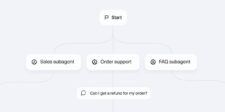
The strategy points beyond AI narration or simple text-to-speech. ElevenLabs is positioning India as a market for agents that can listen, respond and take action inside business workflows, including tasks such as refunds, insurance renewals and appointment booking.
Fourteen Indian languages now, all 22 official languages targeted
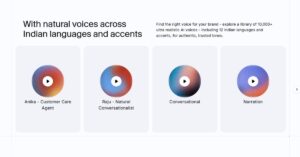
Business Standard reported that ElevenLabs currently provides speech-to-text and text-to-speech services in 14 Indian languages and plans to cover all 22 of India’s official languages over the next year.
The same report said ElevenLabs works with more than 250 businesses and enterprises across India, including Razorpay, TVS Motor and Urban Company. Indian businesses recorded 100 million ElevenAgents conversations over the past year, with more than 70% in Hindi, Kannada, Tamil and Telugu, according to Business Standard.
Karnataka gives the push a public-sector test
The company also formalized its first partnership with an Indian state government through a memorandum of understanding with the Karnataka Innovation and Technology Society, according to Business Standard and ANI reporting.
ANI reported that the MoU focuses on three areas: a voice AI safety framework, AI-based voice restoration for people who have lost their ability to speak, and possible voice interfaces for government services. The Karnataka work includes Kannada pilots for areas such as skilling, citizen services and grievance redressal.
The caveat is important. ANI reported that the MoU is voluntary and non-legally binding, with no predetermined effect on future procurement or tender decisions. Specific pilots still need mutually agreed arrangements, approvals and compliance with applicable laws.
The business signal is bigger than synthetic speech
ElevenLabs’ official September valuation update said the company closed a $300 million employee tender offer valuing it at $22 billion. The company said enterprise customers now account for 55% of revenue and that ElevenAgents handles more than 15 million conversations every week globally.
The India plan fits that enterprise-agent push. For companies evaluating voice AI, the useful test is not whether a generated voice sounds polished in a demo. It is whether the system can understand accents, handle background noise, follow consent and safety rules, complete the requested task and hand off to a person when the issue is sensitive or complex.
Related: Tech Help Canada’s ElevenLabs review covers voice quality, cloning, dubbing, ElevenAgents, pricing, and lessons from years of using the platform.
Data residency and safety will matter
ElevenLabs already launched India data residency for Enterprise customers in July 2025, saying core models can run on India-based infrastructure so voice data and inference stay within the country.
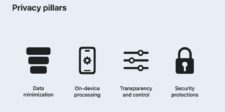
That detail may become more important as voice agents move into finance, healthcare, government services and customer support. The Karnataka MoU’s focus on deepfake detection, audio provenance, watermarking, consent for voice cloning and protection against voice fraud shows the risk side of the same opportunity.
What to watch next
Actual spending: ElevenLabs has described the investment in broad terms, but has not published a final dollar figure, timetable or allocation.
Local hiring: Hiring speed will show how much of the plan turns into operational capacity in India.
Acquisitions: Reuters reported that the company is open to India acquisitions, but no target has been named.
Language performance: Coverage across 22 official languages will matter less than reliability in real calls, mixed-language speech and noisy environments.
Karnataka pilots: Public-sector use cases will need clear consent, fraud-prevention rules, human escalation and accessibility outcomes.
Get new small business insights by email
Practical ideas and useful articles to help you make better business decisions.
Tech Help Canada Staff researches, writes, and reviews practical content for business owners and professionals. Our coverage spans business, marketing, SEO, technology, and the tools and systems people use to grow and operate online. We focus on clear, useful information backed by research, hands-on experience, and editorial review. Learn more about our team and editorial standards. Need help with something? Contact Us