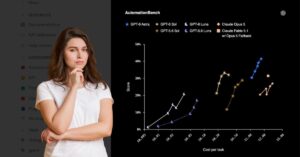
OpenAI added GPT-6 Sol and GPT-6 Luna to its GPT-6 family on Sept. 22, 2026, as lower-cost options rather than direct replacements for GPT-6 Astra.
Sol is aimed at complex coding and agentic workflows. Luna is the efficient option for focused, high-volume tasks. OpenAI said both bring some of Astra’s advances to faster, more affordable models.
In the API, the model names are gpt-6-sol and gpt-6-luna. OpenAI said both models started rolling out to ChatGPT Work and Codex for Plus, Pro, Business, Enterprise, and Edu users. It also said Free and Go users could access GPT-6 Luna in the desktop app.
OpenAI’s Help Center currently frames GPT-6.1 Sol, GPT-6 Sol, and GPT-6 Luna as ChatGPT Work and Codex models, not standard Chat models. That distinction matters because availability in ChatGPT-branded products is now split across Chat, Work, Codex, desktop access, plan level, and admin settings.
Pricing is the main change
OpenAI’s launch post listed GPT-6 Sol at $2 per million input tokens and $10 per million output tokens. That compares with $4 input and $20 output for GPT-5.6 Sol promotional pricing.
GPT-6 Luna was listed at $0.10 per million input tokens and $0.50 per million output tokens, compared with $0.20 input and $1.20 output for GPT-5.6 Luna. OpenAI summarized the shift as 50% cheaper API pricing for Sol and Luna, though its own table shows Luna’s output-token price falling by more than half.
For agent-style workflows, cached input may be the quieter cost lever. GPT-6 Luna’s API docs list cached input at $0.01 per million tokens. GPT-6.1 Sol, introduced on Sept. 29, lists cached input at $0.10 per million tokens, which OpenAI says is 50% less than GPT-6 Sol’s cached-input price.
Model
Standard input
Cached input
Output
How OpenAI positions it
GPT-6.1 Sol
$2.00 / 1M tokens
$0.10 / 1M tokens
$10.00 / 1M tokens
A newer Sol model for capable agentic coding, computer use, and professional work
GPT-6 Sol
$2.00 / 1M tokens
$0.20 / 1M tokens
$10.00 / 1M tokens
A model for complex coding and agentic workflows
GPT-6 Luna
$0.10 / 1M tokens
$0.01 / 1M tokens
$0.50 / 1M tokens
An efficient model for focused, high-volume tasks
Those figures are standard token prices reported in OpenAI’s public materials. OpenAI also lists additional charges or multipliers for features such as fast modes, long context, regional processing, and certain ChatGPT Work or Codex activity. Total spend depends on how often workflows run, how much context they carry, how many tool calls they make, and how many retries are needed.
Why lower-cost GPT-6 models matter
The new lineup suggests OpenAI is trying to make agentic AI cheaper to run repeatedly, not just stronger at the top end. The company’s model-selection guidance now presents Astra as the premium option, GPT-6.1 Sol as the middle choice for complex work where cost and time still matter, and Luna as the efficient option for scoped tasks, triage, and frequent automations.
That is a meaningful shift for software teams, agencies, and businesses experimenting with AI operations. Many useful workflows do not need the most expensive model on every step. A coding agent may need a stronger model for architecture and review, while a lower-cost model may be enough for classification, edits, routing, summaries, or repeated checks.
OpenAI’s own docs push in that direction. The model-selection page recommends testing different models and reasoning settings, then keeping the lightest setting that meets the quality bar. In practice, model choice is becoming a cost-control decision as much as a quality decision.
Benchmark claims should be read carefully
OpenAI reported improvements for Sol and Luna across professional work, factuality, coding, computer use, and alignment compared with their GPT-5.6 counterparts. It also published several benchmark comparisons against competitor models.
Those numbers are useful but not neutral. OpenAI notes that its evaluations were performed in a research environment or through the API and may not match production ChatGPT behavior. It also notes that competitor model evaluations were taken from publicly available reports, and that its factuality tests use de-identified conversations where users had already flagged errors from earlier models. Those prompts are not representative of ordinary usage, according to OpenAI.
GPT-6.1 Sol changes the Sol tier quickly
OpenAI introduced GPT-6.1 Sol on Sept. 29, only one week after the Sol and Luna launch. The company described it as an upgrade to GPT-6 Sol that nearly matches GPT-6 Astra’s intelligence on agentic coding, computer use, and professional work at one-fifth of Astra’s standard input and output token prices.
The upgrade keeps GPT-6 Sol’s standard input and output token prices while halving its cached-input rate. OpenAI said GPT-6.1 Sol is available to Plus, Pro, Business, Enterprise, and Edu users in ChatGPT Work and Codex, and to developers through the API as gpt-6.1-sol. It is not yet available in standard Chat, according to OpenAI.
As of Oct. 1, OpenAI’s GPT-6 Sol API documentation points developers toward GPT-6.1 Sol as the newer Sol model. That makes the Sept. 22 launch less of a finished lineup and more of a fast-moving pricing and product strategy around model tiers.
Get new small business insights by email
Practical ideas and useful articles to help you make better business decisions.
Tech Help Canada Staff researches, writes, and reviews practical content for business owners and professionals. Our coverage spans business, marketing, SEO, technology, and the tools and systems people use to grow and operate online. We focus on clear, useful information backed by research, hands-on experience, and editorial review. Learn more about our team and editorial standards. Need help with something? Contact Us