Inflation is still the top concern for many small business owners, but a lot of them aren’t pulling back on marketing. Rather, many plan to continue marketing, but more strategically.
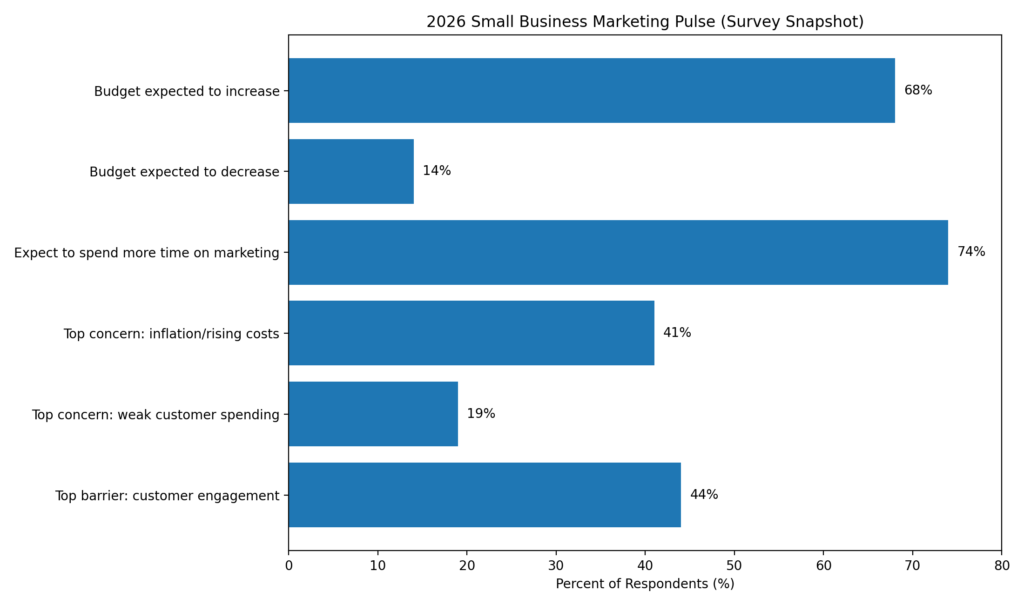
Constant Contact’s latest Small Business Now data suggests many owners expect to put more money and time into marketing in 2026, even though a smaller group expects budgets to shrink.
The data is based on a survey of 1,500+ small business owners across the U.S., Canada, the U.K., Australia, and New Zealand. It’s worth seeing it as a snapshot of sentiment and intent, not a guarantee of what every business will do, or how big those budget increases will be.
2026 Small Business Marketing Trends (Survey Snapshot)
Category
What SMB Owners Reported
Budget expectations
68% expect marketing budgets to increase; 14% expect budgets to decrease
44% say customer engagement is the biggest expected barrier
What they’re prioritizing
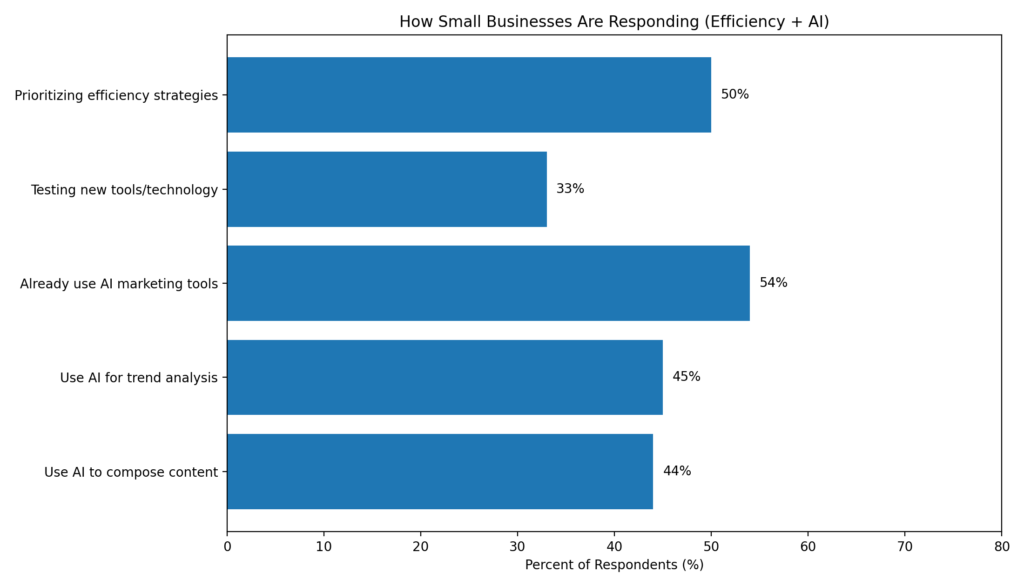
50% are prioritizing efficiency strategies; 33% are testing new tools/tech
AI usage
54% already use AI marketing tools; 45% use AI for trend analysis; 44% use it to compose content
Channel expectations
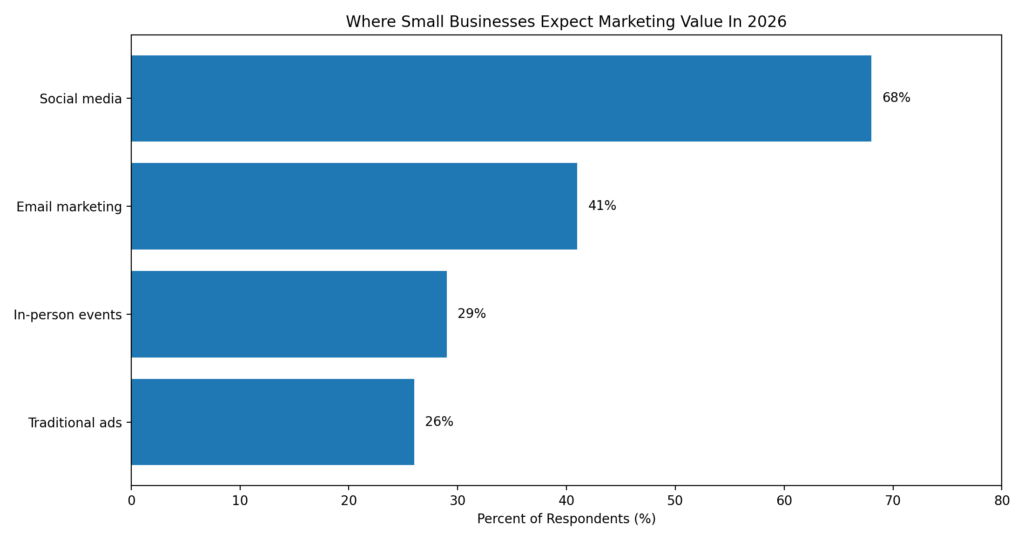
Social 68%, Email 41%, Traditional ads 26%, In-person events 29%
Marketing effort is trending up, but engagement is still the biggest friction point.
What These Numbers Might Mean
Marketing Spend Going Up Doesn’t Mean Pressure Went Away
When inflation remains the top concern, budgets up can signal something more practical than optimism. Many owners may see marketing as one of the few levers they can control when costs rise, and demand feels uncertain.
Also, an increase can look different across businesses. For some, it might mean adding a new paid channel. For others, it might mean investing in tools, content, or help to get consistent output without burning out.
Engagement is the Constraint
The most interesting number in the set might be the 44% that name customer engagement as the biggest barrier.
That points to a common reality in crowded markets. Posting more isn’t the same as being noticed. Even successful businesses can feel stuck when attention is fragmented, and customers respond more slowly.
Efficiency is the Counterweight
When marketing time increases, the natural response is to look for ways to deliver more impact per hour. That’s consistent with the report’s emphasis on efficiency and tooling.
Why Social and Email Lead the Mix
When asked which channels will drive the most business in 2026, respondents leaned heavily toward social and email over traditional advertising and in-person events.
One reason these two often rank at the top in small business surveys is that they feel more controllable than many alternatives. Social can create reach quickly, but it’s sensitive to platform shifts and competition. Email can compound over time, but only if the list stays engaged.
Owners seem to expect the best odds from channels they can run consistently without needing big budgets.
Social and email lead expected marketing value in 2026, while events and traditional ads trail.
AI is Showing Up as an Efficiency Layer
More than half of respondents report using AI marketing tools, with common applications including trend analysis and content drafting.
That analyst-and-author pattern suggests AI isn’t being used only to write faster. It’s also being used to reduce guesswork, so effort isn’t wasted on the wrong direction. In a separate publication, Constant Contact adds that another 27% plan to start using AI this year. In the same report, image creation shows up as a common use case alongside trend analysis and content drafting.
There’s an implied tradeoff here, too. If AI makes it easier for everyone to publish more, then more content becomes less of a differentiator. That pushes the advantage toward clarity, relevance, and real customer understanding.
Efficiency and doing more without burning out are key in 2026.
The Main Takeaway
If you strip it down, the report is essentially saying that many small businesses aren’t treating marketing as a nice-to-have line item anymore. They’re treating it as a core operating lever and are looking for efficiency and tools to make it sustainable.
Sources
Constant Contact press release (Feb 11, 2026) Constant Contact blog post (Q1 2026 Inflation Report)
Get new small business insights by email
Practical ideas and useful articles to help you make better business decisions.
Tech Help Canada Staff researches, writes, and reviews practical content for business owners and professionals. Our coverage spans business, marketing, SEO, technology, and the tools and systems people use to grow and operate online. We focus on clear, useful information backed by research, hands-on experience, and editorial review. Learn more about our team and editorial standards. Need help with something? Contact Us












Thanks for putting this together.