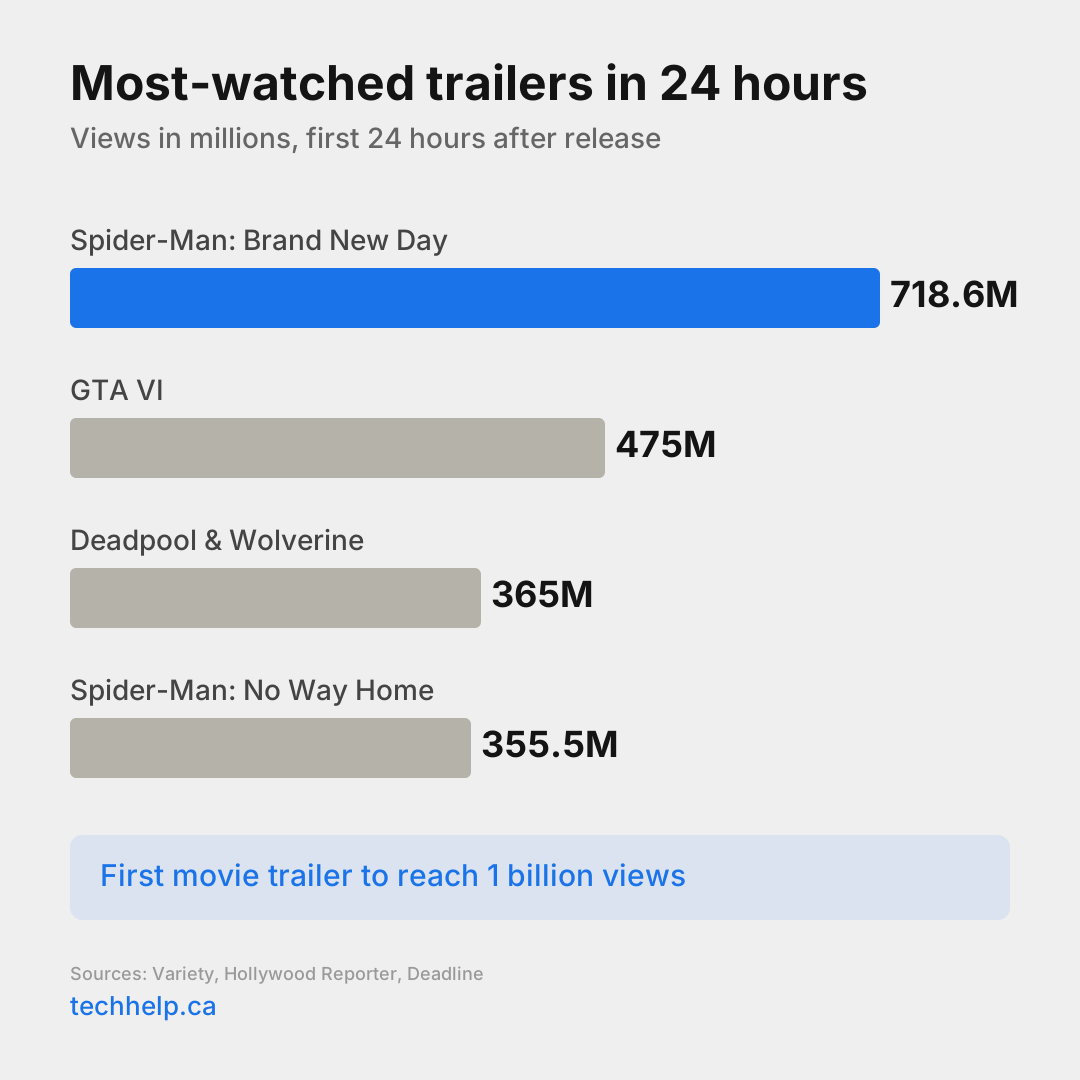
Spider-Man: Brand New Day is now in theaters, and the numbers around its launch already tell a story. Vulture cited Variety tracking that put the film’s domestic opening weekend as high as $260 million to $280 million. The first trailer drew 718.6 million views in its first 24 hours, according to reporting from TheWrap and India Today, then crossed one billion views within four days.
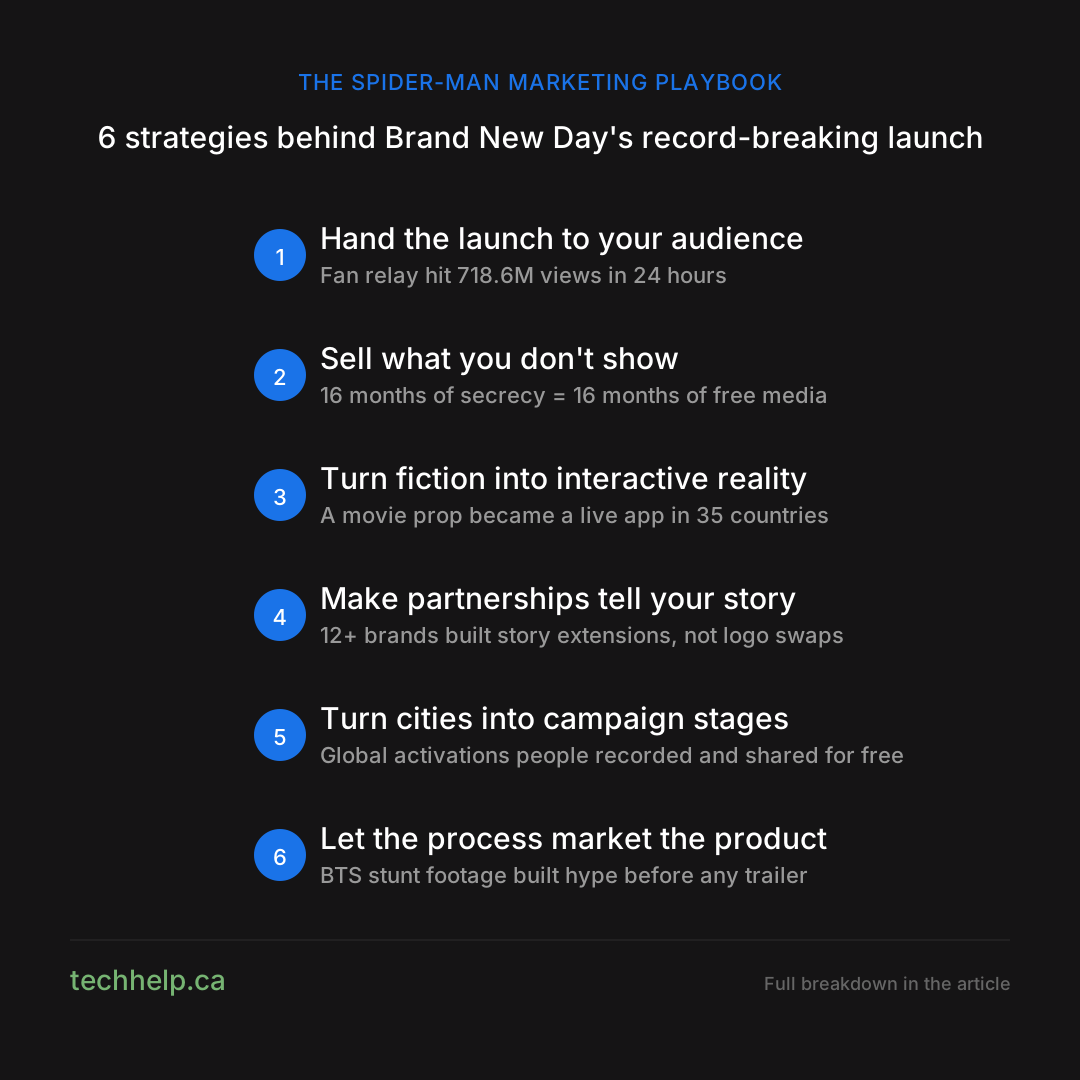
But the more useful story isn’t the box office forecast. It’s the marketing machine that built this much attention before the film reached most audiences. Sony and Marvel didn’t just promote a film. They gave fans a role, turned secrecy into fuel, built interactive campaign pieces, made partnerships feel like part of the story, and turned public spectacle into shareable media.
Marketers should study that part. You don’t need a Marvel budget to learn from the thinking behind it.
They gave fans a job, not just a trailer
Most movie trailers follow a familiar pattern. A studio drops the trailer on YouTube, pushes it across social platforms, buys media around it, and waits for views to pile up.
Sony and Marvel handled the Brand New Day trailer differently. Before the full trailer arrived, fans around the world revealed short pieces of it in sequence. Marvel said the global reveal happened over 24 hours before Tom Holland unveiled the full trailer from the Empire State Building.
That changed the launch from a studio announcement into a fan relay. People weren’t only watching the campaign. They were tracking it, sharing it, reacting to each reveal, and waiting for the next piece.
The move also created a controlled kind of impatience. Some fans wanted the full trailer immediately, which is exactly the tension a launch needs. The campaign gave the audience enough to stay alert without satisfying the demand too early.
The result was attention at record scale. The trailer reached 718.6 million views in 24 hours, passed the previous Deadpool & Wolverine trailer record within eight hours, and later became the first movie trailer reported to cross one billion views.
The marketing lesson is simple: give your best audience something to do before the public launch. Let loyal customers preview a product. Give community members the first screenshots. Let beta users announce a feature. When people feel involved in the reveal, they share with more energy than they do when they’re handed a polished announcement.
It’s the same reason user-generated content can outperform brand-only promotion. Participation turns attention into ownership.
They made one unknown role carry months of conversation
Sadie Sink’s casting gave the campaign another engine: mystery.
Marvel confirmed she was in the film, but the studio kept her role out of the official marketing for months. That silence created room for fan theories around Jean Grey, Gwen Stacy, Mayday Parker, Rachel Summers, and other characters. Through release week, entertainment outlets were still writing about the secrecy and the speculation around her character.
This worked because the mystery wasn’t random. Sink’s casting was high-profile, the Marvel universe gives fans plenty of theory fuel, and the trailers showed just enough to keep people searching for clues.
That’s different from being vague. Weak mystery gives people nothing to work with. Strong mystery gives them enough evidence to argue about.
For marketers, the lesson is to hold back one meaningful piece of the launch instead of revealing everything at once. A software company can tease the problem a new feature solves before naming the feature. A restaurant can preview the mood of a seasonal menu before showing every dish. A creator can reveal the theme of a new project before showing the finished asset.
Curiosity works best when the audience can participate in the guessing. It overlaps with fear of missing out, but the stronger driver is involvement. People keep paying attention because they want to be right before everyone else.
They turned a story prop into an interactive campaign
One of the smartest moves in the campaign was the Spidey Tracker.
In the film’s world, Ned Leeds uses a Samsung device to track Spider-Man sightings. Sony, Samsung, and Google Maps Platform turned that idea into an actual online experience at SpideyTracker.com.
Google Maps Platform said the custom experience spans 35 countries and includes Spider-Man sightings, campaign events, Easter eggs, fan submissions, and exclusive movie content. It also includes five hidden Spider-Man moments in Google Street View across New York City.
That’s stronger than a standard microsite because it pulls a story element out of the movie and lets fans interact with it. The tracker isn’t just a page telling people to buy tickets. It’s a campaign object that feels like it belongs inside the Spider-Man universe.
For any launch, a campaign gets stronger when it gives people an object, tool, quiz, map, template, calculator, or interactive page that helps them step into the idea.
A project management company could turn a customer workflow from a case study into a downloadable template. A fitness brand could build a challenge tracker tied to a product launch. A local business could create a small scavenger hunt around a new store opening.
If the campaign has a world, give people a doorway into it. A strong campaign microsite can do that without needing blockbuster money.
The partnerships extended the story instead of interrupting it
Blockbuster partnerships can easily feel lazy. Put the hero on the packaging, add a logo, run a discount, and move on.
The strongest Brand New Day partnerships went further. They translated the movie’s world into something fans could touch, eat, visit, wear, or use.
Little Caesars launched the Webberoni Pizza, built around a web pattern made with shredded pepperoni, then hosted a one-day Brooklyn pop-up that recreated Peter Parker’s apartment at Greenpoint Terminal Warehouse. Fans could walk through the space, take photos, look for Easter eggs, and try the pizza inside a setting tied directly to the character.
Samsung connected its partnership to Ned Leeds and the Spidey Tracker. Samsung said the Galaxy Z Flip, Galaxy Z Fold, and Galaxy Watch appear in the film, while the tracker extended Ned’s role beyond the screen. That made the technology part of the campaign’s story instead of a product dropped beside it.
Liquid I.V. became the film’s exclusive functional hydration partner, launched two limited-edition flavors, and built the collaboration around the idea of everyday heroes staying ready. BMW said the BMW iX3 and BMW 5 Series are woven into the film’s plot, then extended the partnership with a premiere tie-in and a special Spider-Man animation for eligible BMW vehicles in many markets.
The best partnerships had a job beyond awareness. They gave fans another way to experience the story, which is the standard smaller brands should use too. A partnership works best when both sides create something neither could make as well alone. A bakery and bookstore can build a limited treat around a fictional character. A gym and meal prep company can create a 30-day reset with shared programming. A local retailer and photographer can run a themed portrait day tied to a seasonal launch.
Good partnerships don’t just borrow reach. They create a moment people can remember, share, and associate with both brands.
They turned cities into campaign stages
The campaign also treated public space like part of the media plan.
The Empire State Building trailer event gave the campaign a high-visibility New York moment. Spidey Tracker then listed physical activations and sightings around the world, including a Burj Khalifa projection in Dubai, a Spider-Man drone show at Jumeirah Emirates Towers, a Kingdom Centre takeover in Riyadh, transit and out-of-home placements in Metro Manila, and a Seoul Sky exhibition at Lotte World Tower.
The point wasn’t only to be visible. It was to create moments people would record and pass around. A projection on a famous building, a themed pop-up, or a public fan event becomes content because the audience documents it for you.
Physical marketing in a social-first world doesn’t end with the people who walk by. If the execution is interesting enough, the street becomes the first distribution channel, and social becomes the second.
For smaller businesses, this is the practical lesson behind guerrilla marketing. You don’t need a landmark building. You need a physical idea that interrupts routine in a way people want to photograph.
That might be a storefront installation, a pop-up table in a busy local area, a clever window display, a small live demo, or a neighborhood challenge tied to a launch. The scale is smaller, but the mechanism is the same: make something worth noticing, then make it easy to share.
They made the production process part of the campaign
The campaign didn’t wait for release week to create demand.
Public filming helped build attention long before the full marketing push. Reports and behind-the-scenes clips showed Glasgow streets doubling for New York, large stunt sequences, practical action, tanks, explosions, and crowds of fans watching parts of the production unfold.
Sony also released behind-the-scenes footage that emphasized practical stunts and in-camera action. The footage answered a common superhero-film complaint at the exact moment people were deciding whether to see it: too much weightless CGI. The production itself became proof of effort.
San Diego Comic-Con added another layer. Marvel used Hall H to show exclusive footage involving Spider-Man, Punisher, and Hulk, giving fans in the room something to report back to everyone else. The clip wasn’t only a preview. It was an event designed to create secondhand demand through the people who saw it first.
That idea works far outside entertainment. The process of building something can be a marketing asset if you share the right parts.
Show the prototype. Show the customer problem you’re solving. Show a mistake you fixed. Show how the product is made. Show the team preparing for launch. That kind of material gives people a reason to care before the finished offer is available.
For startups, creators, and small businesses, this is one of the most useful parts of a content marketing strategy. The work behind the work often creates more trust than the final announcement.
The launch lesson for smaller businesses
It’s easy to dismiss a campaign like this because Sony and Marvel have money, stars, global partners, and one of the most loved characters in entertainment. But the useful lessons aren’t budget-dependent.
The trailer relay gave fans a role. The Sadie Sink mystery held back one high-interest reveal. The Spidey Tracker turned a story detail into an interactive experience. The better partnerships extended the movie’s world. The public activations created moments people wanted to share. The production content made the making of the movie feel like part of the event. None of those principles belong only to movie studios.
If you’re launching a product, service, store, newsletter, tool, or campaign, ask sharper questions before you announce it. Who can participate before launch day? What should you reveal slowly? What campaign object can people interact with? Which partner can make the idea more interesting? What physical moment can people photograph? What part of the process should you show before the finished thing arrives?
The budget changes the size of the spectacle. The thinking changes whether anyone cares.
Frequently Asked Questions
What made the Spider-Man: Brand New Day marketing campaign different?
The campaign gave fans an active role instead of treating them as passive viewers. The trailer reveal used a global fan relay, the Spidey Tracker turned a story detail into an interactive experience, and several brand partnerships gave people physical or digital ways to step into the movie’s world.
What can small businesses learn from this campaign?
Small businesses can use the same thinking at a smaller scale by giving loyal customers early access, teasing one meaningful part of a launch, creating an interactive campaign asset, partnering with a complementary business, and showing the process before launch day.
What is the Spidey Tracker?
The Spidey Tracker is an online campaign experience inspired by Ned Leeds’ in-film tracker. It lets fans explore Spider-Man sightings, campaign events, Easter eggs, fan submissions, and hidden Google Street View moments tied to Spider-Man: Brand New Day.
Why did the Sadie Sink mystery help the marketing?
Her undisclosed role gave fans something specific to debate for months. Because Marvel showed only limited clues, fan theories became part of the campaign, keeping the movie in entertainment coverage and online discussion through release week.
Do you need a big budget to use launch marketing like this?
No. A bigger budget increases scale, but the underlying ideas are accessible. A small business can still involve customers, create anticipation, build a small interactive asset, run a local collaboration, and document the work behind the launch.
Get new small business insights by email
Practical ideas and useful articles to help you make better business decisions.
Tech Help Canada Staff researches, writes, and reviews practical content for business owners and professionals. Our coverage spans business, marketing, SEO, technology, and the tools and systems people use to grow and operate online. We focus on clear, useful information backed by research, hands-on experience, and editorial review. Learn more about our team and editorial standards. Need help with something? Contact Us