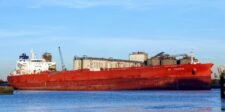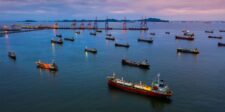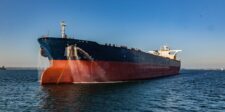
Tracked commodity-vessel movement through the Strait of Hormuz fell back toward a standstill at the start of the week, with no tracked commodity transits on Sunday, September 27, and only four on Monday, September 28.
The latest low count follows several weeks of uneven movement. Reuters initially reported on September 24 that ten commodity vessels transited the strait on Wednesday, up from seven a day earlier but still below a 10-day moving average of about 17. A September 25 Reuters report subsequently put Wednesday’s count at 14 and said Thursday’s commodity-vessel count had fallen to nine, based on preliminary Kpler data.
Those numbers remain far below the pre-conflict pattern. Reuters has reported that before the conflict began on February 28, the strait typically handled about 125 large commercial vessels a day, including tankers, gas carriers, bulk carriers and container vessels.
The U.S. Energy Information Administration estimated that 20.9 million barrels per day of petroleum and other liquids moved through Hormuz in the first half of 2025, along with 11.4 billion cubic feet per day of liquefied natural gas. That gives the latest four-vessel tracked day its weight: the public count is not only low, it is low in a waterway that usually carries a large share of global energy trade.
The count is a visibility signal, not a barrel count
Low visible ship counts do not translate directly into lost supply. Reuters reported on September 25 that crude oil flows out of Hormuz had reached 33.7 million barrels so far in the week starting September 20, based on preliminary Kpler tracking. That traffic included 19 tankers, 17 of them very large crude carriers, with most of the cargoes laden with Saudi and Iraqi crude. Kpler also put the previous full week’s outbound crude flows via Hormuz at 49.2 million barrels.
That same Reuters report warned that an unknown number of ships can sail through the waterway with Automatic Identification System (AIS) transponders turned off and fall outside the visible count. This is the key limitation in interpreting Sunday’s zero and Monday’s four. The count says visible commodity participation weakened again. It does not prove that physical exports stopped.
A September 29 Reuters report carried by OE Digital said crude exports from major Middle Eastern producers climbed to 12.8 million barrels a day in September, the highest level since February, helped by increased shipments from Saudi Arabia and the United Arab Emirates. KCM Trade chief analyst Tim Waterer told Reuters that higher export volumes still rely heavily on ship-to-ship transfers, describing those methods as “less efficient and more costly than normal operations.”
That explains the current contradiction. Cargo can still move, but not in a way that looks like a normal, transparent high-volume shipping lane.
LNG remains less flexible
Crude has more ways to move around a damaged route. LNG does not have the same flexibility because production, liquefaction, specialized ships and receiving terminals are tied to fixed infrastructure.
Reuters reported on September 28 that QatarEnergy had extended force majeure notices to Italian utility Edison and some Asian clients. Edison said it would not receive LNG cargoes until the beginning of December, while trading sources said clients in Bangladesh and Pakistan had been told force majeure notices were extended until November. Reuters also reported that Qatar’s LNG exports had been slashed by 96% as of the end of August, and that ICIS data showed Qatar exported 18 LNG cargoes through the end of August, down from 509 in the same period last year.
There are signs of partial movement. Reuters separately reported that more QatarEnergy-linked LNG vessels, both laden and in ballast, had transited Hormuz in late September after a period in August when Kpler data showed no visible transits by Qatar-linked LNG vessels or vessels carrying Ras Laffan cargoes. Several vessels reappeared outside the strait days after last being seen inside the Gulf, a pattern consistent with the broader use of dark transits.
The LNG signal is therefore mixed: some vessels are moving again, but the force majeure extensions show that buyers still cannot treat the route as dependable.
Voyage records are harder to verify
Kpler warned in June that the open-or-closed framing no longer captures Hormuz risk. The firm said vessels may still be able to pass, but voyage records can be harder to verify because of GNSS spoofing, AIS gaps, route deviations and sanction-related exposure.
In the same analysis, Kpler said visible crossings fell from 147 the day before the February 28 campaign to six by Day 3. Across the first 12 days of the 2026 crisis, it recorded 189 crossings, compared with 2,310 during the equivalent period of the June 2025 conflict. Kpler also said GNSS spoofing affected more than 3,000 vessels on a single day in early March and that only 6.4% of observed crossings between March 1 and May 19 used the IMO-designated traffic separation scheme.
Markets are pricing friction, not certainty
Oil prices reversed earlier gains on Tuesday as markets weighed continued Hormuz disruption against signs of recovering Middle Eastern exports. Reuters reported that Brent crude settled 2.5% lower at $102.59 a barrel, while U.S. West Texas Intermediate crude settled at $89.38.
The reversal reflects a market balancing two signals at once: visible traffic remains severely disrupted, while producers are finding ways to restore more export volume through the strait, alternative pipelines and other workarounds.
The next few daily counts will show whether the latest drop was brief or the start of another stretch of near-zero visible movement.

I can suggest related Tech Help Canada articles based on the topic you’re reading now.

Tech Help Canada Staff researches, writes, and reviews practical content for business owners and professionals. Our coverage spans business, marketing, SEO, technology, and the tools and systems people use to grow and operate online. We focus on clear, useful information backed by research, hands-on experience, and editorial review. Learn more about our team and editorial standards. Need help with something? Contact Us