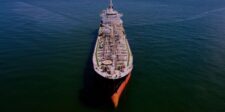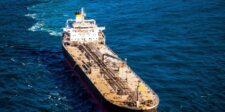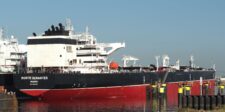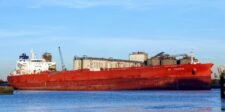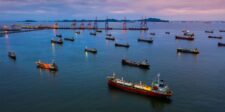
Shipping through the Strait of Hormuz is still moving, but confidence in the route has weakened again after fresh tanker incidents near one of the world’s highest-volume energy chokepoints.
The Associated Press reported on September 3 that the strait recorded 102 ship transits last week, down from 126 the week before, citing Lloyd’s List Intelligence. Before the war, AP said the waterway handled 130 or more transits per day.
That comparison is the useful signal. The strait is not closed, and significant oil volumes are still moving. But traffic remains far below normal, and every new attack forces owners, charterers, insurers, crews and buyers to recalculate the risk of using the corridor.
For businesses, the issue is not only oil prices. It is fuel volatility, war-risk premiums, tanker availability, insurance cost, routing uncertainty, supplier reliability and the contract language that decides who absorbs the extra cost.
The latest incidents keep the route under pressure
UK Maritime Trade Operations reported an August 31 incident about 17 nautical miles east of Khasab, Oman. A tanker said it had been struck by three unknown projectiles while completing an outbound transit of the Strait of Hormuz. UKMTO said no casualties or environmental impact had been reported and authorities were investigating.
UKMTO’s recent-incident feed also listed a time-late report on September 2 involving a tanker in a Strait of Hormuz security incident that resulted in two casualties. UKMTO said there was no reported environmental impact at that time and again advised vessels to transit with caution and report suspicious activity.
The incidents matter because the waterway was already operating under heavy security pressure. Lloyd’s List Intelligence said in late August that owners, charterers and insurers were still treating Hormuz as a high-risk transit, with commercial vessels unable to move through the strait with normal confidence.
That does not mean every ship stops. It means the decision to transit becomes more expensive and more conditional.
Hormuz is still an energy chokepoint, not just a shipping lane
The Strait of Hormuz connects the Persian Gulf with the Gulf of Oman and the Arabian Sea. It is the exit route for large volumes of crude oil, petroleum products and liquefied natural gas.
The U.S. Energy Information Administration’s March 2026 chokepoint analysis said total oil flows through Hormuz averaged 20.9 million barrels per day in the first half of 2025. That was about one-fifth of global petroleum liquids consumption and roughly one-quarter of total global maritime oil trade.
The same EIA analysis said LNG flows through the Strait of Hormuz averaged 11.4 billion cubic feet per day in the first half of 2025. A separate EIA analysis said about one-fifth of global LNG trade moved through Hormuz in 2024, primarily from Qatar.
That is why a Hormuz disruption can spread beyond the ships in the water. Energy buyers, manufacturers, retailers, logistics teams, carriers and insurers all have a reason to watch the route.
The cost risk can travel faster than the cargo
A chokepoint does not need to close before businesses feel it.
If vessel owners demand more compensation for risk, tanker freight can rise. If insurers reprice exposure, war-risk costs can move into shipment economics. If crews require premiums or specialized handling, operating costs can increase. If traffic slows or becomes harder to schedule, buyers may need more inventory, more flexibility or more expensive alternatives.
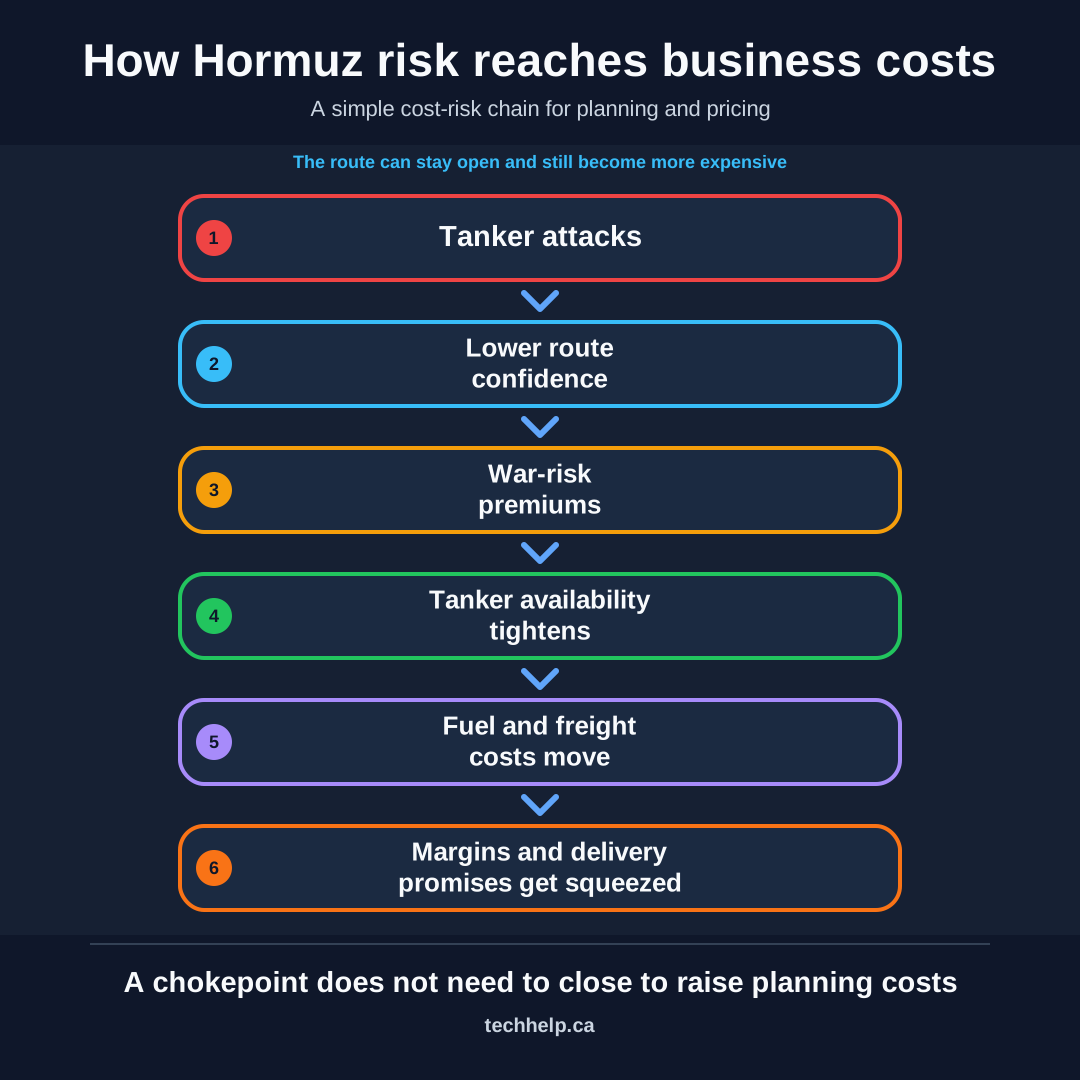
Lloyd’s List Intelligence warned on August 27 that the post-crisis logistics model had become more tanker-intensive, with added waiting time, repositioning voyages, ship-to-ship transfers and longer trading patterns absorbing capacity. It also said owners face higher crewing, insurance, security and compliance costs, which can raise the price of moving energy and commodities.
That is the part most businesses should focus on. The headline may be a tanker attack. The business impact may arrive later as a surcharge, a higher fuel bill, a supplier delay, a tighter quote window or a less forgiving freight contract.
We saw a similar pattern in the Panama Canal. The dramatic number was the record transit-slot auction, but the business issue was how congestion, fees and surcharges moved toward landed cost. Hormuz is different, but the operating lesson is similar: a chokepoint problem can become a margin problem before it becomes a full supply shutdown.
Traffic data is harder to read when ships go dark
The AP’s weekly transit numbers point to a steep decline, but they do not capture the full uncertainty around the route.
Lloyd’s List Intelligence said in July that AIS disabling had become widespread in the region, making it harder to track vessel movements. Nearly 70% of observed tanker transits were conducted “dark” during the July 13-19 period, up from 55% the previous week and 42% two weeks earlier, according to the firm’s brief.
That does not make traffic data useless. It means the numbers need careful reading.
Some ships may be staying away. Some may be moving with reduced public visibility. Some flows may be maintained through shuttle tanker activity, ship-to-ship transfers or routes closer to Oman under military guidance.
For logistics teams, the practical question is not whether a single traffic number is perfect. It is whether visibility is getting worse at the same time risk is rising.
What businesses should check now
Most small and mid-size businesses do not charter tankers. They can still be exposed through fuel, freight, supplier pricing, delivery windows and inventory planning.
The immediate job is to identify where Hormuz risk can touch your own cost structure.
| If your business depends on… | Check this now |
|---|---|
| Ocean freight | Fuel adjustment factors, war-risk surcharges, routing assumptions and carrier notice periods |
| Imported goods | Supplier exposure to Gulf energy, petrochemicals, packaging, plastics, fertilizers or related inputs |
| Energy-intensive operations | Electricity, fuel, natural gas, diesel and logistics cost sensitivity |
| Long lead-time inventory | Buffer stock, reorder timing, alternate suppliers and customer delivery promises |
| Fixed-price contracts | Escalation clauses, force majeure language, freight pass-through terms and margin room |
| International suppliers | Whether quotes remain valid if oil, insurance or freight costs move quickly |
This is not a call to overreact. It is a call to stop treating maritime chokepoints as distant news if your margins depend on energy, freight or imported inputs.
What to watch next
The key signal is not one more incident by itself. It is whether vessel owners, insurers and crews continue to accept the risk of transiting.
If attacks stay isolated and traffic keeps moving, businesses may mostly feel the risk through premiums, delays and cautious planning. If the pattern worsens, tanker capacity and energy pricing can tighten faster.
Watch for three things:
- Weekly transit counts and whether the decline continues.
- War-risk insurance, freight-rate and fuel-cost signals.
- Whether major operators, insurers or governments change their guidance for the corridor.
The strait does not have to close to matter. Lower confidence can still raise the cost of planning, moving and pricing goods.
Final take
Hormuz remains open, but the route is not normal.
The latest traffic drop shows commercial confidence is still fragile after repeated tanker incidents near the chokepoint. Oil and LNG are moving, but the logistics system is absorbing more risk, more cost and more uncertainty to keep that movement going.
For business owners and operations teams, the smart move is not panic. It is exposure mapping.
Know which suppliers, contracts, freight lanes, fuel costs and inventory promises depend on energy moving through high-risk corridors. Then check the clauses, costs and timing before the next shock shows up in the quote.
Frequently asked questions
What happened to Strait of Hormuz shipping traffic?
The Associated Press reported on September 3, 2026, that the Strait of Hormuz recorded 102 ship transits last week, down from 126 the week before, citing Lloyd’s List Intelligence. AP said the strait handled 130 or more transits per day before the war.
Is the Strait of Hormuz closed?
No. Significant oil volumes are still moving through the Strait of Hormuz, but traffic remains far below normal and commercial operators continue to treat the corridor as high risk after repeated tanker incidents.
Why does the Strait of Hormuz matter for energy markets?
The U.S. Energy Information Administration said total oil flows through Hormuz averaged 20.9 million barrels per day in the first half of 2025, equal to about one-fifth of global petroleum liquids consumption. The strait is also a major route for LNG exports from the Persian Gulf.
How can Hormuz risk affect businesses outside energy?
Hormuz risk can affect businesses through fuel volatility, war-risk insurance, tanker availability, freight surcharges, supplier pricing, delivery windows, and imported inputs tied to energy, plastics, chemicals, fertilizers or logistics costs.
What should businesses check now?
Businesses should check supplier exposure, freight terms, fuel adjustment factors, war-risk surcharges, inventory buffers, fixed-price contracts, and clauses that decide whether higher freight or energy costs can be passed through.

I can suggest related Tech Help Canada articles based on the topic you’re reading now.

Tech Help Canada Staff researches, writes, and reviews practical content for business owners and professionals. Our coverage spans business, marketing, SEO, technology, and the tools and systems people use to grow and operate online. We focus on clear, useful information backed by research, hands-on experience, and editorial review. Learn more about our team and editorial standards. Need help with something? Contact Us