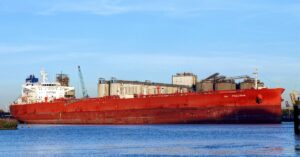
Fresh vessel data shows shipping through the Strait of Hormuz remains far below normal, reinforcing that the physical constraint on one of the world’s most sensitive energy corridors has not gone away.
Aegean Intelligence Group’s September 19 open-data package, which draws from IMF PortWatch AIS-based transit counts, showed 8 commercial vessel transits through the strait on September 13, the most recent day in that series. The same dataset showed 37 transits over the seven days ending September 13, compared with a baseline of 517 for the same seven-day measure. Aegean’s dashboard described the corridor at about 7% of its pre-war reference flow.
That is not a total stoppage. Ships are still moving. But the latest readings point to a corridor operating in a limited, high-risk way rather than returning to normal commercial flow.
The visible recovery remains thin
The daily pattern in the Aegean and IMF PortWatch-derived series stayed weak through early September. The last 10 reported days ranged from 2 to 8 transits per day, with no sign of a sustained return to the much higher pre-conflict baseline.
This matters because the market reaction to Hormuz can swing on small signs of movement. A handful of ships moving through the strait may look like reopening, especially after periods of very low traffic. The vessel data gives a more cautious signal: movement has continued, but normal flow has not resumed.
Lloyd’s List Intelligence reached a similar conclusion in its September 16 Strait of Hormuz brief. It said higher inbound transits showed industry adaptation to a higher-risk operating environment, but activity remained far below pre-conflict levels and did not suggest a Hormuz revival.
That distinction is central to supply-chain planning. A corridor can be technically open and still fail to provide the capacity, certainty, and insurance conditions that normal logistics depend on.
AIS data shows the visible traffic, not every ship
The numbers need careful handling. AIS-based transit counts are not the same as a complete census of all vessel movement, especially in a conflict zone.
The International Energy Agency’s Middle East maritime chokepoints monitor, last updated September 16, warned that AIS is self-reported and that a large and growing share of tankers have been crossing regional chokepoints with transponders switched off. The IEA also cited widely reported GPS jamming and AIS spoofing in the region, saying the displayed volumes are likely to understate true traffic and that actual transit volumes are difficult to determine precisely.
In practical terms, the low counts should not be read as proof that only the visible ships moved. They are still useful because they show how little normal, openly tracked traffic is returning. A healthy shipping corridor does not usually depend on dark sailings, ad hoc routing, and incomplete visibility.
Oil-flow data still points to a much smaller corridor
Slower-moving energy data also shows how much the corridor has shrunk. The U.S. Energy Information Administration’s August 2026 energy security data estimated that total oil flows through the Strait of Hormuz averaged 4.9 million barrels per day in the second quarter of 2026. That was down from 21.6 million barrels per day in the fourth quarter of 2025.
The same EIA table estimated LNG flows through Hormuz at 0.8 billion cubic feet per day in the second quarter of 2026, down from 10.5 billion cubic feet per day in the fourth quarter of 2025.
Those EIA figures are quarterly and not a live reading for September. They still provide a useful anchor: the disruption is not just a short-term chart movement. It has already shown up in measured energy flows through the strait.
Security risk is still shaping the shipping decision
Security conditions remain a major reason normal traffic has not returned. The International Maritime Organization’s confirmed incident table listed several late-August and September vessel damage reports in or near the Strait of Hormuz area, including EL GAIA on September 12 in the Strait of Hormuz, with pollution extent unknown and two seafarers missing. The IMO also listed ROMANCE as damaged on September 10 west of Khasab, Oman, with an oil leak under assessment.
The Associated Press reported September 18 that Iran said it had struck the Togo-flagged oil tanker Trend over what Iran described as an illegal attempt to transit the strait the previous night. AP said it could not immediately confirm the report.
For shipping companies, charterers, insurers, and cargo owners, that is enough uncertainty to keep decisions conservative. The issue is not only whether a ship can pass through the strait. It is whether the passage can be planned, insured, crewed, priced, and repeated at commercial scale.
Why this still matters for technology and supply-chain risk
Hormuz is usually discussed as an oil story, but the supply-chain signal is wider. Energy-linked freight costs, tanker availability, insurance pricing, and routing decisions can all feed into operating costs for companies that depend on physical goods, hardware, equipment, and fuel-sensitive logistics.
The latest vessel data supports the same broad warning raised in earlier Tech Help Canada coverage of Hormuz traffic and tanker risk: the constraint is physical, not just financial. A price chart can move faster than ships, ports, crews, insurers, and security procedures can normalize.
That makes the current data less a sign of closure and more a sign of constrained reopening. The strait is not silent, but it is still far from normal. Until visible traffic, oil flows, security conditions, and insurance behavior improve together, Hormuz remains a live supply-chain risk rather than a resolved headline.
Get new small business insights by email
Practical ideas and useful articles to help you make better business decisions.
Tech Help Canada Staff researches, writes, and reviews practical content for business owners and professionals. Our coverage spans business, marketing, SEO, technology, and the tools and systems people use to grow and operate online. We focus on clear, useful information backed by research, hands-on experience, and editorial review. Learn more about our team and editorial standards. Need help with something? Contact Us