

America’s 250th birthday gave businesses a useful read on the consumer mood.
People still traveled. They still hosted cookouts. They still showed up for fireworks, parades, restaurants, road trips, and local events. But the spending wasn’t a simple sign of confidence.
It’s this: customers are still willing to spend when the occasion feels worth it, but they are comparing harder, planning tighter, and looking for value before they say yes.
For restaurants, retailers, ecommerce brands, and local businesses, July 4th was less of a holiday recap and more of a demand signal for the rest of 2026.
The cookout got more expensive, and customers noticed
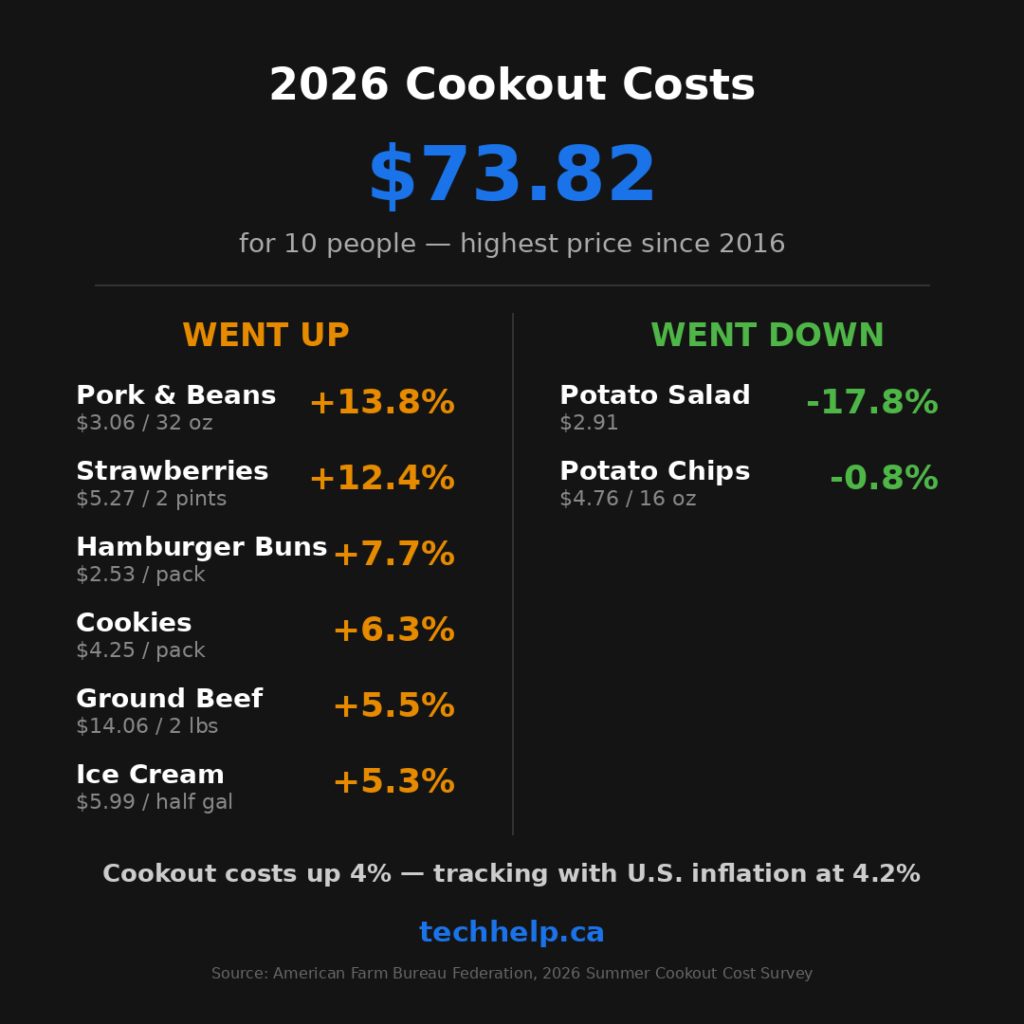
The American Farm Bureau Federation’s 2026 marketbasket survey put the cost of a traditional Fourth of July cookout for 10 people at $73.82, or $7.38 per person. That was up 4% from last year and was the highest cookout cost since Farm Bureau began tracking the basket in 2016.
NRF’s annual Independence Day survey also pointed to higher food spending, with average planned spending on July 4 food items reaching a record $94.41. That figure helps explain why retailers leaned so hard into cookout bundles, private-label promotions, and low-price meal kits heading into the holiday.
The pressure wasn’t spread evenly across the basket. Farm Bureau reported that two pounds of ground beef rose 5.5% to $14.06 as ranchers continue rebuilding herds after years of severe drought. Strawberries rose 12.4% after a damaging frost hit Florida plants earlier in the season. Potato salad, on the other hand, fell 17.8% as egg prices eased from the avian flu shock.
For businesses, the point is not simply “prices are up.” Customers already know that. Value has to be visible.
If a family can see exactly what a $40 meal bundle includes, or a shopper can compare a store-brand party basket against national brands without doing mental math in the aisle, the offer feels easier to justify. If the value takes work to understand, budget-conscious customers keep looking.
Travel stayed strong, but closer to home mattered
AAA expected about 72.2 million Americans to travel at least 50 miles from home between June 27 and July 5. Axios reported that the period was expected to be the busiest July 4 travel week since at least 2019, with 85% of travelers forecast to drive.
The Associated Press also reported that small businesses in U.S. tourist destinations were seeing a stronger summer as Americans chose domestic trips, road trips, day trips, and closer-to-home experiences. The FIFA World Cup and America’s 250th birthday gave some communities an extra reason to attract visitors, but the broader behavior is familiar: people still want experiences, and many are adjusting distance, length, or spending style to make those experiences fit.
AAA’s forecast showed nearly all of the year-over-year growth coming from buses, trains, and cruises rather than driving or flying. Road trips still dominated, while the growth pattern pointed to a travel market fragmenting around price, convenience, and certainty.
Certainty has value in a climate of business uncertainty and household budget pressure. A family that knows the cost of a regional trip, a cruise package, or a one-day local outing can plan around it. A more expensive or unpredictable trip is easier to cut.
Local businesses should pay attention. The customer who skips a faraway vacation may still spend on ice cream, a patio dinner, a guided tour, a local attraction, or a small retail purchase while visiting a nearby community.
Low confidence did not stop spending
The strongest signal from July 4th is the tension between weak sentiment and active spending.
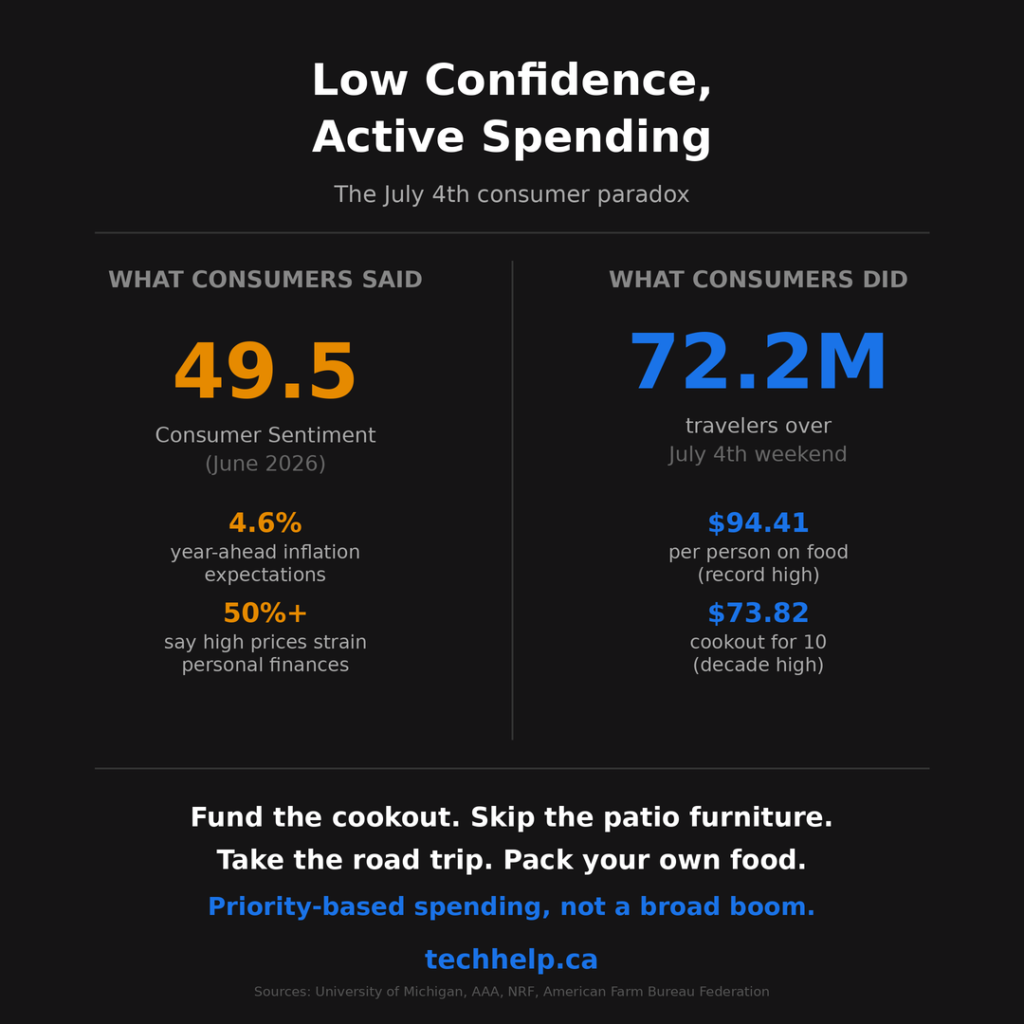
Barron’s reported that the University of Michigan’s Consumer Sentiment Index rose to 49.5 in June from 44.8 in May, while year-ahead inflation expectations eased to 4.6% from 4.8%. It was an improvement, but sentiment remains low by historical standards. Barron’s also cited the University of Michigan’s note that more than half of consumers spontaneously mentioned high prices as a strain on personal finances for the third straight month.
Then millions of people traveled anyway. Families bought higher-priced cookout food anyway. Restaurants, local events, and destination businesses still had customers to serve.
For business owners, the pattern is selective spending. Customers are not frozen. They are choosing more carefully.
They are making trade-offs. They may fund the July 4 cookout but skip the patio furniture. They may take the road trip but pack food for part of the drive. They may buy the kids a treat at a local shop but compare prices before buying a larger item.
Call it priority-based spending, not a broad boom. The businesses that win in that environment make the purchase feel worth protecting.
Restaurants have a clearer value story now
Rising grocery prices are not automatically bad news for restaurants.
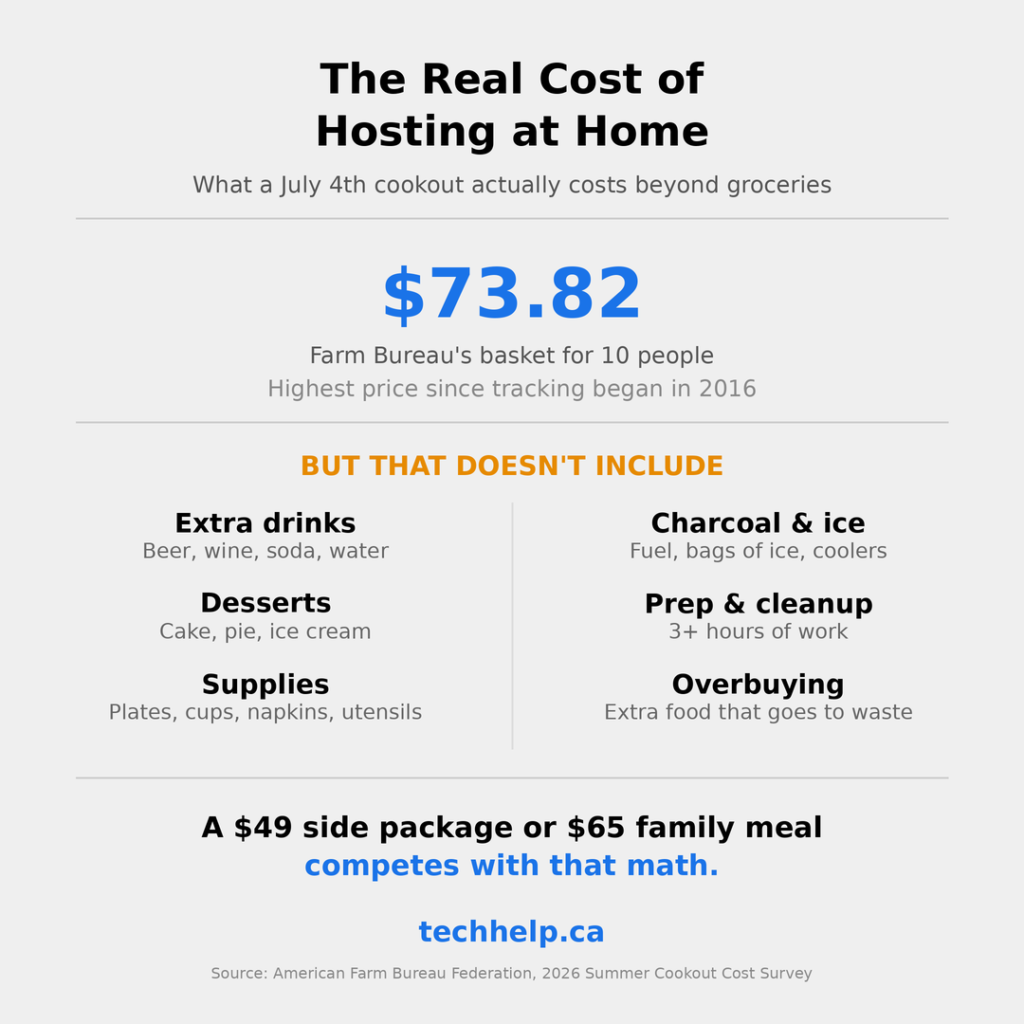
Many consumers are still eating at home to control costs, but the math has changed for group meals. Farm Bureau’s $73.82 cookout figure covers a defined basket of staples for 10 people. It doesn’t include every drink, dessert, paper plate, bag of ice, bag of charcoal, decoration, or hour of prep and cleanup.
Restaurants, caterers, bakeries, and prepared-food sellers now have a stronger comparison to make.
A family meal deal, party tray, or takeout bundle no longer competes only against “cheap home cooking.” It competes against the full price vs. cost of hosting: groceries, time, cleanup, waste, and the risk of buying too much.
Businesses that explain the comparison clearly have an opening. A $49 cookout side package, a $65 family meal, or a $25 dessert tray can feel reasonable when customers see what they save in time and hassle.
The offer still has to be priced carefully. But restaurants do not need to pretend they are cheaper than groceries in every case. They need to show where convenience, portioning, consistency, and time savings make the choice easier.
Retailers should plan holiday campaigns earlier
July 4th shopping is not a one-week event anymore.
Customers research, compare, wait for sales, and often decide before the holiday week arrives. Major retailers know this, which is why cookout bundles, appliance sales, outdoor promotions, and seasonal deals start well before the long weekend.
Small retailers should not copy big-box discounting blindly. The better move is to plan around how customers actually decide.
Launch offers early enough for comparison shoppers to find them. Make price, bundle contents, pickup options, and deadlines easy to understand. Give customers a reason to buy now without fake urgency.
Seasonal buyers are often juggling several costs at once: food, travel, entertainment, gas, gifts, and home projects. A clear offer has a better chance of surviving that ranking process than a vague sale banner.
For ecommerce sellers, this also means tightening the basics: mobile product pages, clear shipping windows, visible return policies, and checkout flows that don’t make customers work harder than necessary.
Local foot traffic is only valuable if you capture it
Holiday travel puts people in front of local businesses that they may never find during a normal week.
AAA’s forecast showed tens of millions of travelers moving through highways, towns, tourist districts, airports, and event zones. The Associated Press reported that some destination-area small businesses were benefiting from Americans choosing trips closer to home.
Holiday traffic is a gift, but only if the business does something with it.
A visitor who buys once and disappears is a sale. A visitor who joins an email list, follows the business on social media, signs up for a loyalty program, or takes a bounce-back offer can become a repeat customer.
Many local businesses leave money on the table here. They prepare for the rush, staff up, sell through inventory, and then let the relationship end at the receipt.
Labor Day, Halloween, Thanksgiving weekend, and the winter holiday season will create similar surges. The scale may be smaller than July 4th, but the playbook is the same: show up where visitors are, make the offer easy to understand, and create a simple reason for them to come back.
What this tells you about the rest of 2026
The holiday data points to a consumer who is cautious but not absent.
Experience spending is still resilient. Travel held up, regional trips stayed strong, and local destinations benefited from customers trying to make summer memories without losing control of the budget.
Food spending is still strong, but customers feel the pressure. That creates room for bundles, private-label alternatives, family meals, prepared foods, and simple price comparisons.
Retail spending is more deliberate. Customers are not only asking whether they want something. They are asking whether it deserves a place above every other cost competing for the same dollars.
The signal for the rest of the year is clear: businesses don’t need to panic because consumers are cautious. They need to make value easier to see.
Show the comparison. Package the offer. Remove uncertainty. Capture the visitor. Give customers a reason to spend with you instead of saving the money for something else.
July 4th showed that customers are still buying. They are just making every purchase compete harder for the yes.

I can suggest related Tech Help Canada articles based on the topic you’re reading now.

Tech Help Canada Staff researches, writes, and reviews practical content for business owners and professionals. Our coverage spans business, marketing, SEO, technology, and the tools and systems people use to grow and operate online. We focus on clear, useful information backed by research, hands-on experience, and editorial review. Learn more about our team and editorial standards. Need help with something? Contact Us