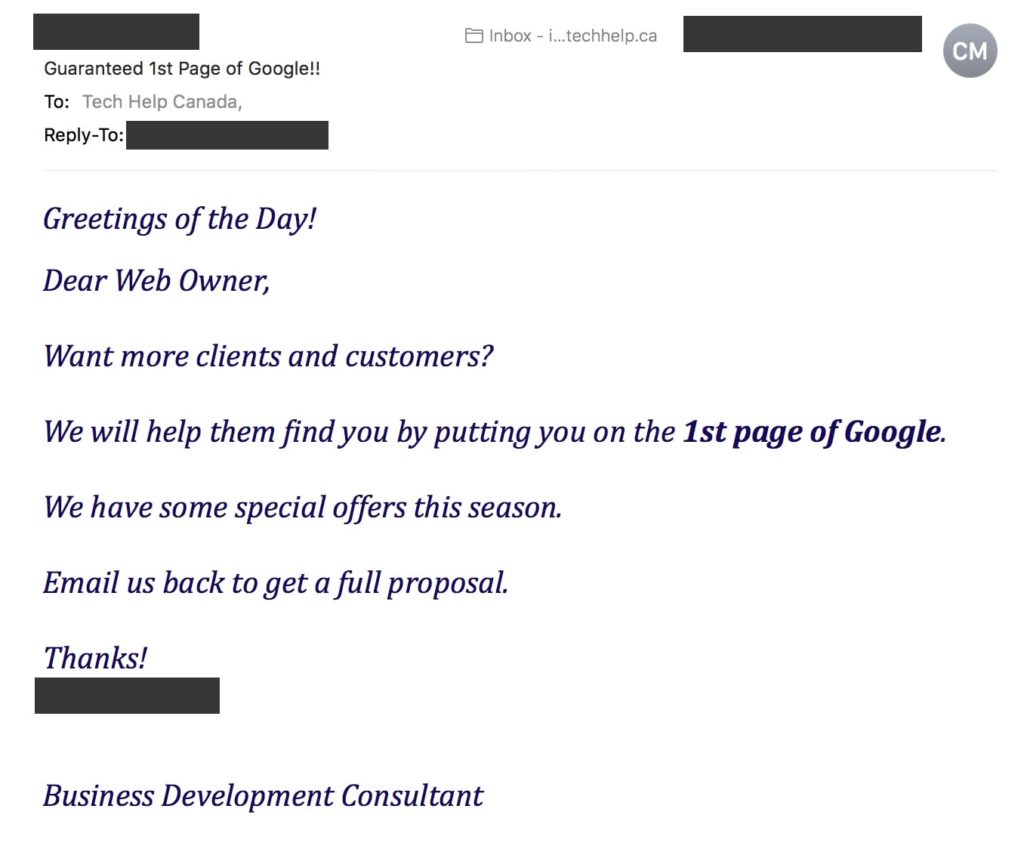
An email doesn’t have to be rude to lose the reader. Most weak emails are too vague, too self-focused, too long, or too hard to answer.
The subject line hides the point. The reader opens the email without knowing whether it needs action, a decision, or a quick reply.
The first line starts with the sender. Long introductions delay the reason the reader should care.
The ask is unclear. Phrases like ‘let me know your thoughts’ sound harmless, but they give the reader extra work.
The tone feels cold, defensive, or passive-aggressive. Even a reasonable message can create friction if the wording feels careless.
The email asks for time before earning it. This is common in sales emails that jump straight to a meeting request.
The next step is missing. A strong email makes the action obvious and easy.
A better email answers three questions fast: Why am I getting this? What do you want from me? What happens next?
How to use these bad email samples
Before using any rewrite, identify the one action you want the reader to take. Then cut anything that doesn’t support that action.
Choose the closest example. Pick the sample that matches your situation, not just your industry.
Replace bracketed details. Add the real deadline, project name, order number, decision, or business problem.
Keep the tone natural. The rewrite should sound like you on a good day, not like a legal notice or a chatbot.
Check the promise. If you can’t deliver the next step, remove it or replace it with what you can actually do.
Read it once from the reader’s side. If they still have to guess, revise again.
Sales email examples
1. The vague cold pitch
Bad email:
Subject: Quick question
Hi [Name],
My name is [Name] from [Company]. We are a full-service agency that provides marketing, design, websites, strategy, and social media management. I wanted to reach out to see if you have any needs we can help with. Do you have time for a quick call this week?
Best, [Name]
What goes wrong: The email asks for time before it gives the reader a reason to care. The offer is broad, the problem is unclear, and the call request feels premature.
Better rewrite:
Subject: Idea for [specific result] at [Company]
Hi [Name],
I noticed [specific, true observation about their website, offer, hiring, content, or public-facing work].
If [priority] is on your list this quarter, I can send over three practical fixes for [area] that may improve [outcome].
Want me to send them?
Best, [Name]
Why the rewrite is stronger: It earns attention before asking for a meeting. The first ask is small, specific, and easy to answer.
2. The all-about-us promotional email
Bad email:
Subject: We’re excited to announce
Hi [Name],
We’re excited to announce our new project management package. It includes dashboards, automations, onboarding, reporting, notifications, team permissions, and workflow support. We’ve worked hard on this and would love to show you what it can do.
Book a demo here.
Thanks, [Name]
What goes wrong: The message is written from the company’s point of view. The reader sees features, but not the problem those features solve.
Better rewrite:
Subject: Spend less time chasing project updates
Hi [Name],
If your team is still chasing status updates in chat threads, this package gives you one place to see overdue tasks, owner changes, and blockers before they slow the project down.
You’ll see what needs attention without asking three people for an update.
Want the 2-minute overview?
Thanks, [Name]
Why the rewrite is stronger: It translates features into an outcome the reader can feel: fewer status chases, fewer surprises, and faster decisions.
3. The generic ‘do you need anything?’ email
Bad email:
Subject: Checking if you need services
Hi [Name],
Do you need IT help? We offer great rates and fast service. Let me know if you’re interested in learning more.
Regards, [Name]
What goes wrong: The email puts the burden on the reader. They have to define the problem, understand the service, and decide whether it’s worth a conversation.
Better rewrite:
Subject: Could we reduce [recurring issue] for [Company]?
Hi [Name],
We work with businesses that want fewer surprise outages, safer backups, and faster support when staff get stuck.
If [recurring issue] has been slowing your team down, I can send a short support plan outline showing what we’d check first.
Should I send it over?
Best, [Name]
Why the rewrite is stronger: It names the situations the service is built for. The reader can quickly decide whether the email applies to them.
Customer service email examples
4. The empty apology
Bad email:
Subject: Re: Order problem
Hello,
We apologize for any inconvenience. Your request has been escalated. Please allow 5–7 business days for a response.
Regards, Customer Support
What goes wrong: The apology sounds automatic. The customer still doesn’t know what happened, who owns the issue, or when they’ll hear back.
Better rewrite:
Subject: We’re checking your order today
Hi [Name],
Thanks for sending the order number. I can see the tracking stopped updating on October 6, 2026, and I understand why you’re frustrated.
I’m contacting the carrier now. If we don’t have a new scan by October 6, 2026, we’ll [replacement/refund/next step according to policy].
I’ll update you by [time], even if there’s no change yet.
Thanks, [Name]
Why the rewrite is stronger: It acknowledges the problem, gives a clear action, and sets an update time. Use the replacement or refund line only if it matches your policy.
5. The defensive complaint response
Bad email:
Subject: Re: Billing issue
Hi [Name],
The charge is correct. You selected annual billing at checkout, so there is nothing we can do.
Regards, [Name]
What goes wrong: The facts may be accurate, but the tone makes the customer feel dismissed. It closes the door before offering a helpful next step.
Better rewrite:
Subject: Let’s fix the billing confusion
Hi [Name],
I checked the account. The annual plan was selected at checkout on October 6, 2026, which is why the full-year charge appeared.
I can help you switch to monthly going forward and confirm whether [refund/credit/cancellation option] applies under your plan.
Would you like me to make that change today?
Thanks, [Name]
Why the rewrite is stronger: It explains the issue without blaming the customer. It also gives them a practical option instead of a dead end.
Workplace email examples
6. The vague task request
Bad email:
Subject: Need this ASAP
Can you look at the deck and fix anything weird? We need it soon.
What goes wrong: The recipient doesn’t know what to review, what ‘soon’ means, or what level of work is expected.
Better rewrite:
Subject: Please review slide 6 by 3 p.m. today
Hi [Name],
Could you review slide 6 for the revenue chart and send any edits by 3 p.m. today?
I’m sending the deck to [team/client] at 4 p.m. If I don’t hear back, I’ll use the current version.
Thanks, [Name]
Why the rewrite is stronger: It gives the exact task, deadline, reason, and default next step. That removes guesswork.
7. The passive-aggressive reminder
Bad email:
Subject: As per my last email
Hi [Name],
As per my last email, I still need the report. Please send it today.
Thanks.
What goes wrong: The wording signals frustration instead of progress. It may get a response, but it can also damage the working relationship.
Better rewrite:
Subject: Report needed by 2 p.m. for client update
Hi [Name],
I’m closing the client update at 3 p.m. and still need the [report/file/data].
Can you send it by 2 p.m.? If that timing won’t work, please reply with the earliest realistic time so I can adjust the update.
Thanks, [Name]
Why the rewrite is stronger: It focuses on the work, not the delay. It also gives the other person a way to respond if the deadline won’t work.
8. The meeting request with no context
Bad email:
Subject: Meeting
Let’s meet tomorrow to discuss everything.
What goes wrong: The recipient doesn’t know the topic, goal, prep required, or decision needed. That makes the meeting feel heavier than it may be.
Better rewrite:
Subject: 20-minute decision meeting for [project]
Hi [Name],
Can we meet tomorrow for 20 minutes to decide [specific decision]?
I’ll bring [input]. Please bring [input]. If we leave with [decision/output], we can keep [project] on schedule.
Does [time] work?
Thanks, [Name]
Why the rewrite is stronger: It tells the reader why the meeting exists and what a useful outcome looks like. If the issue can be handled in writing, replace the meeting request with the exact question.
Follow-up email examples
9. The ‘just checking in’ follow-up
Bad email:
Subject: Just following up
Hi [Name],
Just checking in to see if you saw my last email. Do you have time for a call?
Best, [Name]
What goes wrong: The follow-up adds no new value. It reminds the reader they haven’t responded, but doesn’t make responding easier.
Better rewrite:
Subject: Should I send the [asset] or close the loop?
Hi [Name],
I’m following up on the [topic] I sent over last week.
If [pain/outcome] is still relevant, I can send the short [audit/plan/checklist] I mentioned. If it’s not a priority, reply with ‘not now’ and I’ll close the loop.
Best, [Name]
Why the rewrite is stronger: It gives the reader two easy choices. It also reduces pressure by making ‘not now’ an acceptable answer.
10. The weak proposal follow-up
Bad email:
Subject: Thoughts?
Hi [Name],
Any thoughts on the proposal?
Thanks, [Name]
What goes wrong: The email is too open-ended. ‘Thoughts?’ can mean pricing, timing, scope, approval, objections, or silence.
Better rewrite:
Subject: Decision on [proposal] by Friday?
Hi [Name],
When we spoke on October 6, 2026, the main decision was whether [option] could help you [outcome].
To keep the [timeline/project] on track, do you want to approve the proposal, change the scope, or pause it for now?
If I don’t hear back by Friday, I’ll assume the timing isn’t right and stop following up.
Thanks, [Name]
Why the rewrite is stronger: It reminds the reader of the decision, gives three response options, and sets a respectful stopping point.
Bad email phrases and better alternatives
Small wording changes can make an email easier to answer. Use these swaps when your message feels vague, cold, or heavy.
Weak phrase
Better option
Just checking in
Is [specific next step] still useful?
Let me know your thoughts
Can you choose option A or B by Friday?
Sorry for the inconvenience
I can see what went wrong, and here’s what I’m doing next.
Can we hop on a call?
Would a 15-minute call on Tuesday help you decide [specific thing]?
ASAP
By 3 p.m. today
Per our policy
Here’s what I can do within our policy.
Do you need help?
Are you trying to fix [specific problem]?
Following up again
Should I close the loop on this?
A simple formula for rewriting bad emails
If an email feels messy, don’t polish every sentence. Rebuild it around the job it needs to do.
Start with context. Remind the reader why they’re getting the email.
Name the useful outcome. Show what gets easier, faster, safer, clearer, or decided.
Ask for one action. One email should usually have one primary ask.
Add a deadline or next step. If timing matters, say exactly when.
Remove filler and blame. Cut anything that exists only to soften, pressure, or defend.
Reusable template:
Subject: [Specific action or outcome]
Hi [Name],
[Context in one sentence.]
[Relevant reason for the reader, customer, or project.]
Could you [one action] by [time/date]? If [condition], I’ll [next step].
Thanks, [Name]
How AI can help without making emails sound fake
AI can speed up email rewrites, but don’t let it add fake urgency, fake personalization, or promises you can’t stand behind. Give it the bad email, the reader, the goal, the relationship, and the tone you want.
For example, instead of asking AI to ‘make this better,’ try: ‘Rewrite this customer service email so it sounds calm, specific, and accountable. Keep the same policy outcome, but make the next step clearer.’
If you want more ways to use AI for drafting, editing, and marketing work, Tech Help Canada’s copy-ready AI prompts can help you build better inputs.
Final send checklist
Can the reader understand the ask from the subject line or first two sentences?
Is there one primary action?
Did you replace vague timing with a real deadline?
Did you remove internal jargon the reader may not know?
Did you avoid blame, guilt, and pressure?
Did you remove any claim you can’t prove?
Does the email tell the reader what happens next?
If your email sends people to a sales page, service page, or landing page, make sure the page carries the same promise. These SEO copywriting tips can help tighten the destination page so the click doesn’t land on vague copy.
Get new small business insights by email
Practical ideas and useful articles to help you make better business decisions.
Tech Help Canada Staff researches, writes, and reviews practical content for business owners and professionals. Our coverage spans business, marketing, SEO, technology, and the tools and systems people use to grow and operate online. We focus on clear, useful information backed by research, hands-on experience, and editorial review. Learn more about our team and editorial standards. Need help with something? Contact Us