
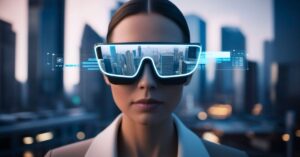
Smart glasses are drawing the kind of scrutiny that usually arrives when a consumer gadget stops feeling experimental and starts appearing in ordinary public spaces.
In France, prosecutors have opened at least one criminal probe connected to suspected sexual harassment involving smart glasses, according to Reuters. In Australia, the federal government is considering whether camera-equipped smart glasses should be barred from Commonwealth workplaces because of privacy and security concerns, ABC News and Reuters reported.
Taken together, the two developments show how the privacy debate is moving beyond one product, one country, or one uncomfortable viral video. The issue is becoming a test of how governments, workplaces, schools, pools, venues and technology companies handle wearable devices that can record people with fewer visible cues than a phone.
Australia is testing a workplace line
Australia’s federal government is considering restrictions on smart glasses in Commonwealth buildings and workplaces, including whether the devices should be prohibited and what exemptions may be needed. ABC News reported that Finance Minister Katy Gallagher asked the Australian Public Service Commission for advice on smart glasses across Commonwealth workplaces.
The proposed move is narrower than a consumer ban. Australia’s attorney-general said at the end of August that the government was not currently considering an import ban on smart glasses, even as it released draft privacy reforms covering risks from artificial intelligence and wearable technology.
That distinction matters. Australia appears to be separating two questions: whether smart glasses should remain available to consumers, and whether camera-equipped wearables belong in sensitive settings where confidential documents, government services, workplace conversations and personal information may be present.
The government’s consultation process on privacy reforms also shows that the smart-glasses debate is being folded into a bigger review of digital privacy. The Attorney-General’s Department said its exposure draft legislation is designed to modernise privacy law and address risks from emerging technologies, including AI and wearable devices such as smart glasses.
France shows the consent problem
In France, the pressure is more directly tied to alleged misuse. Reuters reported on Sept. 18 that the Paris prosecutor’s office had opened at least one criminal probe after sexual harassment complaints related to a social media trend involving women being filmed on the street without consent and the videos being posted online. Prosecutors did not specify the brand of glasses allegedly used.
France’s data protection authority, CNIL, had already flagged smart glasses as a privacy concern earlier in 2026. CNIL said users must respect the privacy rights of people whose image or voice may be captured, and where appropriate, obtain consent. It also said it planned further work on smart-glasses compliance with personal data protection rules.
CNIL’s survey with Harris Interactive and Toluna gives a useful measure of public discomfort. Conducted online from Jan. 22 to Jan. 29, 2026, with 2,128 French adults, the survey found that 87% of respondents had heard of smart glasses, 67% viewed them as a privacy risk, and 81% believed the risk of being photographed or filmed without consent is higher with smart glasses than with a smartphone.
That is the heart of the backlash. Phones can record without consent too, but a raised phone is a familiar social signal. Glasses change the cue. A person can look at someone and record from eye level while appearing to do nothing more than make eye contact.
Why the backlash is arriving now
The technology is becoming easier to buy, easier to wear and harder for bystanders to recognize. ABC News reported in August that cheap camera glasses were flooding the market in Australia, with some basic versions available online for as little as $40 and Kmart Australia’s $89 Anko camera glasses recently selling out.
Meta’s Ray-Ban smart glasses have also put the category in front of mainstream consumers. Reuters reported that Meta’s glasses, made with EssilorLuxottica, hold a roughly 76% global market share and sold 7 million units last year. Those figures help explain why regulators are no longer treating camera glasses as a niche device for enthusiasts.
The concern is not only that recording can happen. It is that recording can happen casually, repeatedly and in places where people are not expecting a camera to be pointed at them. That shifts the burden from the person filming to the people around them, who must notice the device, understand what it is, recognize any recording indicator and react in time.
Meta says the light is the safeguard. Regulators want more.
Meta says every pair of its AI glasses includes a white capture LED that blinks when content is being captured for the wearer’s gallery, and that the light has no off switch. In a July company post, Meta said the camera is disabled when the capture LED is blocked on second-generation glasses, and that the company is updating the glasses to disable the camera when it detects physical tampering or destruction of the LED.
Those safeguards are part of Meta’s answer to the criticism. Regulators and safety bodies are asking whether a small indicator light is enough, especially when bystanders may not know what the light means or may not notice it at all.
Australia’s eSafety Commissioner has taken a broader product-design view. In guidance first published in August 2026, eSafety said smart glasses remove visible recording cues, making it difficult for bystanders to know they are being filmed. The agency recommended clearer recording indicators, automatic blurring of people’s faces when informed consent has not been provided, limits on information retrieval about members of the public, disabling recording when glasses are not being worn, and delayed livestreaming with moderation.
That approach treats smart glasses as more than a personal gadget. It treats them as a recording platform whose design choices affect everyone nearby.
The accessibility case complicates simple bans
The backlash is not one-sided. Smart glasses can offer real accessibility benefits, and regulators are acknowledging that. Australia’s eSafety Commissioner said smart glasses can make a meaningful difference for people with disability, including people who are blind or have low vision using glasses to ask for descriptions of objects, and deaf users benefiting from live speech-to-text features.
CNIL’s French survey found a similar split. While privacy concerns were strong, 78% of respondents saw smart glasses as a potential aid for people with disabilities, including visual or hearing impairments.
That makes sweeping bans harder to design. A blanket rule may reduce covert recording in a workplace, pool or government office, but it can also block assistive uses. More targeted rules may allow exceptions, but they require staff training, clear signage, enforcement and a way to distinguish assistive use from covert recording.
Public spaces are becoming the first battleground
Local settings are moving faster than national laws in some places. ABC News reported that Brisbane City Council became the first local council in Australia to ban non-consensual use of camera-enabled devices at public swimming pools, giving lifeguards power to remove people under conditions of entry.
Pools, gyms, schools, courtrooms, workplaces and government service centres are likely to become early flashpoints because they combine privacy expectations with practical enforcement. In those places, a rule can be posted at the door and tied to entry conditions. A public street is harder.
The policy challenge is that smart glasses sit between familiar categories. They are not just glasses. They are not just cameras. They are not just AI devices. They combine recording, microphones, sensors, cloud services, social media and, in some models, AI assistance in a form designed to look normal.
What Canadian readers should watch
For Canadian readers, France and Australia offer an early warning about how quickly a wearable device can move from consumer novelty to policy problem. The same questions are likely to reach workplaces, campuses, public venues and service counters wherever smart glasses become common enough to cause complaints.
The practical issue is not whether smart glasses are good or bad in every setting. It is whether people nearby can tell when recording is happening, whether consent is meaningful, whether collected footage can be shared or processed by AI systems, and whether organizations have rules before an incident occurs.
France is showing the legal and consent risk. Australia is showing the workplace and public-space response. Technology companies are trying to answer with product safeguards. The unresolved question is whether those safeguards will be trusted by the people being recorded, not just the people wearing the glasses.

I can suggest related Tech Help Canada articles based on the topic you’re reading now.

Tech Help Canada Staff researches, writes, and reviews practical content for business owners and professionals. Our coverage spans business, marketing, SEO, technology, and the tools and systems people use to grow and operate online. We focus on clear, useful information backed by research, hands-on experience, and editorial review. Learn more about our team and editorial standards. Need help with something? Contact Us