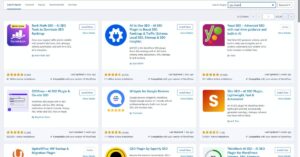
Your main SEO plugin should handle the core tasks WordPress doesn’t make obvious: title tags, meta descriptions, canonical URLs, XML sitemaps, index settings, social preview data, and basic structured data.
Don’t run Yoast SEO, Rank Math, All in One SEO, SEOPress, and The SEO Framework together. They overlap heavily. If two plugins try to control the same metadata or schema, you can end up with duplicate output, conflicting settings, or harder troubleshooting.
Pick one main SEO plugin. Learn its settings. Then add smaller tools only if there’s a clear missing function.
More modules for schema, redirects, analytics, internal links, and AI-assisted workflows
Quieter SEO management
The SEO Framework
Less promotional interface, strong automation, good fit for users who already understand SEO basics
Agency or client work
SEOPress, The SEO Framework
White label or low-branding approach, depending on the plugin and setup
Redirect management
Redirection
Useful when your main SEO plugin or host does not already handle redirects well
Broken link maintenance
Broken Link Checker
Useful for scanning posts, pages, images, and older content for broken URLs
Performance and caching
LiteSpeed Cache, W3 Total Cache
Helpful for speed work, but the right choice depends on your hosting environment
Extra schema control
Schema tools only when needed
Many main SEO plugins already output basic schema, so avoid duplicate markup
That table is not a shopping list. Installing every plugin in it would be a mistake. Treat it as a menu, not a stack.
Best WordPress SEO plugins to consider
Yoast SEO
Yoast SEO is still one of the safest starting points for many WordPress users. Its WordPress.org listing describes real-time SEO guidance, schema features, and AI tools, and says more than 10 million websites run the plugin.
Use Yoast if you want a familiar interface, content readability prompts, title and meta controls, XML sitemaps, basic schema, and social preview settings in one place. It’s a strong choice for bloggers, small business sites, and teams that want SEO suggestions inside the editor.
The tradeoff is that Yoast can feel busy if you already know what you’re doing. If you prefer fewer prompts and a quieter dashboard, The SEO Framework or SEOPress may feel better.
Rank Math SEO
Rank Math is a strong option if you want a broad set of SEO features in one plugin. Its WordPress.org listing includes schema, internal link tools, SEO checks, XML sitemaps, Search Console and Analytics integrations, a redirection manager, and a 404 monitor.
That feature depth is useful, but it also means you should be selective. Turn on the modules you actually need and leave the rest off. Rank Math can reduce the need for separate plugins, but only if you configure it carefully.
Rank Math also includes AI-related features and external service connections. Review those settings before enabling them, especially if you manage client sites or have privacy requirements.
All in One SEO
All in One SEO is another strong all-in-one choice. Its WordPress.org listing says the plugin was founded in 2007 and is used by more than 3 million site owners and SEO users.
AIOSEO is a good fit if you want a guided setup, XML sitemaps, schema markup, local SEO options, WooCommerce SEO, audit tools, author SEO features, Search Console connection, and redirect features under one plugin family.
As with Rank Math, the key is avoiding overlap. If AIOSEO is handling redirects, schema, sitemaps, and social metadata, don’t install extra plugins that output the same things unless you’ve disabled duplicate features.
The SEO Framework
The SEO Framework is a better fit for users who want automation without a loud interface. Its WordPress.org listing positions it as a fast, ad-free SEO plugin that can generate critical meta tags, provide sitemap support, add structured data, and integrate into the WordPress dashboard with little branding.
Use it if you’re comfortable with SEO basics and don’t need constant editor suggestions. It’s especially useful for developers, agencies, and site owners who want less visual noise while still covering technical SEO foundations.
The main drawback is that beginners may prefer the extra hand-holding from Yoast, AIOSEO, Rank Math, or SEOPress.
SEOPress
SEOPress is worth considering if you want a modular SEO plugin with agency-friendly controls. Its WordPress.org listing describes it as privacy-first, white label, and used by more than 350,000 websites since 2017.
SEOPress can handle titles, descriptions, Open Graph data, XML sitemaps, structured data, redirects, image SEO, breadcrumbs, Google Search Console features, and more. It also works across common editors and page builders, which matters if your site uses Elementor, Divi, Bricks, Oxygen, WPBakery, or similar tools.
It’s a good fit for freelancers and agencies that want a professional SEO setup without client-facing plugin branding.
Support plugins that can improve your SEO workflow
Redirection
Redirection is one of the most useful support plugins for WordPress SEO. It manages 301 redirects, tracks 404 errors, and gives you a central place to fix URL changes without editing server files.
Use it when you change slugs, delete pages, merge content, move posts, or rebuild a site structure. Google’s redirect guidance recommends permanent server-side redirects when a page has permanently moved, and a plugin like Redirection can make that easier for non-developers.
If your main SEO plugin already includes redirect management, compare the two before installing Redirection. You usually don’t need two redirect systems.
Broken Link Checker
Broken links frustrate readers and make older content feel neglected. Broken Link Checker can scan posts, pages, comments, custom fields, links, redirects, and missing images depending on the settings you choose.
This plugin is useful for content-heavy sites, older blogs, and sites with lots of outbound links. It can save time compared with checking links manually across hundreds of posts.
For smaller sites, run link checks periodically instead of treating another always-on plugin as mandatory. If you use cloud-based checking, review the privacy and account requirements first.
W3 Total Cache
W3 Total Cache is a performance plugin, not a traditional SEO plugin, but speed and user experience still matter. Its WordPress.org listing describes caching, CDN integration, browser caching, minification, lazy loading, and Core Web Vitals-related performance features.
Use W3 Total Cache if your host does not already provide strong caching and you’re comfortable testing settings carefully. It can be powerful, but it has many options, and aggressive settings can break layouts, scripts, carts, or forms.
After enabling any cache plugin, test your homepage, posts, checkout pages, forms, menus, search, and mobile layout. Don’t assume the site is fine because the dashboard says caching is active.
LiteSpeed Cache
LiteSpeed Cache is often the better performance choice if your site runs on LiteSpeed or OpenLiteSpeed hosting. Its WordPress.org listing describes server-level caching, QUIC.cloud options, image optimization, object cache support, CSS and JavaScript optimization, lazy loading, and database optimization.
The important detail is hosting. Some general optimization features can work on other servers, but LiteSpeed’s exclusive cache features require LiteSpeed-powered hosting, OpenLiteSpeed, commercial LiteSpeed products, or QUIC.cloud.
If your host supports it, LiteSpeed Cache can replace several separate performance plugins. If your host does not, W3 Total Cache, your host’s own cache system, or another performance plugin may make more sense.
Be careful with standalone schema plugins
Structured data can make content eligible for richer search appearances, but Google also says valid structured data does not guarantee a rich result. That’s why schema should be accurate, visible-content-aligned, and not duplicated across multiple plugins.
Many main SEO plugins already output basic schema for articles, breadcrumbs, organizations, people, products, local business pages, FAQs, and other content types. Before installing a separate schema plugin, check what your main SEO plugin already generates.
The long-running Schema plugin outputs JSON-LD structured data, but at the time of review, WordPress.org displayed a compatibility warning on its plugin page. If you use it, test it on a staging site first and validate the output before using it on a production website.
For most site owners, the best schema plugin is often the one already built into your main SEO plugin.
Do you still need an AMP plugin?
For most WordPress sites, AMP is no longer a default SEO requirement. Google’s AMP guidance says Search indexes AMP pages like other web pages and applies the same standard regardless of the technology used. Google also removed the AMP requirement from mobile Top Stories eligibility years ago.
Use an AMP plugin only if your publishing workflow genuinely needs AMP and you can keep the AMP version aligned with the canonical page. For most blogs and small business sites, your time is better spent improving the regular mobile experience, page speed, content quality, and internal linking.
How to build a lean SEO plugin stack
A practical WordPress SEO stack is usually smaller than people think. Start with one main SEO plugin, then add support tools only after you know what’s missing.
Choose one main SEO plugin: Yoast SEO, Rank Math, All in One SEO, SEOPress, or The SEO Framework.
Use one performance tool: LiteSpeed Cache if your host supports it, W3 Total Cache if you need host-agnostic caching, or your host’s built-in caching if it already works well.
Add redirect management only if needed: Use Redirection or your main SEO plugin’s redirect module, not both.
Run link checks on a schedule: Broken link tools are useful, but they don’t always need to run nonstop.
Add schema tools only for a clear reason: Don’t duplicate schema that your main SEO plugin already outputs.
Back up your site first. Then install one plugin at a time, configure it carefully, and test key pages before moving on. If you’re replacing an SEO plugin, export your old settings where possible and use the new plugin’s importer if it offers one.
After setup, check your homepage, a blog post, a category page, a product or service page, and any form or checkout page. View the page source or use an SEO browser extension to confirm the correct title, meta description, canonical URL, schema, and robots settings are showing.
Also check Google Search Console after the site has been crawled again. Plugin settings can affect indexing, sitemaps, structured data, and page experience reports, so don’t treat setup as finished until you’ve checked the results.
Frequently asked questions
Do WordPress SEO plugins improve rankings?
A WordPress SEO plugin can improve your technical SEO setup by managing titles, meta descriptions, sitemaps, schema, redirects, and indexing controls. It does not guarantee rankings. You still need useful content, search intent fit, internal links, page speed, and a well-maintained site.
Can I use more than one SEO plugin?
You usually should not use more than one main SEO plugin. Running multiple all-in-one SEO plugins can create duplicate metadata, conflicting schema, sitemap issues, and confusing index settings. Use one main SEO plugin and add support plugins only for jobs it does not handle.
Is Rank Math better than Yoast SEO?
Rank Math is often better for users who want more built-in modules, while Yoast SEO is often better for users who want a familiar, beginner-friendly workflow. The better choice depends on your comfort level, site type, and how much control you want inside one plugin.
Do I need a separate schema plugin?
Not always. Many main SEO plugins already output basic schema. Add a separate schema plugin only when your main plugin does not support the structured data type you need, and always test for duplicate or inaccurate markup.
Do I need AMP for WordPress SEO?
Most sites do not need AMP as a default SEO move. Google indexes AMP pages like other pages and no longer requires AMP for mobile Top Stories eligibility. Focus first on a fast, usable mobile experience on your regular website.
Get new small business insights by email
Practical ideas and useful articles to help you make better business decisions.
Gabriel Nwatarali is the founder of Tech Help Canada and has worked in SEO, copywriting, and web strategy since the early 2000s. His work has helped drive more than 10 million app downloads and 2,900% organic traffic growth for startups, agencies, and brands across North America. He writes about SEO, marketing, AI, and the decisions that shape how businesses grow online, drawing on hands-on experience building websites, content systems, and digital strategies.