

Google says its AI search opt-out has reached all websites, but Brussels is asking publishers whether the control gives them usable leverage or just a new way to lose visibility.
The European Commission has been asking publishers for feedback on Google’s proposal to let them opt out of AI search without affecting their regular search rankings, Reuters reported. The questionnaire was sent in July, with responses due August 28, 2026, and asked whether publishers planned to use the control, what would influence that decision, and how they viewed Google’s move to bring AI Overviews and AI Mode into one AI Search experience.
That makes the latest Google control more than a product setting. It is now part of a regulatory test: can publishers refuse AI use in Google Search without giving up the visibility that still sends them readers, leads and revenue?
Google’s own help documentation says the Search generative AI control was rolled out to all websites worldwide on August 31, 2026. The setting lets site owners manage whether their links and content can appear in AI Overviews, AI Mode and generative AI features in Google Discover. Inclusion is the default.
If a site opts out, Google says its links and content will not appear in those covered AI features, and the site will not receive traffic or impressions from them. Google also says the control is not used as a ranking or inclusion signal elsewhere in Search.
That sounds like the split publishers wanted: leave AI search while staying in regular Search. The harder question is whether that split is commercially usable.
The control exists because regulators forced the issue
The UK moved first. On June 3, 2026, the Competition and Markets Authority imposed a publisher conduct requirement on Google under the UK’s digital markets regime. The rule requires Google to give publishers effective controls over the use of their search content in generative AI, explain how that content is used, provide detailed engagement metrics, and take steps to ensure clear attribution and access to publisher content.
Google announced new website-owner controls and reports the same day. At first, it said the features would be tested with a subset of UK website owners before broader release. By August 31, Google’s documentation said the control and related generative AI performance reports had been rolled out worldwide.
That timeline matters. Google can now point to a live global opt-out. Regulators can now ask whether the opt-out solves the competition problem they were worried about in the first place.
The European Commission has already been investigating a related issue. In December 2025, it opened a formal antitrust investigation into whether Google breached EU competition rules by using web-publisher content and YouTube content for AI purposes. One concern is whether publishers can refuse that use without risking access to Google Search, where many still depend on referral traffic.
The questionnaire reported by Reuters appears to press directly on that point. If a publisher can technically opt out but would never use the control because AI search is too important to visibility, regulators may decide the choice is too narrow to solve the imbalance.
The reporting is better, but not complete
Google has also rolled out generative AI performance reports in Search Console. The Search report covers AI Overviews and AI Mode. Google’s help page says it can show impression data by page, country, date and device. A separate Discover report covers generative AI features in Discover.
That is useful. Before these reports, site owners had little dedicated visibility into whether their pages were showing in Google’s AI features at all.
But the public help documentation still centers the report on impressions. Search Engine Journal and Search Engine Land both noted that the current report does not include click data. That leaves publishers with a basic measurement problem: they can see where Google displayed them in AI features, but not enough detail to understand how many users clicked through or how those visits performed.
The UK CMA requirement goes further than impressions. It calls for clear and detailed metrics on user engagement with publisher content in search generative AI features. Search Engine Journal reported that the CMA’s interpretive notes point to click-throughs, click-through rates and data separated from regular organic search.
That difference is important. Impressions can tell a publisher whether Google is using the content as part of the AI layer. Clicks and click-through rates tell the publisher whether that visibility is worth staying in.
The opt-out does not remove the AI answer
For businesses, the practical risk is easy to miss. Opting out does not turn off AI Overviews or AI Mode for users. It only removes your site from eligibility in the covered generative AI features.
Google’s help page also says content from other sites will still be available in those features and may appear similar to yours. In other words, if one publisher opts out, Google can still answer the user’s question with other sources.
That makes the decision different for different kinds of websites.
A publisher that earns money from page views, subscriptions or affiliate clicks may view AI summaries as a direct threat to its economics. If the answer is consumed on Google, the value of the original reporting may not return to the site that funded it.
A service business, ecommerce company or software brand may see the trade-off differently. AI visibility can put a company in front of searchers even when the click path is weaker. For that kind of business, disappearing from AI answers may give competitors more room to become the cited source.
That is why the AI search opt-out decision should be made by content type and business model, not as a reflex. A site-wide toggle can be a blunt tool when one section depends on ad revenue, another drives leads, and another supports branded trust.
Publisher pressure is building in Europe
The EU’s review arrives after months of publisher pressure around AI search.
In February 2026, the European Publishers Council filed a formal antitrust complaint against Google over AI Overviews and AI Mode. The group argued that Google was using publishers’ journalistic content without authorization, effective opt-out mechanisms or fair payment while reducing the traffic and revenue professional publishers need.
French publishers have also escalated the issue. In August 2026, APIG, a federation representing nearly 300 French newspapers, filed a complaint with France’s competition authority after Google launched AI Overviews in France in late July. APIG argued that Google introduced new uses of press content without prior authorization or dedicated remuneration under France’s neighbouring-rights framework.
Euronews reported that France’s audiovisual and digital regulator, Arcom, estimated traffic loss attributable to AI-generated summaries at between 33% and 38% in European markets where the feature was already active. Google, for its part, told Franceinfo that website publishers can choose whether or not to appear in those AI features.
That response brings the debate back to the same question Brussels is now asking: is the choice usable if exercising it can also reduce visibility?
The European Commission is already scrutinizing Google’s search business through other digital-market cases. In July 2026, it fined Google EUR 890 million in two Digital Markets Act decisions, including a search self-preferencing finding. That fine was not about AI Overviews, but it shows the wider regulatory context: European officials are watching how Google uses its control of search-result surfaces.
Google says AI search is growing, not replacing the web
Google’s public position is that AI in Search helps people ask more complex questions, use Search more often and discover more of the web. At Google I/O 2026, CEO Sundar Pichai said AI Overviews had more than 2.5 billion monthly active users and AI Mode had surpassed one billion monthly active users.
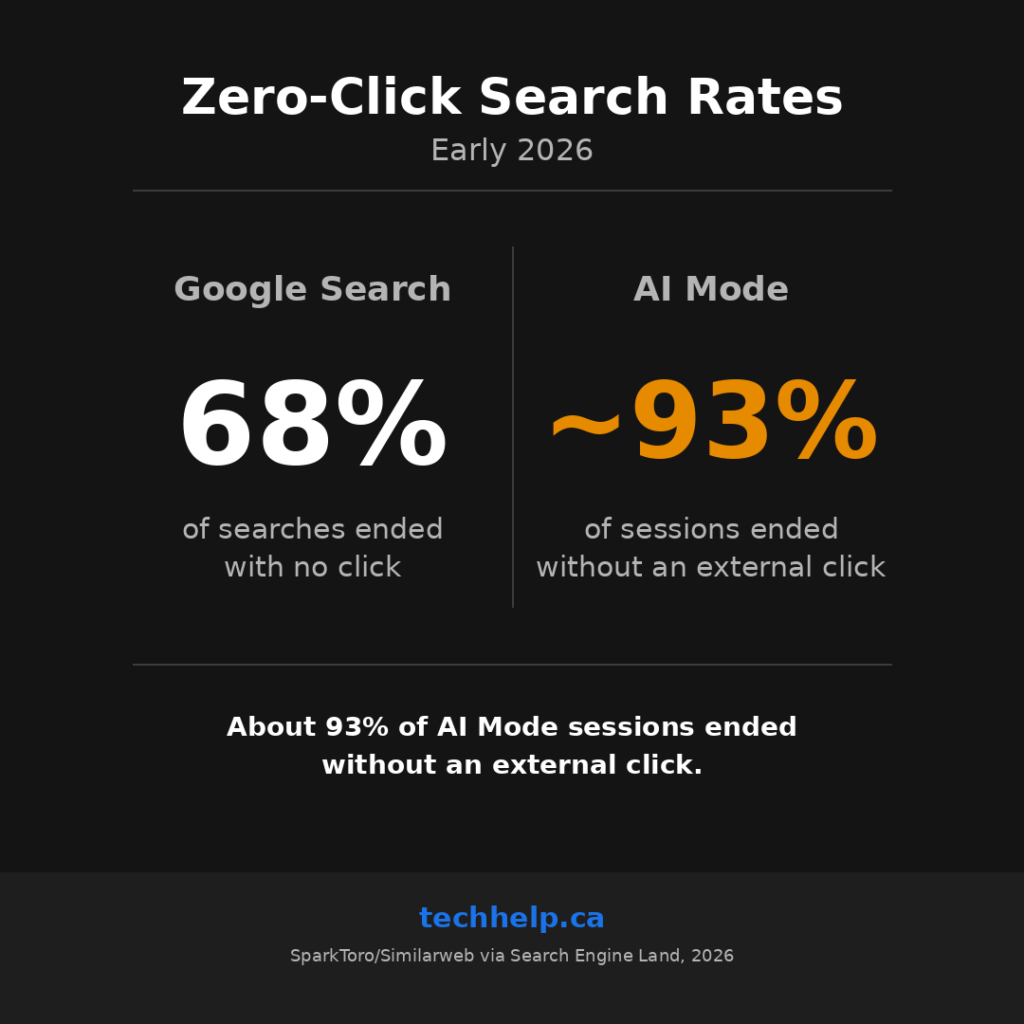
Those numbers help explain why publishers are wary of opting out. AI search is not a small experiment sitting off to the side. It is becoming a mainstream part of Google Search, and Google’s May 2026 Search updates tied AI Overviews and AI Mode more closely together.
Google has also said the opt-out will not affect regular Search ranking. That promise matters, and it addresses one of publishers’ oldest complaints: they wanted a way to refuse AI use without disappearing from classic Google results.
But ranking protection does not answer every economic question. A page can keep its conventional ranking while users increasingly interact with an AI answer above it. For a search-dependent publisher, a protected blue link below a satisfying AI answer may still be worth less than it used to be.
What businesses should do now
Website owners should treat the control as a decision tool, not a protest button.
Start by checking whether Search Console shows generative AI performance data for the property. Record which pages receive AI impressions, which countries those impressions come from, and whether those pages are tied to advertising, affiliate revenue, lead generation, ecommerce, subscriptions or brand trust.
Then separate the pages by business value. If the page only creates value when the user visits, an AI answer that satisfies the query can be a serious risk. If the page supports brand discovery or consideration, AI visibility may be useful even with uncertain clicks.
For most small businesses, the safer starting point is measurement before exclusion. The UK legal limits on Google Search suggest more reporting and more granular controls are still part of the regulatory path. Page-level control is especially important because one domain can contain pages with very different jobs.
Businesses should also keep building content that gives users a reason to click after the summary. Original data, local detail, hands-on testing, first-party examples, tools, pricing context and strong product or service comparisons are harder to replace with a short AI answer than generic informational copy.
The expansion of AI Overviews into buying searches makes this bigger than a publisher fight. Search visibility is moving from a list of ranked pages toward a layer where Google may summarize, compare and recommend before the user leaves the results page.
Google’s opt-out gives publishers and site owners a new control. The EU is now asking whether that control is enough. For any business that relies on search, the answer will depend less on the existence of the switch and more on what the switch costs.
Frequently asked questions
What is Google’s AI search opt-out?
Google’s AI search opt-out is a Search Console control that lets site owners exclude their links and content from AI Overviews, AI Mode and generative AI features in Google Discover. Google says the control was rolled out to all websites worldwide on August 31, 2026.
Does opting out of AI search hurt regular Google rankings?
Google says the Search generative AI control is not used as a ranking or inclusion signal outside the covered generative AI search features. However, opting out means your site will not receive traffic or impressions from those AI features.
Why is the EU asking publishers about Google’s opt-out?
EU regulators are testing whether the opt-out gives publishers a usable choice. The concern is that publishers may technically be able to refuse AI search use, but may feel unable to do so if it removes them from a growing part of Google Search visibility.
Does the opt-out stop Google from training AI models on a site?
No. Google says the Search generative AI control affects whether content appears in certain AI search features. It does not control AI training. Google directs site owners to Google-Extended for separate training-related controls.
Should small businesses use Google’s AI search opt-out?
Most small businesses should measure first. If AI features cite your pages, opting out may reduce visibility while competitors stay eligible. If a page depends on visits for ad, subscription or affiliate revenue, the trade-off may be different.
What should site owners watch next?
Watch for more detailed Search Console reporting, click data, page-level controls and the outcome of EU and UK regulatory pressure. The key question is whether site owners can evaluate AI search participation with enough data to make a real business decision.

I can suggest related Tech Help Canada articles based on the topic you’re reading now.

Tech Help Canada Staff researches, writes, and reviews practical content for business owners and professionals. Our coverage spans business, marketing, SEO, technology, and the tools and systems people use to grow and operate online. We focus on clear, useful information backed by research, hands-on experience, and editorial review. Learn more about our team and editorial standards. Need help with something? Contact Us